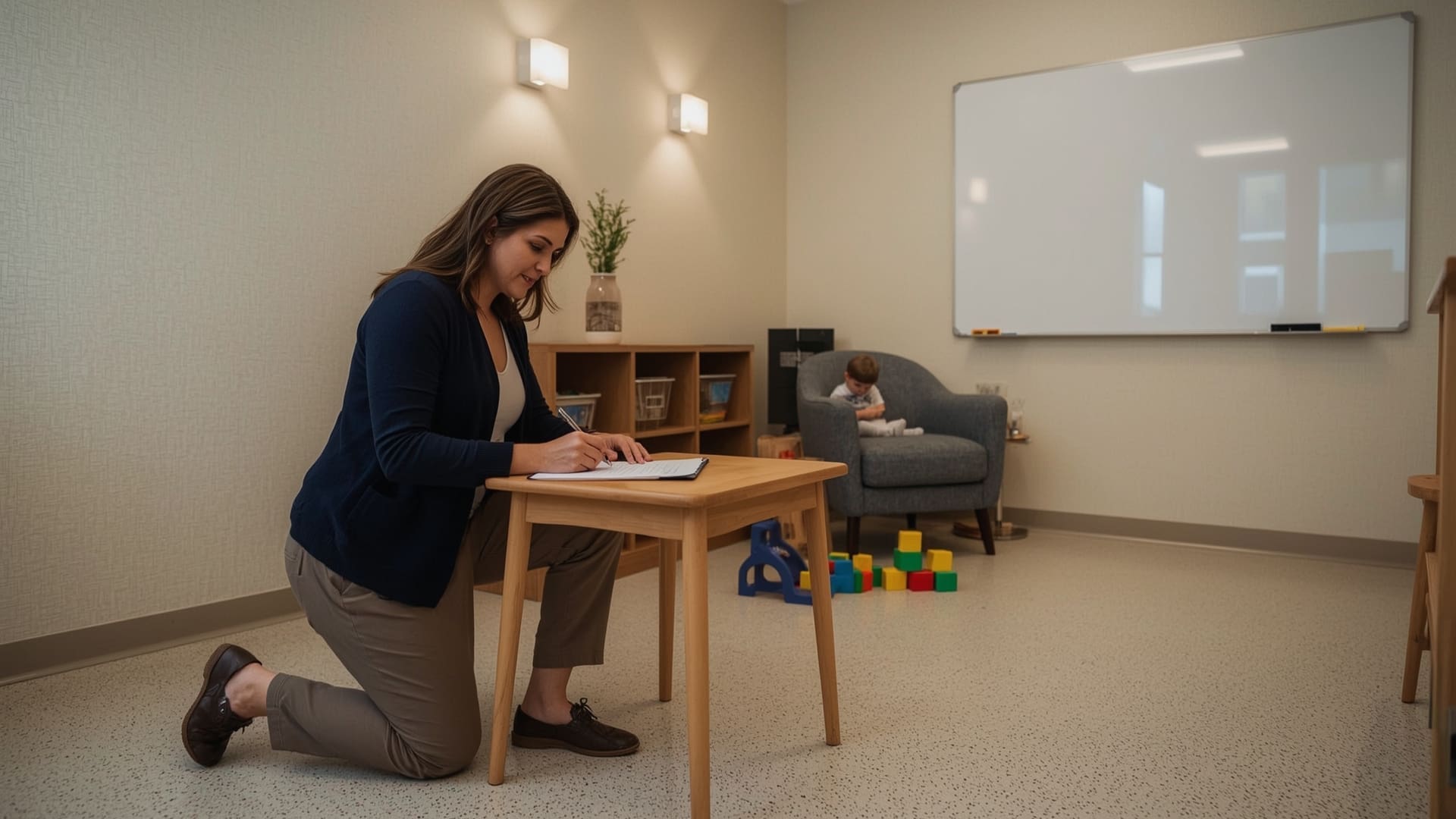


When a child gets diagnosed with autism, parents often feel a bit lost with all the treatment choices out there. It’s a lot to take in. Applied Behavior Analysis, or ABA therapy, is one of the most talked-about options. It’s been around for a while and has a lot of research behind it. This guide is here to break down what evidence-based ABA therapy explained really means, how it works, and what it might look like for your child and your family. We want to make it easier for you to understand this approach.
Key Takeaways
- Evidence-based ABA therapy uses learning principles to help children develop skills and reduce challenging behaviors.
- Positive reinforcement is a core part of ABA, where desired actions are rewarded to encourage repetition.
- ABA therapy breaks down skills into small, manageable steps, making learning more achievable for children.
- Early intervention with ABA therapy can lead to significant developmental progress and long-term benefits.
- Parents play a vital role in ABA therapy by communicating with therapists and practicing strategies at home.
Understanding Evidence-Based ABA Therapy Explained

What Is Applied Behavior Analysis (ABA)?
Applied Behavior Analysis, or ABA, is a type of therapy that looks at how behavior works and how we learn. It’s a science that uses specific strategies to help people learn new skills and reduce behaviors that might be getting in the way of their progress. Think of it as a way to break down complex skills into smaller, manageable steps. ABA is widely recognized as a top-tier approach for individuals with autism spectrum disorder (ASD) and other developmental needs. It’s all about making a real difference in everyday life by teaching practical skills. You can find out more about what ABA therapy is.
The Core Principles Behind ABA
At its heart, ABA is built on a few key ideas that make it work so well. These principles guide how therapists help children learn and grow.
- Positive Reinforcement: This is a big one. When a child does something well, like using a new word or following a direction, they get a reward. This reward could be praise, a favorite toy, or a special activity. The idea is that getting a reward makes them more likely to do that good behavior again.
- Breaking Down Skills: Big goals can seem impossible. ABA takes those big goals, like having a conversation, and breaks them into tiny, achievable steps. For example, learning to ask for a drink might start with just reaching for the cup, then making eye contact, then saying "drink," and eventually forming a full sentence.
- Data Collection: Therapists carefully track what happens during sessions. They write down what the child does, what works, and what doesn’t. This information is super important because it helps the therapist see if the plan is working and where adjustments might be needed. It’s how we know the therapy is on the right track.
ABA therapy is not a one-size-fits-all approach. It’s designed to be flexible and adapted to each individual’s unique needs and learning style. The focus is always on teaching skills that matter for daily life and independence.
Why ABA Is Considered A Gold Standard
ABA has earned its reputation as a "gold standard" in therapy for good reason. It’s backed by a lot of research and has shown consistent, positive results for many children. Major health organizations recognize its effectiveness. The structured yet adaptable nature of ABA means it can be used in different settings – at home, at school, or in a clinic – and can address a wide range of skills, from communication to social interaction and daily living.
Here’s a quick look at why it stands out:
- Research-Backed: Decades of studies show that ABA therapy can lead to significant improvements in communication, social skills, and behavior.
- Individualized: Every child is different, and ABA plans are created specifically for each child’s strengths and challenges.
- Focus on Practical Skills: The goal is to teach skills that help children become more independent and successful in their everyday lives.
- Measurable Progress: The constant data collection means you can see the progress your child is making over time.
How Evidence-Based ABA Therapy Works
Applied Behavior Analysis (ABA) therapy is built on some pretty straightforward ideas about how people learn and change. It’s not magic; it’s a science that looks at what makes behaviors happen and how we can encourage the good stuff and reduce the not-so-good stuff. The main goal is to help kids learn new skills and become more independent.
The Power of Positive Reinforcement
Think about it: when something good happens after you do something, you’re more likely to do it again, right? ABA uses this idea a lot. When a child does something we want them to do – like asking for a toy instead of grabbing it – they get a reward. This reward could be praise, a high-five, or a small toy they like. It’s all about making sure the child understands that doing that specific thing leads to a positive outcome. This makes them want to repeat that behavior.
Breaking Down Skills Into Achievable Steps
Sometimes, a big skill can seem really overwhelming. ABA therapy breaks these down into much smaller, easier steps. Let’s say a child needs to learn how to get a drink of water. Instead of expecting them to do the whole thing at once, a therapist might start by teaching them to walk to the kitchen. Then, they’ll work on getting a cup, then turning on the water, and so on. Each small step is practiced and rewarded until the child masters it. Only then do they move on to the next step. It’s like building with blocks – you need a solid foundation before you can build higher.
Here’s a look at how a skill like asking for a snack might be broken down:
- Step 1: Making eye contact with the adult when they want something.
- Step 2: Pointing to the snack or the place where snacks are kept.
- Step 3: Using a word or sign for the snack (e.g., "cookie" or a sign for "eat").
- Step 4: Saying a full sentence, like "Can I have a cookie, please?"
The Antecedent-Behavior-Consequence Model
This is a fancy way of saying we look at what happens before, during, and after a behavior. It helps therapists figure out why a behavior is happening and how to change it.
- Antecedent: This is what happens right before the behavior. It could be a request from an adult, a change in the environment, or something the child sees or hears.
- Behavior: This is what the child actually does. It’s the action or response.
- Consequence: This is what happens immediately after the behavior. It could be reinforcement (like a reward), or it could be that the behavior stops something from happening.
By understanding this cycle, therapists can change the ‘antecedent’ to make a desired behavior more likely, or change the ‘consequence’ to make an undesired behavior less likely to happen again. It’s about understanding the triggers and the outcomes.
ABA therapy is very much a team effort. Therapists collect lots of information, or data, during sessions. This isn’t just to see if the child is learning, but also to make sure the therapy plan is actually working. If something isn’t leading to progress, the plan can be adjusted. It’s all about making sure the therapy is the best it can be for each child.
Key Areas Addressed By ABA Therapy
Applied Behavior Analysis (ABA) therapy is designed to help children develop a wide range of skills. It’s not just about reducing challenging behaviors; it’s also about building up positive ones that help kids thrive. The therapy looks at different parts of a child’s development and creates plans to support growth in those areas. It’s all about making life better for the child and the whole family.
Enhancing Communication Skills
Communication is a big one. Many children who benefit from ABA therapy have trouble expressing themselves. ABA works on this by teaching different ways to communicate. This can include:
- Using spoken words
- Using sign language
- Using picture exchange systems or communication devices
The goal is to help children share their needs, wants, and thoughts. This can make a huge difference in their daily lives and reduce frustration. Learning to communicate better is a step towards more independence and connection with others. It’s amazing how much can change when a child can be understood.
Building Social Engagement
Social skills can be tricky. ABA therapy helps children learn how to interact with others. This involves understanding social cues, taking turns, sharing, and making friends. Therapists work on these skills in a structured way, often through play and practice.
- Learning to make eye contact
- Participating in group activities
- Understanding how others might be feeling
These skills are so important for building relationships and feeling like part of a group. It helps children feel more confident when they’re around other kids or adults. Building these connections is a key part of growing up.
Developing Self-Help and Daily Living Skills
ABA therapy also focuses on practical life skills. This helps children become more independent. Skills like dressing, eating, brushing teeth, and using the toilet are taught step-by-step. Therapists break down these tasks into small, manageable parts.
- Learning to put on clothes
- Practicing how to eat with utensils
- Mastering toileting routines
As children gain these skills, they feel a greater sense of accomplishment and autonomy. It’s about giving them the tools to do more for themselves, which is a huge confidence booster. This area of ABA therapy is really about everyday success.
Supporting Academic Success
ABA can also play a role in a child’s learning and academic journey. Complex school subjects or tasks can be broken down into smaller steps. This makes learning feel less overwhelming. By celebrating each small success, children build confidence in their ability to learn.
- Learning letters and numbers
- Following classroom instructions
- Developing problem-solving abilities
This support can help children feel more prepared for school and learning environments. It’s about setting them up for success in the classroom and beyond.
What To Expect During ABA Therapy Sessions
So, you’re curious about what actually happens when your child starts ABA therapy? It’s totally normal to wonder! While every child’s journey is unique, there’s a general flow to how these sessions work. Think of it as a structured, yet flexible, approach designed to help your child learn and grow.
The Initial Assessment Process
Before any therapy begins, a qualified professional, like a Board-Certified Behavior Analyst (BCBA), will meet with you and your child. This isn’t a test for your child, but rather a way for the therapist to get to know them. They’ll observe your child, talk with you about their strengths, challenges, and what you hope to achieve. Sometimes, they might use specific tools or games to get a clearer picture of your child’s current skills. This first step is all about understanding your child as an individual.
Individualized Treatment Planning
Based on that initial assessment, a personalized plan is created just for your child. This isn’t a one-size-fits-all approach. The plan outlines specific goals, like improving communication, learning new self-help skills, or reducing certain behaviors. It also details the strategies the therapist will use to help your child reach these goals. You’ll be involved in this process, discussing the plan and making sure it aligns with your family’s priorities.
What Happens In A Typical Session?
Therapy sessions are usually one-on-one, with a trained therapist working directly with your child. The exact activities will depend on the treatment plan, but they often involve play-based learning. For example, a session might include:
- Playing games that teach turn-taking and sharing.
- Practicing asking for toys or snacks.
- Working on following simple instructions.
- Learning to identify and express emotions.
Therapists use positive reinforcement, meaning they’ll praise or reward your child for trying or succeeding at a task. The goal is to make learning fun and motivating.
The Role of Data Collection
This is a really important part of ABA. Therapists carefully track your child’s progress during each session. They note what works, what doesn’t, and how your child responds to different strategies. This data isn’t just for the therapist; it helps everyone see how well the plan is working and if any adjustments are needed. It’s how we make sure the therapy stays effective and focused on your child’s needs.
Data collection is the backbone of evidence-based ABA. It allows therapists to objectively measure progress, identify effective strategies, and make informed decisions to tailor the therapy to your child’s unique learning style and needs, ensuring the best possible outcomes.
The Importance Of Early Intervention With ABA
Maximizing Potential Through Early Start
Starting Applied Behavior Analysis (ABA) therapy early can make a big difference. Think of it like planting a seed; the sooner you plant it and give it the right conditions, the better it can grow. For children, especially those on the autism spectrum, early intervention means they can start learning important skills when their brains are most adaptable. This can lead to better outcomes down the road.
Research shows that the earlier a child begins ABA therapy, the more likely they are to see significant improvements. This is because young children’s brains are like sponges, soaking up new information and skills more readily. Getting started sooner rather than later helps build a strong foundation for future learning and development.
Long-Term Benefits of Early ABA
When ABA therapy begins early, the benefits can last a lifetime. Children often develop better communication abilities, learn to interact more effectively with others, and gain independence in daily tasks. These skills are not just for childhood; they help individuals thrive throughout their lives, leading to greater success in school, work, and personal relationships.
Early intervention can also help reduce challenging behaviors. By teaching children more appropriate ways to communicate their needs and feelings, ABA therapy can lead to a more positive and less stressful environment for both the child and their family. This can mean a smoother path as they grow and face new situations.
Prevalence of Autism Spectrum Disorder
It’s helpful to know that autism spectrum disorder (ASD) is more common than many people realize. Statistics show that about 1 in 36 children in the United States have been diagnosed with ASD. This number has been on the rise, highlighting the need for accessible and effective support services like ABA therapy. Early diagnosis and intervention are key to helping these children reach their full potential.
Starting ABA therapy early is like giving a child a head start. It capitalizes on a critical window of development, making it easier for them to learn and adapt. The sooner we begin, the more we can help them build the skills they need to succeed.
Here are some key areas where early ABA intervention can have a significant impact:
- Communication: Helping children express their needs, wants, and thoughts, whether through speaking, using sign language, or communication devices.
- Social Skills: Teaching children how to interact with peers, understand social cues, and build friendships.
- Daily Living Skills: Assisting with tasks like dressing, eating, and hygiene, which promotes independence.
- Behavioral Support: Reducing challenging behaviors and teaching more appropriate ways to manage emotions and frustrations.
The Benefits Of ABA Therapy For Children And Families
Applied Behavior Analysis (ABA) therapy can bring about some really positive changes, not just for the child receiving it, but for the whole family too. It’s not just about teaching new skills; it’s about making everyday life a bit smoother and more connected for everyone.
Significant Developmental Progress
One of the biggest wins with ABA therapy is seeing kids make real strides in their development. Therapists work on breaking down big goals into small, manageable steps. This means kids can learn things like asking for what they need, following directions, or even playing with others. When these skills start to click, it’s a huge boost for the child’s confidence and their ability to interact with the world around them.
- Communication: Children often learn to express their wants and needs more clearly, whether through words, signs, or other methods.
- Social Skills: They can start to understand how to take turns, share, and engage with peers, which is a big deal for making friends.
- Daily Living: Skills like getting dressed, eating independently, or using the toilet become more achievable, leading to greater self-reliance.
Increased Independence and Confidence
As children gain new skills through ABA, they naturally become more independent. Think about a child who can now dress themselves or ask for a snack without needing constant help. This growing independence is a direct path to increased confidence. When kids feel capable and can do more things on their own, their self-esteem really grows. It’s amazing to see them tackle new challenges with a bit more assurance.
Learning to do things for oneself, even small tasks, builds a strong sense of capability and self-worth that can last a lifetime.
Positive Family Dynamics and Reduced Stress
ABA therapy doesn’t just focus on the child; it often involves the family too. When parents and siblings learn strategies to support the child’s development and understand their behaviors better, it can really change the family atmosphere. Communication often improves, and there can be a noticeable reduction in stress for everyone. Having a shared understanding and consistent approach at home can make a big difference in how the family functions day-to-day.
- Better Understanding: Families gain insights into why certain behaviors happen and how to respond effectively.
- Improved Communication: Strategies learned in therapy can be used at home, leading to clearer interactions.
- Reduced Strain: With more independence for the child and better coping strategies for the family, daily routines can become less challenging.
Your Role In Supporting ABA Therapy

Open Communication With Therapists
Think of your child’s ABA therapist as a partner in their development. It’s really important to talk openly with them. Share what you’re seeing at home – the good days, the tough days, and any new things you notice. This helps the therapist get a fuller picture of your child’s progress and challenges outside of therapy sessions. Don’t hesitate to ask questions, no matter how small they seem. Understanding the strategies and goals makes it easier for you to support them. Remember, you know your child best, and your insights are incredibly valuable to the therapy team. Keeping the lines of communication open helps make sure everyone is on the same page.
Incorporating Strategies At Home
Therapy doesn’t just happen in the clinic; it extends into your daily life. The skills your child learns in ABA sessions can be practiced and strengthened at home. Your therapist can show you specific techniques, like using positive reinforcement when your child tries a new skill or communicating in a certain way. It’s about finding natural opportunities throughout the day to encourage these behaviors. For example, if your child is working on asking for things politely, you can practice this during snack time or when they want to play a game. Making these connections between therapy and home life helps your child use their new skills more often and in different places. This consistent practice is key to making the progress stick. You can find more information about Applied Behavior Analysis and its methods to help you understand these strategies better.
Patience And Consistency Are Key
Seeing progress with ABA therapy is often a journey, not a race. It takes time for children to learn new skills and change behaviors. Some days will be better than others, and that’s completely normal. The most important thing you can do is stay patient and consistent with the strategies you and the therapist have agreed upon. Consistent practice at home, coupled with the structured therapy sessions, builds momentum. Try not to get discouraged if you don’t see big changes overnight. Celebrate the small victories along the way – they all add up. Your steady support makes a significant difference in your child’s long-term development and confidence.
The consistent application of learned skills in everyday settings, supported by open communication and a patient approach from parents, significantly boosts the effectiveness of ABA therapy and promotes lasting positive change for the child.
Wrapping Up: What This Means for Your Family
So, we’ve talked a lot about ABA therapy – what it is, how it works, and why it’s become such a go-to for many families. It’s really about understanding your child’s unique way of learning and using proven methods to help them grow. Remember, ABA is all about building skills, boosting communication, and helping your child feel more confident in their day-to-day life. It’s a journey, and while it takes time and consistency, seeing those small wins add up can be incredibly rewarding. Don’t hesitate to ask your child’s therapists questions and work together – you’re a key part of this process. You’ve got this.
Frequently Asked Questions
What exactly is ABA therapy?
ABA stands for Applied Behavior Analysis. Think of it as a science that helps us understand how people learn and behave. ABA therapy uses this understanding to teach new skills and help change behaviors that might be causing problems. It’s all about using positive ways to encourage good behaviors and make learning easier.
Why is ABA called ‘evidence-based’?
Evidence-based means that ABA therapy has been studied a lot, and research shows that it really works. Scientists have tested it and found that it helps kids learn better, communicate more, and improve their social skills. It’s not just a guess; it’s a proven method.
How does ABA therapy help my child learn new things?
ABA therapy breaks down big skills into tiny, easy steps. For example, learning to ask for a toy might be broken down into steps like reaching for it, looking at the person, making a sound, and then saying the word. The therapist gives rewards for each step the child gets right, making it fun to learn.
What does a typical ABA therapy session look like?
Sessions are usually one-on-one with a therapist. They often involve playing games or doing activities that the child enjoys, but with a goal in mind. The therapist might work on things like talking, playing with others, or doing daily tasks like getting dressed. They keep track of how the child is doing to make sure the plan is working.
When is the best time to start ABA therapy?
Starting ABA therapy early, especially before a child turns 5, can make a big difference. Research shows that the sooner a child begins therapy, the more they can benefit. Early help can lead to better progress in learning, talking, and getting along with others over the long term.
What is my role as a parent in ABA therapy?
Parents are super important! You’ll talk a lot with the therapists to make sure everyone is on the same page. You can also use the same helpful strategies at home to practice skills. Being patient and consistent with these methods helps your child learn even faster and feel more confident.