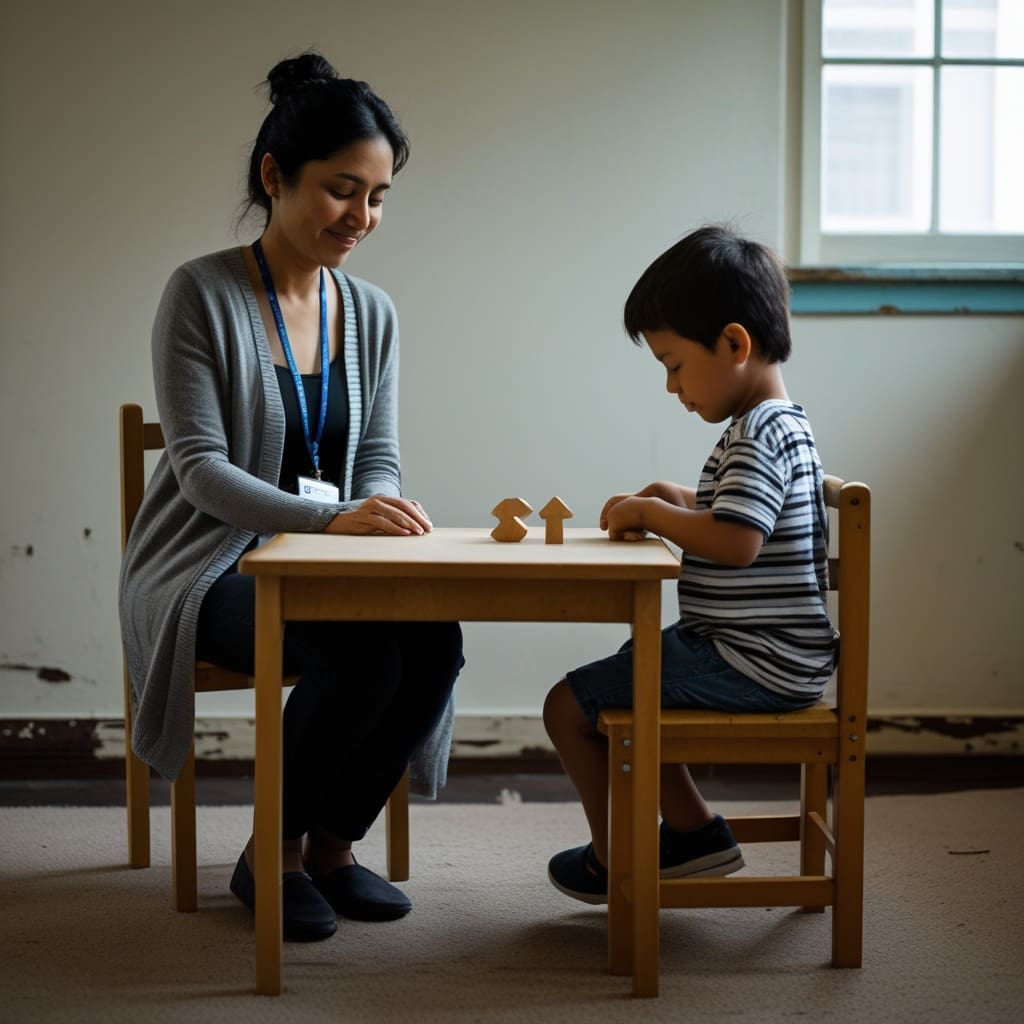

Signs of autism in a 9 year old boy include trouble holding two-way conversations, missing facial expressions or tone of voice, rigid routines, narrow intense interests, and repetitive movements like hand-flapping or rocking. These traits tend to stand out more at this age because third and fourth grade classrooms demand more group collaboration, social flexibility, and independent problem-solving than earlier grades required. According to the CDC's most recent Autism and Developmental Disabilities Monitoring (ADDM) Network data, autism now affects roughly 1 in 31 children nationwide, with boys identified at a rate of about 1 in 20 compared to 1 in 70 for girls. If your son struggles to keep friendships, has meltdowns after school, or can't handle small disruptions to his daily schedule, that pattern deserves a closer look, and there are specific, actionable steps you can take from here.
Key Takeaways
- At age 9, autism most often shows up as social difficulty, such as trouble reading peers or sustaining a back-and-forth conversation, rather than the speech delays typically identified in toddlers.
- Repetitive behaviors, restricted interests, and rigid routines make up one of two core diagnostic categories in the DSM-5-TR, and these patterns frequently intensify between ages 8 and 10.
- The CDC’s latest ADDM data places overall autism prevalence at roughly 1 in 31 children, with boys diagnosed at about 1 in 20 and girls at about 1 in 70.
- Meltdowns, aggression, or self-injury at this age rarely reflect defiance; they usually signal sensory overload or an underlying communication gap.
- Only a formal developmental evaluation can confirm an autism diagnosis, but Applied Behavior Analysis (ABA) therapy can begin addressing many of these behaviors once a diagnosis is established.

Why Signs Become More Obvious Around Age 9
A 9-year-old boy faces a social and academic environment that looks nothing like kindergarten. Group projects, unstructured recess, shifting friendships, and multi-step homework assignments all require flexible thinking and social judgment that younger children were never expected to manage. When a boy cannot keep pace with these growing expectations, the gap between him and his classmates frequently becomes visible for the first time in third or fourth grade.
Many parents notice that behaviors which seemed minor at age 5 or 6, such as a strong preference for solitary play or a narrow fixation on one topic, suddenly appear far more significant once classroom and playground demands increase. This shift does not mean autism developed later in life. It means the surrounding environment changed and began exposing challenges that simpler routines and smaller peer groups had previously masked.
Boys are also diagnosed later, on average, than girls who display similar traits. This gap exists partly because externalizing behaviors, such as impulsivity or physical outbursts, tend to draw quicker attention from teachers and parents than the quieter social withdrawal some girls exhibit instead. As a result, a boy showing subtle signs may go unnoticed for years until the academic and social pressure of age 9 finally forces those signs into plain view.
Social and Communication Signs to Watch For
Social difficulty tends to be the clearest signal at this age, since most 9-year-old boys with autism have already developed functional, grammatically correct speech. The real challenge lies in the give-and-take of conversation and in interpreting unspoken social rules, not in vocabulary or sentence structure.
- Trouble sustaining conversation: He may answer direct questions but rarely ask anything in return, or he may speak at length about a favorite subject without noticing that his listener has lost interest.
- Missed social cues: Facial expressions, sarcasm, and shifts in tone are frequently misread, which can produce awkward or confusing exchanges with classmates during lunch or recess.
- Few close friendships: He may play near other children rather than with them, or struggle to insert himself into a game that has already started.
- Literal interpretation of language: Idioms, jokes, and figures of speech can confuse or frustrate him, since he tends to take words at face value.
- One-sided conversation topics: Subjects such as trains, a specific video game, or a historical event may dominate nearly every discussion regardless of what his peers want to talk about.
These patterns usually surface most clearly during unstructured moments, such as recess, lunch, or birthday parties, where no adult is directing the interaction. Teachers frequently notice these signs before parents do, simply because a classroom offers far more opportunities for peer comparison than home life does. If your son’s teacher has raised similar concerns, it is worth how a 9-year-old’s classroom struggles can signal the need for extra support, since interventions delivered at school can target the exact settings where difficulties appear most often.
Repetitive Behaviors and Restricted Interests
Repetitive behavior and restricted interests make up one of two core diagnostic categories in the DSM-5-TR, alongside social communication differences. At age 9, these signs often look less like the toddler stereotype of constant hand-flapping and more like rigid daily routines or intensely narrow hobbies that dominate a child’s free time.
Common Repetitive Behaviors at This Age
- Hand-flapping, rocking, or spinning, particularly when a child feels excited, anxious, or overstimulated by noise or crowding.
- Lining up objects or arranging items in a precise order before moving on to another task.
- Repeating phrases from television shows, video games, or past conversations, a pattern clinicians call echolalia.
- Insisting on the same route to school, the same seat at the dinner table, or the exact same sequence of morning tasks every single day.
Restricted or Intense Interests
A boy with autism may develop an almost encyclopedic knowledge of one narrow subject, such as train schedules, weather patterns, or the internal mechanics of a specific video game. This differs from an ordinary hobby in both intensity and inflexibility. He may resist discussing anything else, become distressed if the topic is dismissed, or spend the majority of his free time on this single interest rather than rotating through several activities the way most 9-year-olds naturally do.
Sudden changes to routine, such as a substitute teacher, a canceled activity, or a rearranged classroom seating chart, can trigger distress that seems disproportionate to the actual change. This reaction is not stubbornness. It reflects genuine difficulty predicting and coping with an unexpected shift, which is one reason consistency at home matters so much for children showing these traits.
Behavioral and Emotional Red Flags
Meltdowns, aggression, and emotional dysregulation are frequently mistaken for discipline problems in 9-year-old boys, especially when no speech delay is present and the child otherwise appears academically capable. In reality, these behaviors usually stem from sensory overload, communication frustration, or an inability to self-regulate once demands exceed his coping capacity.
- Frequent or prolonged meltdowns: Episodes lasting 20 minutes or longer, occurring multiple times per week, and appearing far out of proportion to the triggering event.
- Aggression toward peers or family members: Hitting, pushing, or biting when he feels cornered, misunderstood, or overwhelmed by sensory input such as loud noise or physical crowding.
- Self-injurious behavior: Head-banging, hand-biting, or scratching, patterns that research published in developmental and behavioral pediatrics journals links to communication frustration rather than intentional self-harm.
- Extreme reactions to sensory input: Covering ears at moderate noise levels, refusing certain clothing textures, or gagging at specific food textures during lunch.
- Difficulty transitioning between activities: Prolonged resistance when asked to stop one task and begin another, even when the new task is preferred.
Left unaddressed, these behaviors tend to escalate rather than resolve on their own as academic and social demands increase through middle school. Recognizing them early gives you far more options than waiting for a crisis point. If these behaviors show up primarily in specific settings, such as during transitions, homework time, or group activities, understanding what’s driving a school-age child’s challenging behaviors through a formal assessment can identify the exact triggers before a treatment plan is built.
How These Signs Differ From Typical 9-Year-Old Behavior
Every 9-year-old boy has quirks, strong opinions, and occasional meltdowns. The distinction that matters is frequency, intensity, and impact on daily functioning rather than the mere presence of a behavior.
- A typical boy has one or two close friends; a boy with autism-related social struggles may have none despite repeated attempts to connect.
- A typical boy enjoys a hobby intensely for weeks or months; a boy with a restricted interest may resist any other topic for years and become distressed when it is interrupted.
- A typical boy has an occasional tantrum lasting a few minutes; a boy showing red-flag behavior may have meltdowns lasting 20 to 60 minutes several times per week.
- A typical boy dislikes an unexpected schedule change but adjusts within minutes; a boy with rigid routines may remain distressed for hours or refuse to participate for the rest of the day.
- A typical boy occasionally misses a joke; a boy with autism-related communication differences consistently interprets figurative language literally across many different situations.
None of these signs, taken alone, confirms an autism diagnosis. The pattern across multiple categories, sustained over at least six months and present across more than one setting (home, school, and social activities), is what clinicians look for under DSM-5-TR criteria.
What to Do If You Recognize These Signs
A parent’s observations matter, but only a licensed professional can deliver a formal diagnosis. The following steps outline a realistic path forward, along with concrete timeframes and costs you can expect at each stage.
- Keep a two-to-four-week behavior log. Write down specific incidents, including the setting, the trigger, and the duration of each meltdown or repetitive behavior episode. This record becomes valuable evidence during a formal evaluation.
- Request a referral from your pediatrician. Most pediatricians can complete a basic developmental screening, such as the M-CHAT-R or a similar tool, during a single 20 to 30 minute appointment and then refer you to a developmental pediatrician, psychologist, or psychiatrist.
- Schedule a comprehensive developmental evaluation. A full evaluation, often including the Autism Diagnostic Observation Schedule, Second Edition (ADOS-2), typically takes two to four hours across one or two visits. Wait times commonly range from six to twelve weeks depending on your region, and out-of-pocket costs without insurance generally fall between $1,000 and $3,500.
- Pursue a school-based evaluation under IDEA. Under the Individuals with Disabilities Education Act, public schools must respond to a written evaluation request, generally within 60 calendar days in most states, and the evaluation itself is provided at no cost to the family.
- Begin ABA therapy once a diagnosis is confirmed. For a school-age child, ABA programs commonly range from 10 to 25 hours per week, delivered at home, in a clinic, or directly in the classroom, at typical rates of $120 to $150 per hour before insurance. Every state currently mandates at least some level of private insurance coverage for autism services, though the exact hour caps and age limits vary by state law.
Once a diagnosis is in hand, the next question most families ask is where to start. figuring out next steps once you recognize these behaviors in an older child is often the single most useful move a parent can make, since a structured plan reduces the guesswork of choosing therapies, school accommodations, and home strategies all at once.
A formal evaluation does not label your son. It simply gives you and his care team an accurate map of what he needs to succeed.
Conclusion
Recognizing the signs of autism in a 9-year-old boy starts with paying attention to patterns rather than isolated incidents. Social struggles, rigid routines, intense narrow interests, and meltdowns that seem out of proportion to their triggers are the clearest signals at this age, and they tend to grow more visible as classroom and social demands increase. Acting on these observations now, through a pediatrician referral, a developmental evaluation, and, if appropriate, ABA therapy, gives your son a far stronger foundation heading into middle school than waiting and hoping the challenges resolve on their own.
Frequently Asked Questions
Can a 9-year-old boy be diagnosed with autism if he was never flagged as a toddler?
Yes, late diagnosis is common, especially in boys with average or above-average verbal skills. Many children mask difficulties in early childhood when social and academic demands are low, and the gap only becomes apparent once group work, shifting friendships, and multi-step assignments arrive in third or fourth grade.
Do all boys with autism show repetitive movements like hand-flapping?
No, repetitive movements vary widely and some boys show subtler versions, such as pacing or fidgeting. By age 9, repetitive behavior often looks more like rigid daily routines or an intensely narrow hobby than the classic hand-flapping associated with early childhood autism.
How is autism different from ADHD in a 9-year-old boy?
ADHD centers on attention and impulse control, while autism centers on social communication and restricted, repetitive behavior patterns. The two conditions frequently co-occur, and a comprehensive evaluation is the only reliable way to distinguish which challenges stem from which condition, or whether both are present.
What should I say to my son’s pediatrician to get taken seriously?
Bring your written behavior log and describe specific, observable incidents rather than general impressions. Mention frequency, duration, and setting for each example, such as “three meltdowns lasting over 30 minutes this week after schedule changes,” since concrete details prompt a faster referral than vague concerns.
How soon can ABA therapy start after a diagnosis?
Many families begin ABA services within four to eight weeks of receiving a diagnosis, depending on provider availability in their area. Some regions have longer waitlists of three to six months for in-home services, so requesting a school-based evaluation in parallel can help your son access support sooner.