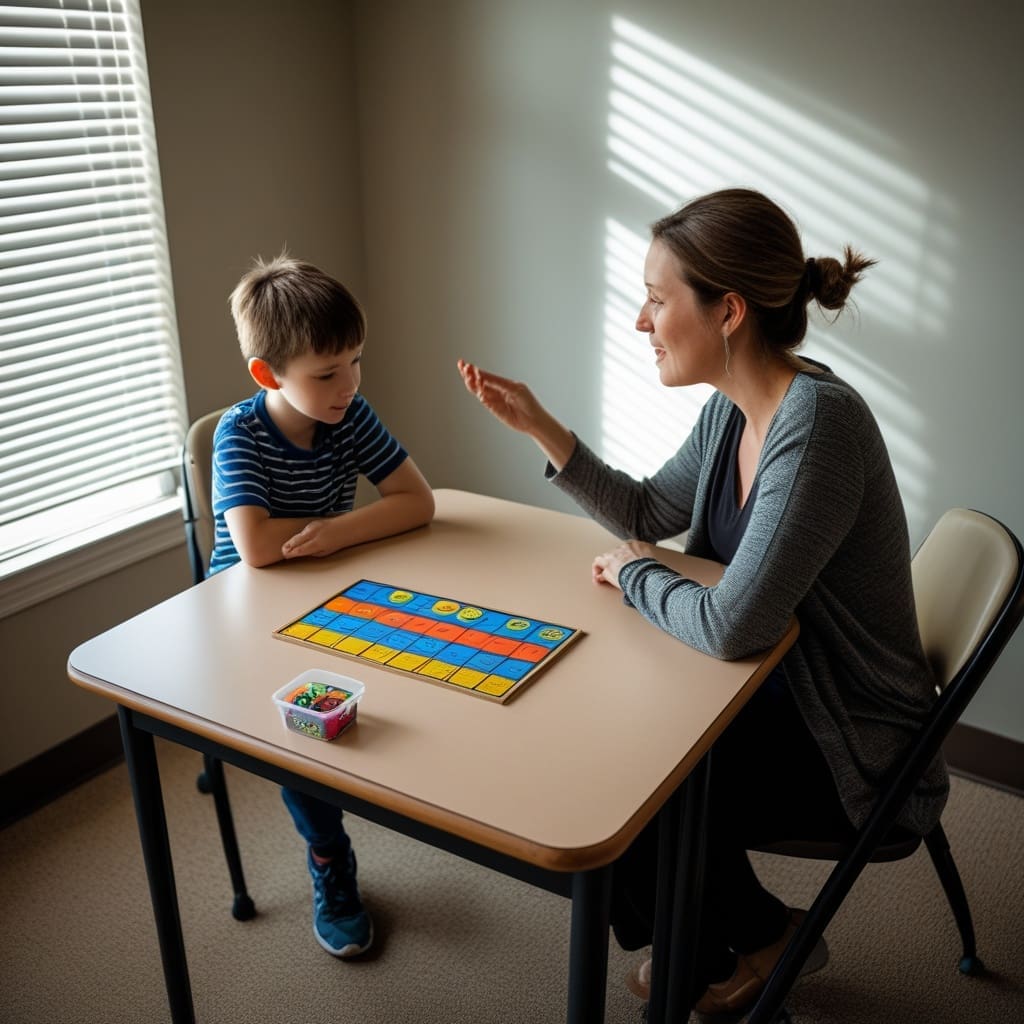

ABA therapy for teens uses structured, evidence-based techniques to help adolescents with autism build social, communication, and independence skills for adulthood. Sessions typically run 10 to 20 hours per week, a lighter schedule than the 20 to 40 hours common in early childhood programs, because teenage goals focus on refining specific skills rather than building foundational ones from scratch. According to the CDC’s Autism and Developmental Disabilities Monitoring Network, approximately 1 in 31 children in the United States is identified with autism spectrum disorder, and a growing share of these individuals now enter or continue Applied Behavior Analysis (ABA) programs well into adolescence. For families weighing this option, understanding the actual structure of treatment, not just the general concept, makes the decision far easier.

Key Takeaways
- ABA therapy for teens is individualized, targeting social skills, communication, emotional regulation, and daily living independence rather than following a single fixed curriculum. Goals might include starting conversations with peers, managing frustration without shutting down, or handling a part-time job interview.
- A typical program runs 10 to 20 hours per week, guided by a Board Certified Behavior Analyst (BCBA) and often delivered by a Registered Behavior Technician (RBT). Sessions can happen at home, at school, in the community, or through a mix of settings depending on the teen’s goals.
- Treatment follows a structured process: assessment, goal setting, custom planning, implementation, and ongoing data-based evaluation. The BCBA reviews progress every few weeks and adjusts the plan if a teen masters a skill faster than expected or hits a roadblock.
- All 50 states now require some form of insurance coverage for autism-related ABA services, though age limits and session caps vary by state and plan. Some plans stop coverage at age 18 or 21, so families should confirm details before starting treatment.
- Family involvement, through parent training and consistent reinforcement at home, strongly affects how quickly a teen generalizes new skills outside of sessions. Parents who practice the same prompts and rewards used in therapy tend to see faster, more lasting change.
How ABA Therapy Works for Adolescents
Applied Behavior Analysis studies how behavior connects to the environment around it, then uses that information to teach new skills and reduce behaviors that interfere with daily life. For a teenager, this looks nothing like the flashcard-style drills often associated with early childhood ABA. Instead, sessions center on real situations a teen actually faces, ordering food independently, managing a locker combination under time pressure, or responding calmly when a group project does not go as planned.
Three principles guide nearly every session regardless of the teen’s specific goals.
- Positive reinforcement: Desired behaviors get rewarded in ways meaningful to the individual teen, which might mean extra screen time, verbal recognition, or points toward a preferred activity rather than the small tangible rewards used with younger children.
- Task breakdown: Large goals, such as “hold a part-time job,” get split into smaller measurable steps like filling out an application, practicing an interview script, and rehearsing arrival and greeting routines.
- Data collection: Therapists record specific numbers, such as how many times a teen initiated a conversation without prompting, during each session. A BCBA reviews this data on a set schedule, often every two to four weeks, and adjusts the treatment plan when progress stalls or a goal is mastered early.
This data-driven structure separates ABA from general counseling or social skills clubs. Progress is measured, not assumed, which allows a treatment team to prove a technique is working before continuing it for months.
What to Expect: The ABA Process Step by Step
Families beginning ABA therapy for a teenager can expect a fairly consistent sequence of steps, though the pace differs based on the teen’s needs and the provider’s caseload. Most programs follow this general path:
- Initial assessment (typically 4 to 8 hours across one to three sessions): A BCBA conducts direct observation, interviews, and often a Functional Behavior Assessment to identify strengths, challenges, and the specific behaviors that most affect daily functioning.
- Goal setting (usually finalized within 1 to 2 weeks of assessment): The BCBA, the teen, and the family agree on 3 to 6 target goals, balancing what clinicians recommend with what the teen personally wants to achieve.
- Custom treatment planning (drafted within 2 weeks of goal setting): A written plan lays out specific teaching methods, session frequency, and measurable success criteria for each goal, along with a plan for how goals shift to reflect a teenager’s developmental stage and needs as the year progresses.
- Direct implementation (ongoing, typically 10 to 20 hours weekly): An RBT delivers most sessions under BCBA supervision, which per Behavior Analyst Certification Board standards must occur at least once every two weeks for a minimum of 5% of total direct service hours.
- Formal evaluation (every 3 to 6 months): The team reviews collected data against the original goals, retiring mastered skills and introducing new targets as needed.
A full program often runs 6 months to 2 years, though many teens step down to lower-intensity maintenance sessions, sometimes just 2 to 5 hours weekly, once core goals are met rather than stopping abruptly.
Core Benefits: Social Skills, Communication, and Emotional Regulation
The most requested outcomes from ABA therapy for teens fall into three categories, and most treatment plans address all three to some degree, even if one takes priority.
Social interaction. Adolescence brings more complex peer dynamics than childhood, including group texting, shifting friend groups, and unwritten social rules. ABA sessions practice reading body language, joining conversations already in progress, and recovering gracefully after a social misstep. For teens who struggle here, therapy focused on helping older kids build peer relationships and social confidence often runs alongside broader ABA goals rather than as a separate service.
Communication. Some teens need support expressing needs verbally, while others need help interpreting sarcasm, idioms, or indirect requests from teachers and peers. Sessions might include role-playing a disagreement with a friend or practicing how to ask a teacher for an extension, building both expressive and receptive language in situations that actually matter to a teenager.
Emotional regulation. According to a 2023 survey published by the Autism Society, difficulty managing frustration and anxiety ranks among the top concerns parents raise when their autistic child enters adolescence. ABA addresses this by teaching teens to name an emotion, apply a specific coping strategy such as paced breathing or a short break, and then return to the task at hand. Over repeated practice, this reduces reliance on impulsive reactions during stressful moments like exams or unexpected schedule changes.
Building Independence and Life Skills
Independence goals separate teen-focused ABA from programs designed for younger children. Where early intervention often targets basic communication and play skills, teen programs shift toward the competencies needed for adulthood, sometimes called functional life skills training.
Common independence targets include:
- Managing personal hygiene and grooming routines without reminders.
- Following a written or visual schedule to manage homework, chores, and free time.
- Handling money, including budgeting an allowance or a paycheck from a part-time job.
- Using public transportation or navigating a fixed route safely.
- Preparing simple meals and following basic kitchen safety rules.
- Practicing workplace behavior, such as arriving on time and accepting feedback from a supervisor.
These goals get built into the same structured plan used for social and communication targets, tracked with the same data-driven rigor. A treatment plan typically documents how goals shift to reflect a teenager’s developmental stage and needs, moving from supervised practice to independent performance across multiple settings, including home, school, and community locations. A teen who can complete a task once with a therapist present has not mastered it; mastery generally requires demonstrating the skill correctly across at least three different people and settings without prompting, a standard many BCBAs use when deciding whether to mark a goal complete.
The Family’s Role in Teen ABA Therapy
Progress made during a 60-minute session rarely sticks unless it gets reinforced at home. Most reputable ABA providers build parent training directly into the treatment plan rather than treating it as optional, since research published in the Journal of Applied Behavior Analysis has repeatedly linked caregiver involvement to faster skill generalization.
Parent training sessions typically run 30 to 60 minutes every one to two weeks and cover practical strategies, such as how to prompt a skill without doing it for the teen, how to apply consistent consequences, and how to collect simple data at home to share with the clinical team. Programs focused on equipping parents to reinforce independence goals as their teen grows help families avoid the common trap of accidentally reinforcing dependence, such as continuing to pack a teen’s school bag every morning after therapy has already taught the teen to do it independently.
A teen’s growth outside the therapy room often depends more on what happens at the dinner table than on what happens during the session itself.
Cost, Insurance, and Access
ABA therapy costs between $120 and $180 per hour in most regions of the United States, according to figures compiled by the Council of Autism Service Providers. At 15 hours per week, a mid-range weekly cost, that translates to roughly $1,800 to $2,700 per week before any insurance adjustment, which explains why coverage matters so much to families.
All 50 states now mandate some level of private insurance coverage for autism services, per Autism Speaks’ state insurance mandate tracker, though specifics vary widely. Some plans cap coverage at a certain age (often 21), others limit annual visit counts, and a few require a specific autism diagnosis code, such as ICD-10 F84.0, on file before authorizing services. Medicaid coverage for ABA is also required nationwide following a 2014 CMS clarification, though prior authorization processes and approved hour limits still differ by state. Families should request a written benefits summary from their insurer before starting services, since verbal quotes from a call center frequently miss exclusions buried in the plan document.
Frequently Asked Questions
Is ABA therapy still effective for teenagers, or is it mainly for young children?
Yes, ABA remains effective well into adolescence, though the goals and methods shift. Rather than building early foundational skills, teen-focused ABA targets social nuance, emotional regulation, and independent living tasks appropriate to a teenager’s age and daily responsibilities.
How many hours of ABA therapy does a teenager typically need each week?
Most teen programs run between 10 and 20 hours weekly, lower than the intensive schedules used with young children. A BCBA adjusts this figure based on the number and complexity of active goals, often reducing hours as a teen masters skills and moves toward a maintenance phase.
Can ABA therapy help a teenager who is already verbal and doing well in school?
Yes, verbal and academically successful teens frequently still benefit from targeted support. Common goals for this group include managing anxiety in social situations, interpreting sarcasm or indirect communication, and building executive function skills like time management that academic success alone does not guarantee.
Who actually delivers ABA sessions for teens, a therapist or a doctor?
A Registered Behavior Technician typically delivers direct sessions under the supervision of a Board Certified Behavior Analyst. The BCBA, credentialed through the Behavior Analyst Certification Board, designs the treatment plan and reviews progress data, while the RBT carries out day-to-day teaching following that plan.
At what age does a teenager usually stop needing ABA therapy?
There is no fixed age; most teens step down once they consistently meet independence and social goals, often between ages 18 and 21. Some individuals transition to lower-intensity maintenance support rather than stopping services entirely, particularly if new challenges arise during the transition to college or employment.
Conclusion
ABA therapy for teens gives adolescents on the autism spectrum a structured path toward the social, communication, and independence skills that adulthood demands. The process follows a clear sequence, assessment, goal setting, custom planning, and ongoing evaluation, so families always know what progress looks like and how it gets measured. Unlike therapy for younger kids, ABA for teens shifts focus toward practical, real-world outcomes: holding a part-time job, managing money, navigating friendships, handling conflict without shutting down, and preparing for life after high school.
A typical plan might combine weekly one-on-one sessions with a behavior analyst, group sessions that practice social skills with peers, and parent training so strategies carry over into the home. For example, a teen working on job readiness might practice mock interviews, learn how to fill out a timesheet, or role-play asking a supervisor for help. A teen struggling with anxiety around social situations might work on scripts for ordering food, joining a conversation, or handling teasing without escalating. Progress gets tracked through data, not guesswork, so a therapist can point to specific numbers showing how often a teen initiates conversation now compared to three months ago.
Families should also expect the plan to change as the teen grows. Goals that made sense at 13, like learning to ride public transportation with a chaperone, might shift by 16 toward independent travel or driving readiness. Providers who specialize in adolescents will build in that flexibility from the start, rather than applying the same childhood curriculum with a few tweaks.
If your teenager could benefit from this kind of individualized, evidence-based support, reach out to a licensed ABA provider in your area to schedule an initial assessment. Ask about their experience working specifically with teens, how they measure progress, and how often the plan gets reviewed and adjusted. A good provider will welcome those questions and walk you through exactly how they’ll build a plan suited to your teen’s specific goals, strengths, and challenges.