
ABA therapy — Applied Behavior Analysis — uses specific, research-backed methods to teach skills and reduce challenging behaviors. Each technique works differently. Some use structured drills. Others build skills during everyday play. The right method depends on the child’s age, goals, and learning style.
This guide breaks down the four primary ABA techniques, how each one works in practice, and what each approach is best suited for. Whether you’re a parent, caregiver, or someone new to ABA, you’ll leave with a clear picture of what actually happens in a session.
Key Takeaways
- ABA uses multiple techniques, not just one — most treatment plans combine two or more methods based on the child’s goals.
- Discrete Trial Training (DTT) is the most structured approach — it breaks skills into small steps using clear prompts and immediate reinforcement.
- Natural Environment Teaching (NET) builds skills through play — learning happens during everyday activities, not at a desk.
- Pivotal Response Training (PRT) targets core motivation areas — improving motivation and self-management leads to gains across many skills at once.
- Verbal Behavior (VB) focuses on why we communicate — it teaches the function of language, not just the words themselves.
- All four techniques use positive reinforcement — rewarding desired behavior is the common thread across every ABA method.
What Is ABA Therapy and Why Are There Different Techniques?
Quick Answer: ABA therapy is a science-based approach that uses reinforcement to teach skills and reduce problem behaviors. Different techniques exist because children learn in different ways — some need structured practice, others learn best through play and natural routines.
ABA is not a single script. It’s a framework built on behavioral science principles. Practitioners — called BCBAs (Board Certified Behavior Analysts) — use those principles to design individualized programs.
Each technique in ABA shares the same core idea: behavior that gets reinforced will happen more often. But they apply that idea in very different settings and formats.
A child who struggles to sit and attend for more than a minute needs a different approach than a child who has strong attention but can’t generalize skills to new places. Technique selection comes down to the learner’s profile, the target skill, and the environment where that skill needs to show up.
How BCBAs Choose Which Technique to Use
Before selecting a technique, a BCBA completes a skills assessment. This identifies what the child can already do, what they’re working toward, and what kind of learning environment works best. The treatment plan then maps specific techniques to specific goals.
Most children receive a blend. For example, a child might practice a new skill through DTT in the morning and then practice the same skill in a play setting using NET in the afternoon. This combination builds both the skill and the ability to use it in real life.
What Is Discrete Trial Training and How Does It Work?

Quick Answer: Discrete Trial Training breaks skills into small, separate steps. A therapist gives a clear instruction, the child responds, and they receive immediate feedback. Each “trial” is one complete instruction-response-consequence sequence, repeated until the child masters the skill.
DTT is the most structured of the four techniques. It was developed by Dr. O. Ivar Lovaas in the 1980s and remains one of the most researched methods in ABA.
Each trial has three parts: the discriminative stimulus (the instruction or cue), the response (what the child does), and the consequence (reinforcement or correction). This three-part structure is called the ABC model — Antecedent, Behavior, Consequence.
What Does a DTT Session Look Like in Practice?
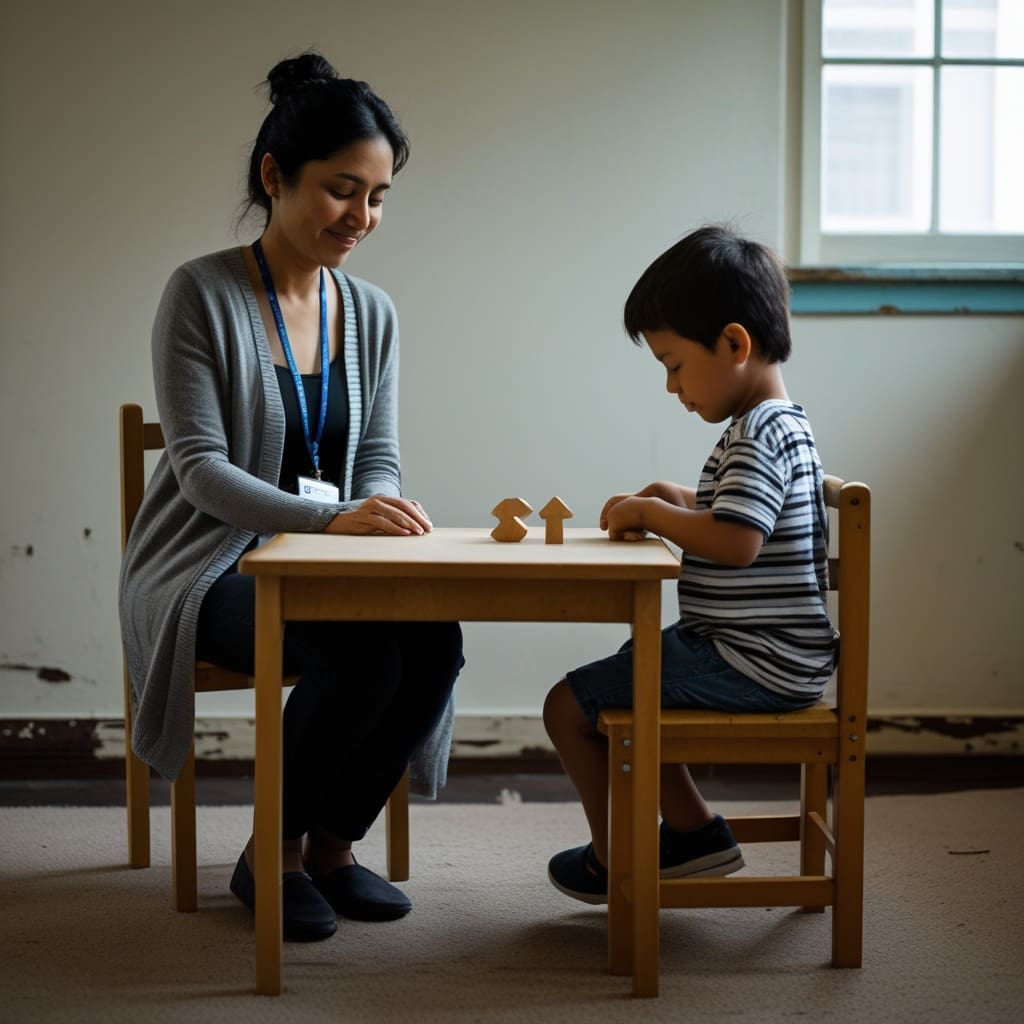
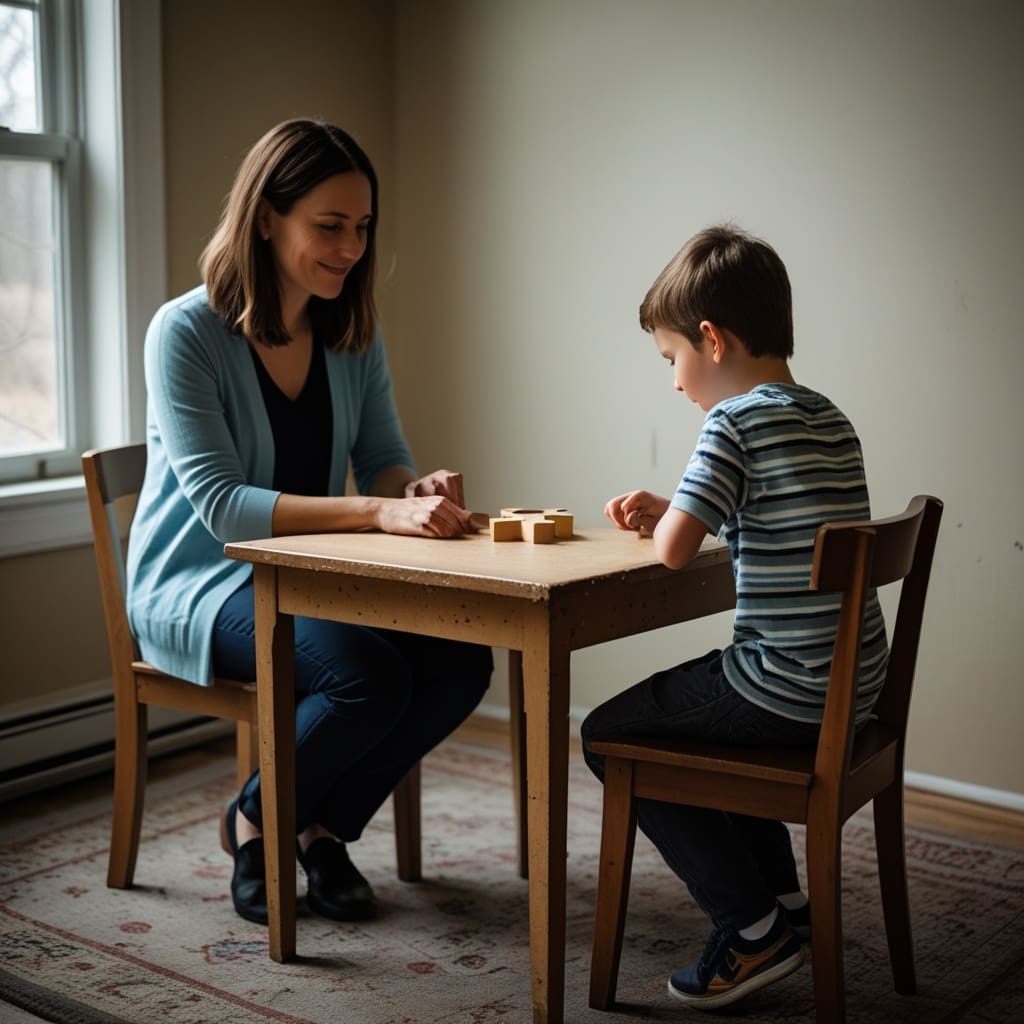
Imagine a therapist working with a 4-year-old on identifying colors. The therapist places a red block and a blue block on the table. They say, “Touch red.” The child touches the red block. The therapist immediately says, “Great job!” and gives the child a sticker. That’s one trial.
They repeat the process 10 to 20 times in a row, tracking whether the child gets it right each time. The therapist uses a data sheet to record correct responses, incorrect responses, and prompted responses. When the child gets it right consistently — typically 80% or better across multiple sessions — they move on to the next step.
What Skills Does DTT Work Best For?
DTT is most effective for teaching foundational skills that require repetition to master. It works well in a quiet, distraction-free setting where the therapist can control all the variables.
| Skill Area | Example Target | Typical Trials Per Session | Mastery Criterion | Setting |
|---|---|---|---|---|
| Receptive Language | Identifying body parts | 10–20 | 80% correct across 3 sessions | Table, low distraction |
| Expressive Language | Labeling common objects | 10–20 | 80% correct across 3 sessions | Table or chair setup |
| Imitation | Copying gross motor actions | 8–15 | 90% correct across 2 sessions | Open floor space |
| Academic Readiness | Matching shapes and numbers | 15–25 | 80% correct across 3 sessions | Table with materials |
| Self-Care | Identifying steps in hand washing | 5–10 (task analysis) | 100% independent across 3 sessions | Bathroom or simulation |
What Are the Limitations of DTT?
The main challenge with DTT is generalization — transferring a skill learned at a table to real-world situations. A child might correctly identify colors 90% of the time in a session but fail to use that skill at home or in school.
This is why DTT is rarely used alone. It builds the skill. Other techniques, like NET, help move that skill into everyday life.
What Is Natural Environment Teaching and How Is It Different From DTT?

Quick Answer: Natural Environment Teaching uses everyday activities and the child’s natural interests as the setting for learning. Instead of drills at a table, skills are practiced during play, snack time, and daily routines. It improves skill generalization compared to structured DTT.
NET flips the DTT model. Instead of the therapist setting up a controlled exercise, the child leads and the therapist follows, embedding learning opportunities into whatever is already happening.
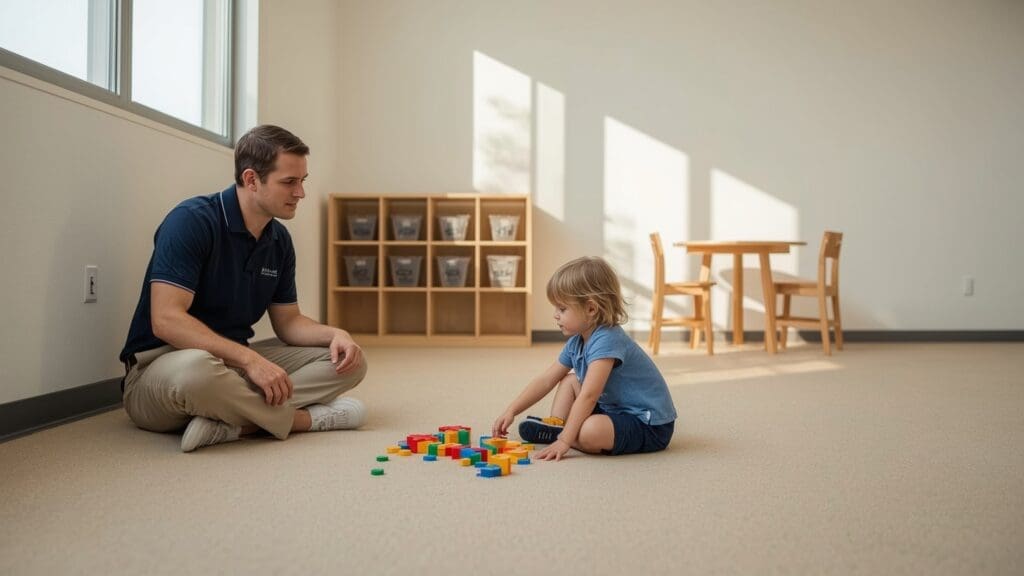
If a child reaches for a toy car, that’s a teaching moment. The therapist might hold up the car and wait for the child to request it verbally. When the child says “car” or “I want the car,” they get the car immediately. That’s reinforcement tied directly to what the child actually wants — which makes it much more motivating.
How Does NET Improve Skill Generalization?
Generalization means using a skill in different places, with different people, and in different situations. DTT builds the skill in one setting. NET builds the habit of using that skill everywhere.
Because NET happens in natural settings — a playroom, a kitchen, a school hallway — the skill gets connected to many different cues. That connection makes it much easier for the child to use the skill independently later.
What Situations Is NET Best Suited For?
| Feature | Natural Environment Teaching | Discrete Trial Training |
|---|---|---|
| Setting | Playroom, home, community | Quiet, controlled space |
| Who leads | Child’s interest guides activity | Therapist directs all activity |
| Reinforcer type | Natural (child gets what they asked for) | Arbitrary (sticker, praise, token) |
| Generalization | High — built into the method | Low — must be planned separately |
| Best for | Social skills, communication, play | Foundational skills, new concepts |
| Data collection | Ongoing, embedded in activity | Trial-by-trial on data sheet |
NET works especially well for social communication goals, play skills, and daily living skills. It’s also a great fit for young children who aren’t yet able to sit and attend for structured table work.
What Is Pivotal Response Training and What Makes It Different?
Quick Answer: Pivotal Response Training targets “pivotal” behaviors — core areas like motivation, self-management, and responding to multiple cues — that produce widespread improvements across many other skills. Improving one pivotal area can lead to gains in dozens of related behaviors without teaching each one separately.
PRT was developed by Drs. Robert and Lynn Koegel at the University of California, Santa Barbara. The central insight is that some behaviors are more important than others because improving them creates a ripple effect across the child’s development.
Instead of targeting one skill at a time, PRT targets the underlying engine. Fix the engine and many skills improve together.
What Are the Pivotal Areas PRT Focuses On?
| Pivotal Area | Definition | Skills That Improve With It | Example PRT Activity |
|---|---|---|---|
| Motivation | Child’s drive to engage and learn | Communication, social play, task completion | Child picks reinforcer before task |
| Responding to Multiple Cues | Noticing more than one detail at a time | Reading, social awareness, problem-solving | “Give me the small red ball” (two-part instruction) |
| Self-Management | Monitoring and controlling own behavior | Independence, classroom behavior, transitions | Child checks off completed steps on a visual chart |
| Self-Initiation | Starting communication or tasks without prompting | Language initiation, asking questions, starting play | Child asks “What’s that?” about new objects |
| Empathy and Social Skills | Responding to the emotional states of others | Friendship skills, joint attention, turn-taking | Role-play scenarios with peer support |
How Does PRT Feel Different to the Child Compared to DTT?
PRT sessions look a lot like play. The child has real choices — they pick activities, switch tasks when interested, and use natural materials. There are no flashcards or data tables in view.
The therapist still tracks data and delivers reinforcement intentionally. But to the child, it feels like they’re just having fun. This makes PRT especially effective for children who resist structured therapy or who have become conditioned to avoid table work.
Is PRT Supported by Research?
Yes. PRT has been studied extensively since the 1970s. It is recognized as an evidence-based practice by the National Professional Development Center on Autism Spectrum Disorder. Studies show it improves language, reduces problem behaviors, and supports inclusion in general education settings.
What Is Verbal Behavior Therapy and How Does It Teach Language?
Quick Answer: Verbal Behavior therapy, developed from B.F. Skinner’s analysis of language, teaches communication by focusing on the function of words — why we say what we say. It breaks language into categories called “verbal operants” and teaches each one separately using reinforcement.
Most language programs teach vocabulary. VB teaches why we use vocabulary. The difference matters.
A child might learn to say “cookie” when shown a picture of a cookie. But can they say “cookie” when they’re hungry and want one? Can they say “cookie” to describe what they just ate? Can they say “cookie” when someone else says “chocolate chip”? Those are different language functions, and VB treats them as separate skills.
What Are the Core Verbal Operants in VB?
| Verbal Operant | Definition | Example | Teaching Approach |
|---|---|---|---|
| Mand | A request motivated by a specific want | “Juice” (when thirsty) | Create motivation, withhold item, reinforce request |
| Tact | A label or comment about the environment | “Dog” (when seeing a dog) | Present item or picture, prompt label, reinforce |
| Echoic | Repeating a word spoken by someone else | Therapist says “ball,” child says “ball” | Model word, reinforce immediate imitation |
| Intraverbal | Responding to a verbal cue without a visual | “What do you eat?” → “Food” | Question-answer practice, fill-in-the-blank |
| Listener Responding | Following directions or responding to spoken language | “Touch your nose” → child touches nose | Give instruction, prompt compliance, reinforce |
How Is VB Used With Children Who Are Non-Speaking?
VB works just as well with augmentative and alternative communication (AAC) devices, picture exchange systems, and sign language. The focus is on the function of communication, not the specific mode.
A child who uses a speech-generating device to press a button for “juice” when they’re thirsty is demonstrating a mand. The therapy process is the same — build motivation, create an opportunity, reinforce the communication attempt.
What Is the Verbal Behavior Milestones Assessment and Placement Program?
The VBMAPP — Verbal Behavior Milestones Assessment and Placement Program — is a skills assessment tool developed by Dr. Mark Sundberg. It measures a child’s verbal operants across three developmental levels and helps BCBAs identify language goals for the treatment plan.
The VBMAPP covers 170 milestones across areas including manding, tacting, intraverbal behavior, listener skills, and social interaction. It’s one of the most widely used assessment tools in ABA clinics.
How Do ABA Techniques Use Reinforcement?

Quick Answer: All ABA techniques rely on positive reinforcement — giving something desirable immediately after a behavior to increase the chance of that behavior happening again. Reinforcers vary by child and must be identified individually through preference assessments.
Reinforcement is the engine behind every ABA technique. Without it, the techniques don’t work. Getting reinforcement right requires knowing what each child genuinely values — not just what adults assume they should want.
What Types of Reinforcers Are Used in ABA?
| Reinforcer Type | Description | Examples | Best Used With |
|---|---|---|---|
| Edible | Food or drink items the child enjoys | Small crackers, fruit pieces, juice sip | Early learners, initial motivation building |
| Tangible | Physical objects the child wants access to | Toy car, fidget item, book | DTT, NET, PRT |
| Activity | Access to a preferred activity | 5 minutes of iPad, playground time | Older learners, token economy systems |
| Social | Praise, high-fives, attention from therapist | “Amazing job!”, thumbs up, tickle | Children with social motivation |
| Natural | The outcome directly connected to the behavior | Asking for a ball → receiving the ball | NET, VB mand training |
What Is a Preference Assessment?
A preference assessment is a structured process BCBAs use to identify which items or activities will work best as reinforcers. The most common formats are free operant observation (watching what the child naturally gravitates toward), paired stimulus (presenting two items and tracking which the child picks), and multiple stimulus without replacement (MSWO).
Reinforcer effectiveness changes over time. What motivates a child today might not work next month. BCBAs update preference assessments regularly throughout treatment.
How Do ABA Therapists Use Prompting and Prompt Fading?
Quick Answer: Prompting provides the child with extra support to complete a skill correctly. Prompt fading gradually removes that support as the child becomes more independent. The goal is always to transfer control from the prompt to the natural cue in the environment.
Prompts are not shortcuts — they’re temporary scaffolding. The problem with leaving prompts in place too long is called prompt dependency, where the child waits for help instead of attempting the skill independently.
What Are the Types of Prompts Used in ABA?
Prompts are organized from most to least intrusive. BCBAs typically start with the least intrusive prompt that allows the child to succeed, then fade support over time.
- Full physical prompt: The therapist hand-over-hand guides the child through the action (most intrusive)
- Partial physical prompt: A light touch or tap to guide without full assistance
- Model prompt: The therapist demonstrates the action for the child to imitate
- Gestural prompt: A point, nod, or look directed toward the correct answer
- Verbal prompt: A spoken hint, partial word, or full instruction
- Positional prompt: Placing the correct item closer to the child (least intrusive)
How Are Data and Progress Monitored Across ABA Techniques?

Quick Answer: ABA therapists collect data on every trial, session, and skill target. Data is reviewed weekly by the supervising BCBA to track progress, adjust prompting levels, change reinforcers, and decide when goals have been mastered or need modification.
Data collection is what separates ABA from other behavioral approaches. Every technique generates measurable outcomes. If a skill isn’t progressing, the data shows exactly where the breakdown is — wrong reinforcer, too much prompting, skill not yet prerequisite-ready.
What Does the Data Review Process Look Like?
BCBAs typically review session data weekly. They look for trend lines across sessions — is accuracy increasing, plateauing, or declining? If progress stalls for two to three sessions in a row, they modify the program before the child falls further behind.
Parents receive regular progress reports — usually monthly — that summarize goal status, mastery levels, and upcoming targets. Many clinics also use digital platforms so parents can view session data in real time.
What Is the Difference Between ABA Techniques and ABA Strategies?
Quick Answer: Techniques are the structured methods — DTT, NET, PRT, VB — that define how sessions are run. Strategies are the specific tools used within those techniques, like prompting, shaping, chaining, and token economies. Strategies operate inside techniques, not separately from them.
Think of it this way: DTT is the technique. The prompting hierarchy is a strategy used inside DTT. NET is a technique. Incidental teaching — using a naturally occurring moment to embed a learning trial — is a strategy used inside NET.
What Is Task Analysis and How Is It Used?
Task analysis breaks a complex skill into smaller, teachable steps. For example, washing hands might have 8 to 12 individual steps, from turning on the faucet to drying hands with a towel. Each step is taught and measured individually.
Task analysis is used within DTT for self-care skills and within NET for routines. The steps can be taught forward (starting from step 1), backward (starting from the last step), or as a total task (practicing all steps in every session).
What Is Shaping and When Is It Used?
Shaping reinforces successive approximations — small steps toward a final behavior. If a child is learning to say “juice,” the therapist might first reinforce any vocalization, then reinforce a “j” sound, then reinforce “joo,” and finally reinforce “juice.”
Shaping is especially useful for building new behaviors that the child has never performed before. It’s a gradual process and requires close attention to where the child currently is in the progression.
Which ABA Technique Is Most Effective?
Quick Answer: No single ABA technique is most effective for every child. Research supports all four as evidence-based practices. The most effective approach is an individualized blend chosen by a BCBA based on the child’s assessment data, learning profile, and specific skill targets.
Comparing techniques isn’t the right question. The right question is: which technique best matches this child’s current needs and this goal?
A child who just started therapy and has very limited language might need heavy DTT to build foundational skills, with VB woven in to target communication from the start. As those skills grow, NET increases so the child can use what they’ve learned in real contexts. PRT gets added when the program shifts toward independence and motivation.
The BCBA’s job is to match method to moment — and to keep adjusting as the child changes.
Frequently Asked Questions About ABA Therapy Techniques
Can ABA techniques be used at home by parents?
Yes. BCBAs regularly train parents to use ABA strategies at home. Parent training is actually a required part of most ABA programs. Techniques like mand training (from VB) and natural environment teaching are commonly taught to families so learning continues between therapy sessions.
At what age do children typically start ABA therapy?
ABA therapy can begin as early as 18 months to 2 years of age. Early intervention programs often use techniques like NET and VB because they fit naturally into play-based routines. Earlier starts are associated with stronger long-term outcomes in research studies, though ABA is also effective for school-age children and adolescents.
How long does each ABA technique take to produce results?
Results vary based on the technique, the skill, the child’s baseline, and therapy intensity. With DTT, a child might master a basic labeling goal in two to four weeks of daily practice. Pivotal skills targeted through PRT may show improvements across multiple areas within a few months. Progress is tracked through data and reviewed regularly.
What is the role of the RBT in delivering these techniques?
A Registered Behavior Technician — RBT — is the frontline therapist who runs sessions directly with the child. RBTs are trained to implement DTT, NET, PRT, and VB programs created by a supervising BCBA. They also collect session data that the BCBA reviews to make program decisions.
Can ABA techniques be used for children without an autism diagnosis?
Yes. ABA techniques are based on behavioral principles that apply to all learners. They are used with children with ADHD, intellectual disabilities, language delays, and other developmental differences. The techniques are also used in organizational behavior management, sports psychology, and classroom instruction for general education.
What is the difference between ABA therapy and speech therapy?
Speech therapy focuses specifically on communication, articulation, and language processing. ABA therapy addresses a broader range of skills including behavior, social interaction, daily living, and academics, while also targeting communication. In many cases, children receive both services at the same time, with BCBAs and speech-language pathologists coordinating on shared communication goals.