

When a child struggles with challenging behavior, the first question isn’t “how do we stop it?” It’s “why is it happening?” A functional behavior assessment (FBA) answers that question. It’s a structured process that uncovers the root cause of a behavior so that the right support can be put in place, instead of guessing.
This guide walks you through everything parents, caregivers, and educators need to know about FBAs, from what gets measured to how results drive real therapy decisions.
Key Takeaways
- An FBA identifies the “why” behind behavior — it finds the function (reason) a behavior serves for a child, not just what the behavior looks like on the surface.
- Behavior functions fall into four categories — attention, escape, access to tangibles, and automatic reinforcement (sensory input).
- A Board Certified Behavior Analyst (BCBA) leads the FBA process — they design the assessment, analyze data, and write the summary report.
- FBAs use multiple data collection methods — interviews, direct observation, and sometimes controlled experiments (functional analysis).
- FBA results directly shape the behavior intervention plan (BIP) — without knowing the function, a BIP is built on guesswork.
- FBAs are required by law in some school settings — IDEA mandates an FBA before placing students with disabilities in more restrictive educational environments.
What Is a Functional Behavior Assessment?
Quick Answer: A functional behavior assessment (FBA) is a data-driven process used to identify why a specific behavior occurs. It examines what happens before and after the behavior to pinpoint its function, which then guides the creation of an effective support plan.
Every behavior serves a purpose for the person doing it. A child who screams during math class might be trying to escape a difficult task. A child who throws toys might be seeking attention. These two behaviors look similar but need completely different responses.
An FBA digs into the context around a behavior: what triggers it, what maintains it, and what the child gets out of it. That context is the function.
The FBA process looks at three core components:
- Antecedents — what happens right before the behavior (the trigger or setting event)
- Behavior — a clear, observable description of what the child does (called an operational definition)
- Consequences — what happens right after the behavior (what the child gains or avoids)
This three-part framework is often called the ABC model (Antecedent, Behavior, Consequence). It forms the backbone of every functional assessment.
What Are the Four Functions of Behavior?
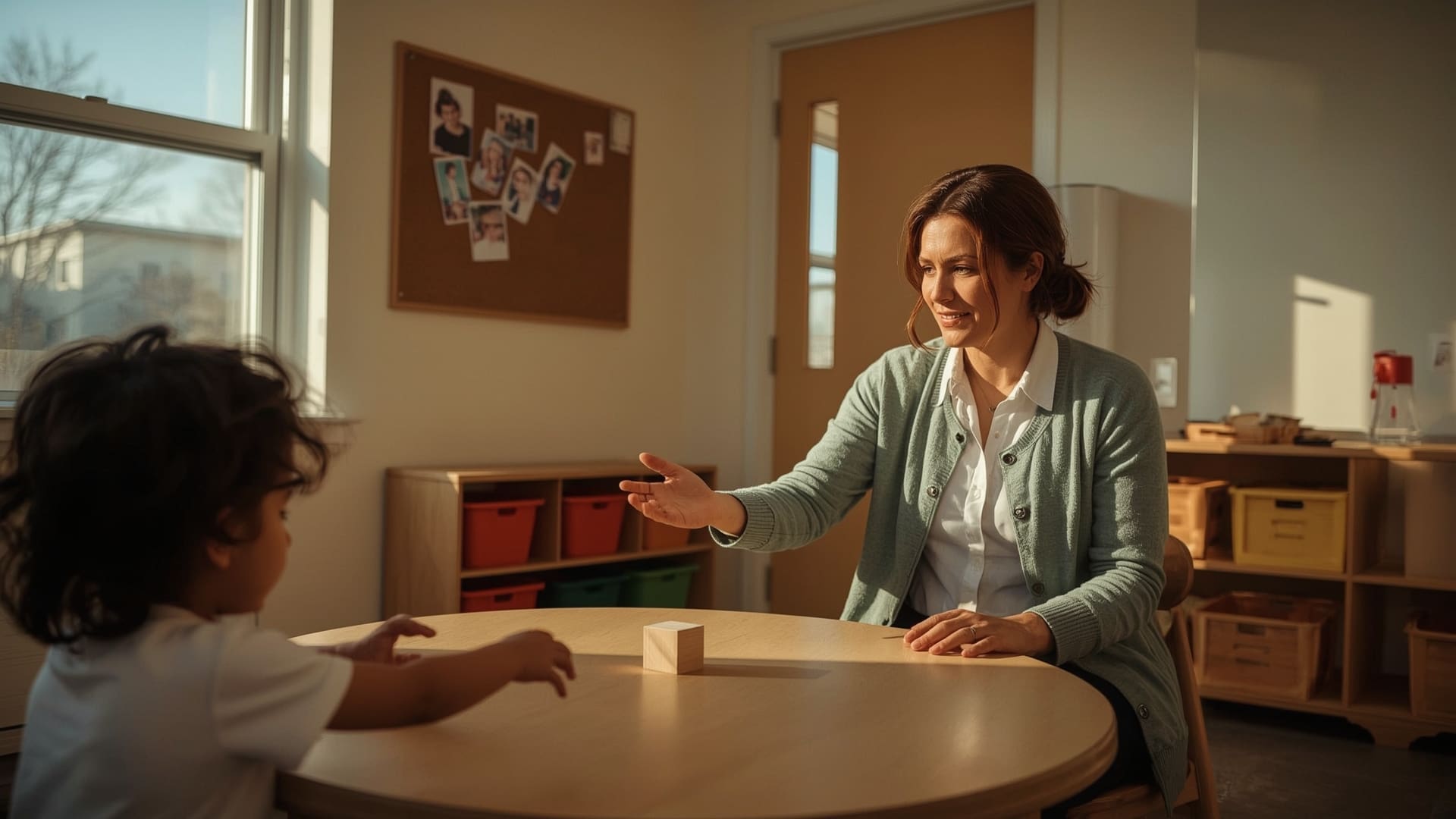
Quick Answer: Behaviors typically serve one of four functions: gaining attention from others, escaping or avoiding a task, accessing a tangible item or activity, or automatic reinforcement (sensory input the child finds rewarding on its own).
Understanding function is the entire point of an FBA. Once you know the function, you can teach a replacement behavior that meets the same need in a more appropriate way.
Attention
The child engages in behavior to get a reaction from others, whether that’s a parent, teacher, or peer. Even negative attention (redirection, scolding) can reinforce this function if the child wants social engagement.
Escape or Avoidance
The behavior allows the child to get out of or delay something they find aversive. This is one of the most common functions seen in school settings. A child who has a meltdown when asked to write may be escaping a task that’s frustrating or painful.
Access to Tangibles
The behavior results in the child getting something they want, like a preferred toy, food, or activity. This function is common with younger children and those with limited communication skills.
Automatic Reinforcement (Sensory)
The behavior produces its own internal reward, meaning no other person is needed to maintain it. Rocking, hand-flapping, or repetitive vocalizations often serve this function. The behavior itself feels good or calming to the child.
| Function | What the Child Gets | Common Example | Key Identifier |
|---|---|---|---|
| Attention | Social response from others | Yelling in class to get teacher’s reaction | Behavior increases when attention is withheld |
| Escape/Avoidance | Removal of a task or demand | Crying when asked to do homework | Behavior starts when demands are made |
| Access to Tangibles | Preferred item or activity | Grabbing a sibling’s tablet | Behavior starts when preferred item is unavailable |
| Automatic Reinforcement | Sensory input or internal reward | Repetitive rocking or humming | Behavior occurs even when alone |
Who Conducts a Functional Behavior Assessment?
Quick Answer: A Board Certified Behavior Analyst (BCBA) typically leads an FBA. In school settings, a licensed school psychologist or special education specialist may also conduct one. The BCBA designs the assessment, observes the child, and analyzes the collected data.
A BCBA holds graduate-level training in applied behavior analysis. They are trained specifically in behavioral assessment methods, data analysis, and intervention design. This makes them the most qualified professional to run a comprehensive FBA.
Registered Behavior Technicians (RBTs) and other team members may assist by collecting observational data. But the BCBA interprets that data and draws conclusions about behavioral function.
In public schools, the Individuals with Disabilities Education Act (IDEA) requires that a qualified professional conduct the FBA. Depending on the district, that could be a school psychologist, special education coordinator, or a contracted BCBA.
What Methods Are Used in a Functional Behavior Assessment?

Quick Answer: FBAs use three main methods: indirect assessment (interviews and rating scales), direct observation (watching the child in natural settings), and functional analysis (controlled experiments that test hypotheses about behavior function).
Most FBAs combine at least two methods. The more methods used, the more confidence a BCBA has in the identified function.
Indirect Assessment
This is the starting point. The BCBA interviews parents, teachers, and caregivers to gather background information. Common tools include:
- Functional Assessment Interview (FAI) — a structured interview covering the behavior, setting, triggers, and current responses
- Motivation Assessment Scale (MAS) — a 16-item rating scale that estimates behavioral function
- Problem Behavior Questionnaire (PBQ) — a 15-item tool focused on escape and attention functions
Indirect assessment is fast and low-cost. But it relies on recall, which can be inaccurate.
Direct Observation
The BCBA observes the child directly in the environments where the behavior occurs, like a classroom, home, or therapy clinic. They record ABC data in real time.
A common tool here is the Scatter Plot, which maps when and where behaviors happen across the day. This helps identify patterns tied to specific times, settings, or activities.
Functional Analysis
This is the most rigorous method. A functional analysis (FA) involves structured experiments where the BCBA systematically manipulates antecedents and consequences to test which function drives the behavior.
For example, an “attention condition” would involve the assessor ignoring the child to see if behavior increases when attention is withheld. If it does, attention is likely the function.
Functional analysis produces the clearest results. But it requires a trained clinician, a controlled environment, and more time, typically 2 to 5 hours of structured sessions.
| Method | Time Required | Who Participates | Reliability Level | Best Used When |
|---|---|---|---|---|
| Indirect Assessment | 30–90 minutes | Parents, teachers, caregivers | Moderate | Gathering context and history |
| Direct Observation | 2–6 hours across sessions | BCBA, child, natural environment | Moderate to High | Identifying triggers in real settings |
| Functional Analysis | 2–5+ hours structured sessions | BCBA, child, controlled environment | High | Confirming function before intensive intervention |
What Does the FBA Process Look Like Step by Step?
Quick Answer: An FBA follows five steps: define the target behavior, gather indirect information through interviews, observe the child directly, analyze data to form a hypothesis about function, and write a summary report that includes intervention recommendations.
Step 1: Define the Target Behavior
The BCBA writes an operational definition, a clear, observable, and measurable description of the behavior. Vague terms like “aggressive” get replaced with specific descriptions like “hits others with an open hand on the arm or back.”
This precision matters because different people may describe the same behavior differently. An operational definition ensures everyone is measuring the same thing.
Step 2: Gather Background Information
The BCBA interviews parents and teachers. They review records like previous evaluations, IEPs, and medical history. They also use standardized rating scales to form an initial hypothesis about function.
Step 3: Observe the Child Directly
The BCBA or a trained team member observes the child across multiple settings and times of day. They collect ABC data and may use a scatter plot to identify when the behavior is most frequent.
Step 4: Analyze the Data
The BCBA reviews all collected data and identifies patterns. They form a behavioral hypothesis, a statement that explains the function. Example: “When given a non-preferred academic task, Marcus engages in self-injurious behavior to escape the demand.”
Step 5: Write the FBA Report
The final report includes the operational definition, assessment methods used, data summary, behavioral hypothesis, and recommendations for intervention. This report becomes the foundation for the behavior intervention plan.
How Long Does a Functional Behavior Assessment Take?
Quick Answer: A full FBA typically takes 1 to 4 weeks from start to finish. Indirect interviews may take 1 to 2 hours. Direct observation adds 2 to 6 hours across multiple sessions. Report writing and team review add additional time.
The timeline depends on the complexity of the behavior and the number of settings involved. A child who shows the behavior only at school takes less time to assess than a child who shows different behaviors in multiple environments.
Urgent situations, like behaviors that pose a safety risk, often get prioritized. Some clinics and schools can complete an FBA within a week when needed.
| Phase | Time Estimate | Who Is Involved |
|---|---|---|
| Referral and intake review | 1–3 days | BCBA, administrative team |
| Indirect assessment (interviews, rating scales) | 1–2 hours per informant | BCBA, parents, teachers |
| Direct observation | 2–6 hours across 2–5 sessions | BCBA or trained observer |
| Functional analysis (if conducted) | 2–5+ hours structured sessions | BCBA, child |
| Data analysis and report writing | 3–7 days | BCBA |
| Team review and BIP development | 1–5 days | BCBA, parents, educators |
How Does an FBA Connect to a Behavior Intervention Plan?

Quick Answer: The FBA identifies the function of a behavior. The behavior intervention plan (BIP) uses that function to design specific strategies, including antecedent modifications, replacement behaviors, and consequence changes, to reduce the problem behavior and teach a better alternative.
A BIP built without an FBA is essentially guesswork. You might accidentally reinforce the behavior you’re trying to reduce.
For example: if a child throws a pencil to escape writing tasks, putting them in a timeout (removing them from the task) actually reinforces the escape function. The behavior worked. It will happen again.
A function-based BIP would instead modify the antecedent (break the task into smaller steps), teach a replacement behavior (asking for a break using a card or communication device), and change the consequence (breaks are earned through effort, not behavior).
Key Components of a Function-Based BIP
- Antecedent strategies — changes to the environment or task before the behavior can occur (visual schedules, task modifications, priming)
- Replacement behavior — a new skill that serves the same function as the problem behavior but is more appropriate
- Consequence strategies — planned responses to both the problem behavior and the replacement behavior
- Crisis response plan — steps for managing situations where the behavior poses an immediate safety risk
- Generalization plan — how the replacement behavior will be practiced across different settings and people
When Is a Functional Behavior Assessment Required?
Quick Answer: Under IDEA, schools must conduct an FBA when considering a change in placement for a student with a disability due to behavior, or when a suspension exceeds 10 consecutive days. Many ABA providers also require an FBA before starting intensive behavioral intervention.
Beyond legal requirements, an FBA is clinically appropriate any time a challenging behavior is:
- Occurring frequently enough to interfere with learning or daily functioning
- Putting the child or others at risk of physical harm
- Not responding to typical classroom management strategies
- The target of a new or revised behavior intervention plan
Most insurance providers that cover ABA therapy will require FBA documentation before authorizing intensive services. The FBA report serves as clinical justification for the level of care being recommended.
What Behaviors Does an FBA Typically Target?
Quick Answer: FBAs most commonly target self-injurious behavior, aggression, property destruction, elopement (running away), severe non-compliance, and disruptive behaviors that significantly affect learning or safety.
The behavior chosen for FBA is usually the one causing the most significant barrier to the child’s progress or safety. BCBAs prioritize behaviors using a combination of frequency (how often), intensity (how severe), and impact (what it blocks).
| Behavior | Most Common Functions | Common Antecedent |
|---|---|---|
| Self-injurious behavior (SIB) | Escape, automatic reinforcement | Demand presentation, unstructured time |
| Aggression (hitting, biting) | Attention, escape, access to tangibles | Peer interaction, non-preferred task, denied request |
| Property destruction | Escape, attention | Transition, academic demand |
| Elopement (running away) | Escape, automatic reinforcement | Crowded settings, non-preferred activities |
| Severe non-compliance | Escape, access to tangibles | Instruction delivery, denied preferred activity |
| Repetitive vocalizations | Automatic reinforcement, attention | Downtime, low stimulation environments |
What Are the Limitations of a Functional Behavior Assessment?

Quick Answer: FBAs can be limited by inaccurate informant recall, behaviors that don’t occur during observation, rapidly changing functions, and the complexity of behaviors with multiple functions. Even a thorough FBA may need to be revised as new data emerges.
No assessment is perfect. Even when conducted by an experienced BCBA, an FBA reflects a snapshot of behavior at a specific point in time. Behaviors change as children grow, as settings shift, and as reinforcement histories evolve.
A few important limitations to understand:
- Low-frequency behaviors may not occur during observation windows, making direct data collection difficult
- Multiple functions can make intervention design more complex, as some behaviors serve more than one purpose
- Setting-specific behavior may not generalize across environments, requiring separate data collection in each context
- Informant bias in interviews can skew indirect data if caregivers describe behavior inconsistently
This is why BCBAs treat the FBA as a living document. If the BIP isn’t working, the BCBA returns to the data and reassesses. An updated FBA may reveal a function that wasn’t identified in the original assessment.
How Does an FBA Differ From Other Behavioral Assessments?
Quick Answer: An FBA focuses specifically on the function and context of a challenging behavior. Other ABA assessments like the VB-MAPP or ABLLS-R measure skill levels and developmental progress. FBAs identify why a problem behavior occurs, not what skills are missing.
Parents often encounter multiple types of assessments in ABA therapy. Here’s how an FBA fits alongside other common tools:
- VB-MAPP (Verbal Behavior Milestones Assessment and Placement Program) — measures language and social milestones across 170 skill areas; used to build a skill-based curriculum
- ABLLS-R (Assessment of Basic Language and Learning Skills, Revised) — assesses 544 skills across 25 domains; guides individualized teaching programs
- AFLS (Assessment of Functional Living Skills) — measures independence in daily living skills like dressing, cooking, and community safety
- FBA — investigates the cause and maintaining conditions of a specific problem behavior; guides the behavior intervention plan
These assessments often work together. A BCBA may complete a VB-MAPP to understand a child’s communication level and an FBA to understand why the child is hitting. Both pieces of information shape the therapy plan.
Frequently Asked Questions About Functional Behavior Assessments
Can parents request a functional behavior assessment for their child?
Yes. Parents can request an FBA through their child’s school or ABA therapy provider. In the school setting, the request should be made in writing to the special education coordinator or principal. The school is required to respond to the request under IDEA.
Is an FBA the same as a functional analysis?
No, but a functional analysis is one method used within an FBA. An FBA is the overall assessment process. A functional analysis (FA) is a specific experimental procedure that tests hypotheses about behavior function. Not every FBA includes a functional analysis.
Does an FBA diagnose autism or other conditions?
No. An FBA does not diagnose any condition. It assesses the function of a specific behavior. Diagnoses like autism spectrum disorder are made by licensed psychologists, developmental pediatricians, or psychiatrists using separate diagnostic evaluations.
How often should an FBA be updated?
There is no fixed schedule, but most BCBAs recommend reviewing the FBA when a behavior intervention plan isn’t producing results, when the child’s environment changes significantly, or when new challenging behaviors emerge. Annual reviews are common practice in school IEP cycles.
Does insurance cover the cost of a functional behavior assessment?
Many insurance plans that cover ABA therapy will also cover an FBA as part of the initial assessment process. Coverage varies by plan and state. Some plans require prior authorization before the FBA can be conducted. Contact your insurance provider directly to confirm your specific benefits.
What happens after the FBA is completed?
The BCBA presents the findings to the family and care team, then uses the FBA report to develop or revise a behavior intervention plan. Therapy goals, teaching strategies, and staff training are all aligned to the identified function. Progress is monitored and the plan is adjusted as data comes in.