

If you suspect you or your child may be autistic, knowing how to get an autism diagnosis is the first step toward real support. The process can feel overwhelming, especially when you are not sure where to start or who to call. This guide walks you through every stage, from recognizing early signs to receiving a formal evaluation and understanding what happens next.
An autism diagnosis is not a label that limits someone. It is a key that unlocks the right therapies, school accommodations, insurance coverage, and community resources. Getting that diagnosis as early as possible gives children the best chance to thrive, and it gives adults answers they may have needed for years.
Ready to learn more? Explore how our team supports families through every stage with dedicated autism diagnosis support designed to guide you from first concerns to next steps.
What Autism Spectrum Disorder Actually Is
Autism spectrum disorder, often called ASD, is a neurodevelopmental condition that affects how a person communicates, interacts socially, and processes sensory information. The word “spectrum” matters because no two autistic people are exactly alike. One person may be nonverbal and need full-time support. Another may be highly verbal and hold a demanding job, yet still struggle with sensory overload or social cues.
ASD is not caused by parenting style, vaccines, or diet. Current research points to a combination of genetic and environmental factors that influence early brain development. Understanding what autism is helps you talk to doctors more clearly and advocate more effectively for the person you care about.
Early Signs That Prompt Most Families to Seek an Evaluation
Most families start the diagnosis journey because they notice something that feels different. For young children, the signs often appear before age three. For older children, teens, and adults, the signs may have been present all along but misunderstood or missed entirely.
Common signs in young children include delayed speech, little to no eye contact, not responding to their name, and repetitive movements like hand-flapping or rocking. Social play milestones, such as pointing to share interest or playing pretend, are often absent or delayed.
Autism symptoms in girls often look different from what clinicians historically expected. Girls are more likely to mask their difficulties by mimicking peers, which leads to later or missed diagnoses. Teens and adults may seek evaluation after recognizing patterns in themselves, such as lifelong difficulty with social rules, sensory sensitivities, or burnout from constant social effort.
Who Can Diagnose Autism

A formal autism diagnosis must come from a licensed professional with specific training in neurodevelopmental assessment. Knowing which type of provider to contact saves you time and avoids dead ends.
The professionals most qualified to diagnose ASD include:
- Developmental pediatricians: Physicians who specialize in child development and behavioral concerns. Often the first specialist families see.
- Child psychiatrists or psychologists: Mental health professionals trained to assess behavioral and cognitive patterns across the lifespan.
- Neuropsychologists: Specialists who administer in-depth cognitive and behavioral tests to build a detailed profile of strengths and challenges.
- Pediatric neurologists: Physicians who evaluate neurological conditions. They may co-evaluate when seizures or other neurological signs are present.
- Speech-language pathologists: They assess communication, but cannot issue a standalone autism diagnosis. They contribute important data to a multidisciplinary team evaluation.
Your child’s pediatrician is not typically the one who makes the formal diagnosis, but they are the right first call. They can rule out other causes, administer a brief screening tool, and give you a referral to the right specialist.
Step One: Start with Your Pediatrician or Primary Care Provider
The most practical first move is scheduling an appointment with your child’s pediatrician or your own primary care doctor. Come prepared with specific observations, not just a general worry. Write down the behaviors that concern you, when they started, how often they occur, and how they affect daily life.
At well-child visits, pediatricians routinely use a screening tool called the M-CHAT-R (Modified Checklist for Autism in Toddlers). This is not a diagnosis. It is a structured list of questions that flags risk. A positive screen means a full evaluation is recommended, not that autism is confirmed.
If your child is school age, the school district can also conduct an educational evaluation at no cost. This evaluation does not result in a medical diagnosis, but it can qualify your child for services under an Individualized Education Program, commonly called an IEP, while you pursue a clinical evaluation separately.
What Happens During a Full Autism Evaluation

A comprehensive autism evaluation involves multiple components completed over one or more sessions. The exact format depends on the provider, the age of the person being evaluated, and the complexity of their profile. Here is what most thorough evaluations include.
1. Developmental and Medical History Interview
The evaluator will ask detailed questions about prenatal history, birth, developmental milestones, medical conditions, family history, and current concerns. For a child, parents are the primary informants. For an adult, the individual is interviewed directly, and input from a parent or close family member is often requested if available.
2. Standardized Observation Tool
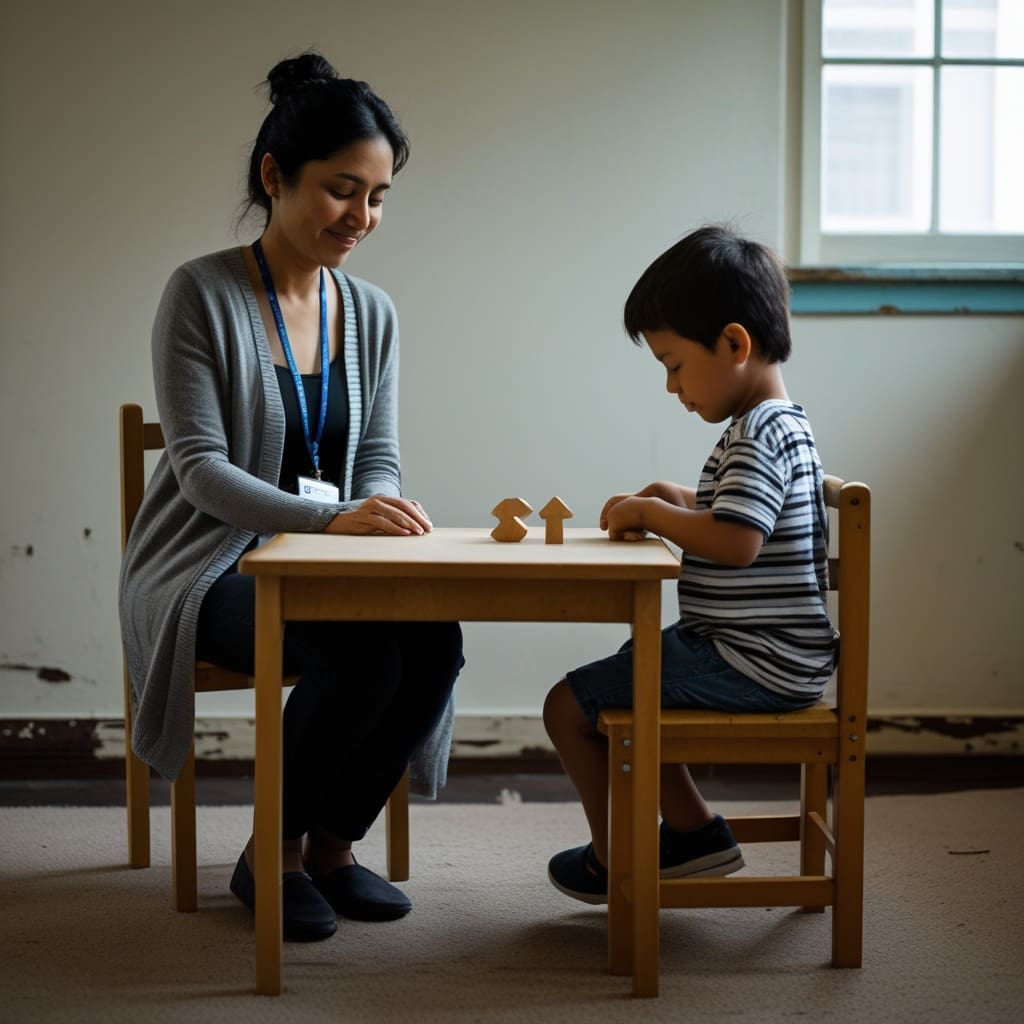
The most widely used autism-specific observation tool is the ADOS-2, or Autism Diagnostic Observation Schedule, Second Edition. The evaluator guides the individual through structured activities and semi-structured play or conversation designed to elicit social communication behaviors. The evaluator scores the responses against a standardized rubric.
3. Caregiver or Self-Report Rating Scales
Parents, teachers, or the individual themselves complete questionnaires about everyday behavior. The ADI-R, or Autism Diagnostic Interview-Revised, is a detailed caregiver interview that covers the same core domains as the ADOS-2 from a historical perspective.
4. Cognitive and Adaptive Functioning Assessments
Most evaluations include standardized testing of intellectual ability and adaptive behavior, meaning how a person manages daily tasks like dressing, communicating, and following routines. These scores help identify co-occurring conditions and inform recommendations for support intensity.
5. Speech and Language Assessment
Because communication is central to an autism diagnosis, a speech-language evaluation is often part of the package, especially for children. The assessment covers both verbal and nonverbal communication skills.
How Long the Diagnostic Process Takes
Families are often surprised by the timeline. The evaluation appointment itself may take anywhere from two hours to a full day, spread across multiple sessions. Waiting for that appointment is typically the longest part of the process.
In many parts of Florida and across the country, wait times for a developmental pediatrician or neuropsychologist range from several weeks to over a year, depending on the provider and your location. Families in areas like Key Largo and the surrounding Florida Keys often face additional challenges due to the limited number of specialists in rural and semi-rural communities.
Ways to reduce waiting time include:
- Ask your pediatrician for multiple referrals and contact all of them simultaneously.
- Ask to be placed on a cancellation list.
- Look into telehealth evaluation options, which have expanded access significantly in recent years.
- Contact university training clinics, which often have shorter wait times and lower fees.
- Check whether your state’s early intervention program (for children under three) can fast-track an evaluation.
What to Do After Receiving a Diagnosis
A diagnosis is the beginning of a path, not the end of a conversation. Once you have a formal report in hand, several important steps follow.
First, read the full evaluation report carefully. It will include a summary of findings, the diagnostic conclusion, scores from each assessment, and specific recommendations for therapy, school supports, and follow-up care. These recommendations are your roadmap.
Second, share the report with your child’s school if applicable. Schools are legally required to consider outside evaluations and must hold an eligibility meeting within a defined timeline. Bring a copy to every IEP or 504 Plan meeting.
Third, begin connecting with therapy providers. Applied behavior analysis, commonly called ABA therapy, is one of the most researched and widely covered interventions for autism. Speech therapy, occupational therapy, and social skills training are also commonly recommended, depending on the individual’s profile. Learning about social skills therapy for autism helps families understand how these services build on each other over time.
Understanding the Role of ABA Therapy After Diagnosis
ABA therapy, or Applied Behavior Analysis, is a structured approach that uses principles of learning science to build communication, daily living, and social skills while reducing behaviors that interfere with learning. It is often the first recommendation clinicians make for young children with a new autism diagnosis.
ABA is delivered in different formats: center-based, in-home, or in the school setting. Intensity varies from a few hours per week to full-day programs, based on the individual’s needs and the recommendations in the evaluation report. Insurance coverage for ABA has improved significantly in Florida and most other states, making it more accessible than it was a decade ago.
ABA therapy works best when it is individualized and targets goals the family actually cares about, such as toilet training, reducing meltdowns, building play skills, or improving communication. A board-certified behavior analyst, known as a BCBA, designs and oversees the program.
How Insurance and Costs Work for Autism Evaluations
The cost of a comprehensive autism evaluation varies widely depending on the provider type, the number of assessments included, and your insurance plan. Neuropsychological evaluations from private providers tend to be the most expensive, while hospital-based programs and university clinics are often more affordable.
Most major insurance plans in Florida are required to cover autism evaluations under state and federal law. Check your specific plan for requirements around referrals, in-network providers, and prior authorization. When you call your insurance company, ask specifically whether autism diagnostic testing is a covered benefit and what documentation they need from your doctor to process the claim.
If you do not have insurance or your plan does not cover the evaluation, consider these options:
- Medicaid: Florida Medicaid covers autism evaluations and many therapies for eligible children and adults.
- Florida’s Agency for Persons with Disabilities (APD): Provides funding and services for individuals with developmental disabilities, including autism.
- Children’s Special Health Care program: A state program that may help cover costs for children with complex health needs.
- Sliding-scale clinics: Some nonprofits and university programs offer evaluations on a sliding fee scale based on income.
Common Reasons Diagnoses Get Delayed or Missed
Even when a family has real concerns, the path to a diagnosis can stall for reasons that have nothing to do with the child’s actual profile. Knowing these pitfalls helps you push past them.
One frequent barrier is the “wait and see” approach. Some pediatricians advise families to give a child more time before pursuing evaluation. While some developmental variation is normal, autism-specific concerns should not be dismissed without a proper screening. If you feel your concerns are not being heard, you have every right to ask for a referral or seek a second opinion.
Gender bias in diagnosis is another well-documented issue. Because early autism research focused heavily on males, the diagnostic criteria and many evaluator assumptions were shaped by male presentations. This is a core reason why autism symptoms in girls are missed at higher rates and why many women do not receive a diagnosis until adulthood.
Co-occurring conditions can also cloud the picture. Anxiety, ADHD, OCD, and sensory processing difficulties all overlap with autism. A provider who is not thoroughly trained in ASD may attribute the symptoms to one of those conditions and stop there. A skilled evaluator considers all possibilities and weighs them systematically.
Getting an Autism Diagnosis as an Adult

Adults seeking an autism diagnosis for the first time face a unique set of challenges. Many grew up before ASD was widely understood, or they presented in ways that were not recognized as autism at the time. Signs of autism in adults, such as chronic social exhaustion, rigid routines, intense focused interests, and sensory sensitivities, are often misattributed to personality quirks or anxiety disorders.
For adults, the diagnostic process is similar in structure but adapted in delivery. The ADOS-2 has an adult module. The developmental history portion relies on self-report and, when possible, input from a parent or sibling who knew you as a child. School records, old report cards, and childhood photos can all serve as supporting documentation.
A late diagnosis often brings a mix of relief and grief. Relief because the pieces finally fit together. Grief because support that could have helped was not available earlier. Both responses are valid and common. Connecting with a therapist who understands autism in adults is a valuable next step alongside any formal services.
Final Thoughts on How to Get an Autism Diagnosis
Pursuing an autism diagnosis is an act of advocacy, whether you are doing it for your child or for yourself. The process takes time and persistence, but the clarity it brings is worth it. A formal diagnosis opens doors to services, accommodations, and a community of people who understand what autism actually feels like from the inside.
Start with your doctor, gather your observations, and push for a full evaluation with a qualified specialist. Once you have a diagnosis in hand, build a support team that includes therapists, educators, and behavior specialists who take an individualized approach. The right support, at the right time, makes a meaningful difference in quality of life at every age.
Frequently Asked Questions About How to Get an Autism Diagnosis
At what age can a child be diagnosed with autism?
Autism can be reliably diagnosed as early as 18 to 24 months by an experienced clinician. Many children are not diagnosed until age three or older, often because earlier concerns were not flagged or evaluated. Early diagnosis is associated with better outcomes because it allows intervention to begin sooner during a critical window of brain development.
Can a pediatrician diagnose autism, or do I need a specialist?
A general pediatrician can conduct a developmental screening, but a formal autism diagnosis requires a specialist such as a developmental pediatrician, child psychologist, or neuropsychologist. Some pediatricians with extra training in developmental issues do make diagnoses, but most will refer you to a specialist for a comprehensive evaluation.
How much does an autism evaluation cost without insurance?
Costs vary widely. Private neuropsychological evaluations can range from several hundred to several thousand dollars depending on the depth of testing and the provider’s location. University clinics, hospital programs, and nonprofit providers typically charge less. Florida Medicaid and the state’s early intervention system cover evaluation costs for eligible individuals, so checking your coverage first is always worthwhile.
What if the evaluation says my child does not have autism but I still have concerns?
A negative evaluation result does not mean your concerns are wrong. It means the evaluator did not find enough evidence for an autism diagnosis at that time. If concerns persist, you can seek a second evaluation from a different provider, particularly one who specializes in complex or atypical presentations. Keep documenting your observations and bring that record to the next evaluation.
Does an autism diagnosis affect my child’s ability to get insurance or other services later in life?
A diagnosis should not negatively affect your child’s access to services or insurance coverage. In fact, it generally expands access. Federal law prohibits insurers from denying coverage based on pre-existing conditions. In Florida, state law requires insurance plans to cover autism diagnosis and treatment. The diagnosis is a tool for accessing the right support, not a barrier to opportunity.