


Many adults spend years feeling like they process the world differently than the people around them. Social interactions feel exhausting, routines feel essential, and conversations seem to follow unwritten rules that no one ever explained. If this sounds familiar, you may be wondering how to get diagnosed with autism as an adult and what that process actually looks like.
A formal diagnosis is not just a label. It gives you a framework to understand your own mind, access the right support, and stop blaming yourself for differences that were neurological all along. This guide walks you through every step, from recognizing the signs to sitting across from an evaluator and getting your results.
Ready to learn more? Explore our autism diagnosis support services to find out how we can guide you through every stage of the evaluation process.
Why Adults Seek an Autism Diagnosis Later in Life
Autism spectrum disorder (ASD) was historically under-identified in adults, especially in women, people of color, and those with average or above-average intelligence. Many people developed strong coping strategies in childhood that masked their differences well enough to go undetected. They passed through school, held jobs, and built relationships, but at a significant personal cost.
The push toward a diagnosis often comes from a specific life event. A child gets diagnosed, and the parent recognizes themselves in the description. A therapist raises the possibility during treatment for anxiety or depression. A social media post or documentary clicks something into place. At whatever age it happens, the decision to seek answers is valid and often life-changing.
Recognizing the Signs That Prompt Adults to Seek Evaluation

Before you schedule anything, it helps to understand what characteristics evaluators look for in adults. Autism presents differently across individuals, and adult presentations often look distinct from what you see described in children.
Common patterns that prompt adults to seek evaluation include:
- Difficulty reading facial expressions, tone of voice, or unspoken social rules
- Strong preference for routines and significant distress when those routines are disrupted
- Sensory sensitivities to sounds, textures, lights, or crowds
- Deep, focused interests that occupy large amounts of time and attention
- Social exhaustion or the need to rehearse conversations before having them
- A history of feeling fundamentally different from peers, even without knowing why
- Challenges with executive function, including planning, switching tasks, and managing time
No single trait confirms autism. Evaluators look at the full pattern across your lifetime, not just current behavior.
Understanding What the Diagnostic Process Actually Involves
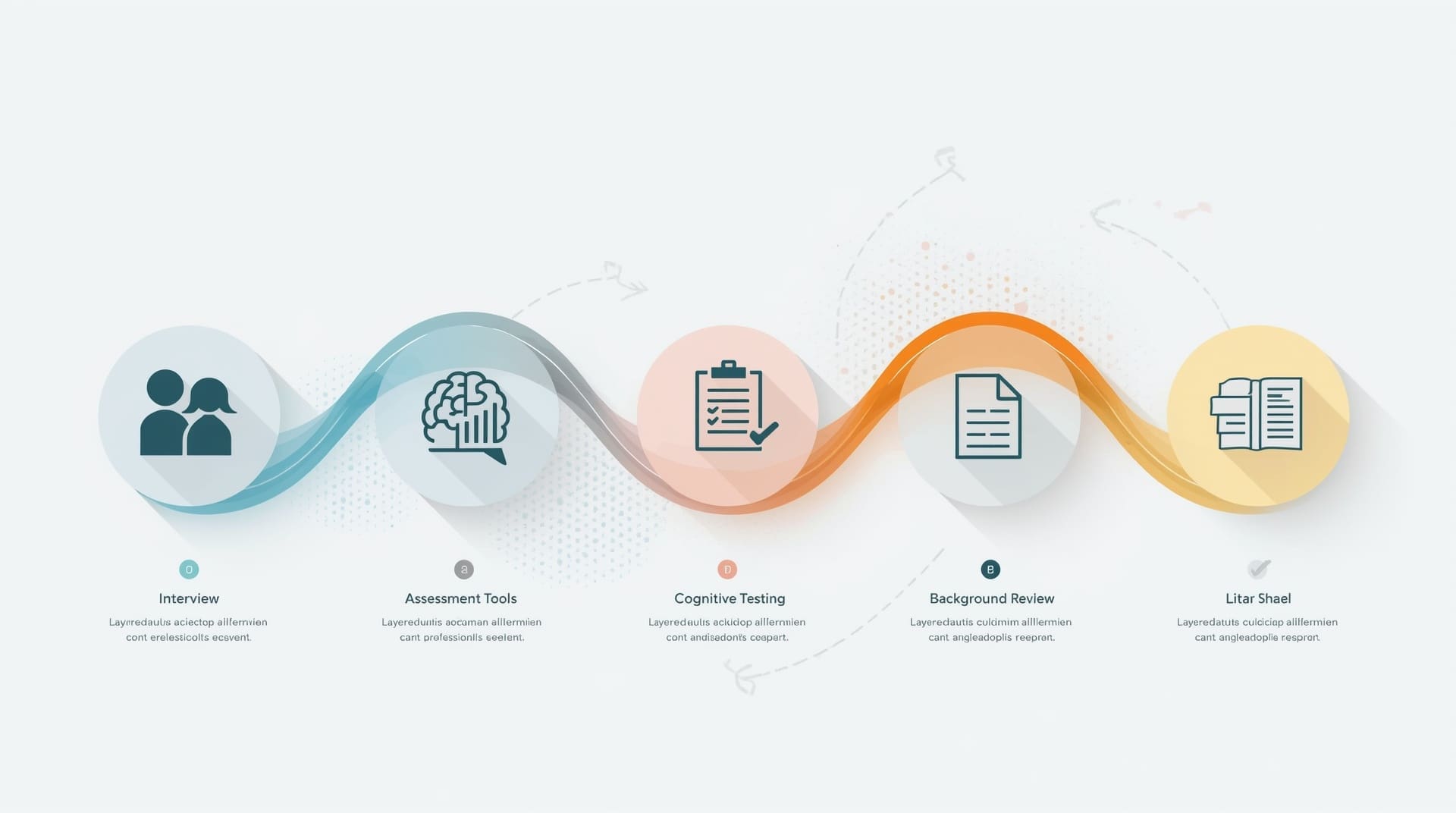
Adult autism evaluation is a structured clinical process. It is not a single appointment or a quick questionnaire. Understanding the components helps you prepare and reduces the anxiety that often comes with the unknown.
Clinical Interview
The evaluator will spend significant time talking with you about your developmental history, social experiences, sensory responses, communication style, and daily functioning. This interview often covers childhood in detail, so gathering old school records, report cards, or memories from family members beforehand can be useful.
Standardized Assessment Tools
Evaluators use validated instruments designed for adults. The ADOS-2 (Autism Diagnostic Observation Schedule, Second Edition) is the gold-standard observational tool. It involves structured activities and conversation while the clinician observes specific social and communication behaviors. The ADI-R (Autism Diagnostic Interview, Revised) may also be used if a caregiver or parent is available to provide childhood history.
Cognitive and Psychological Testing
Many evaluators include cognitive testing to assess IQ, processing speed, working memory, and executive function. This helps build a complete picture and rules out other explanations for the challenges you are experiencing. A full psychological evaluation may also screen for co-occurring conditions like ADHD, anxiety, or depression.
Review of Background Information
The evaluator may ask for school records, medical history, or any prior psychological evaluations. If family members are available and willing, a structured interview with a parent or sibling about your childhood behavior adds valuable historical data.
Who Can Diagnose Autism in Adults
Not every mental health professional is qualified to diagnose ASD in adults. The evaluation requires specific training and experience with autism across the lifespan. Knowing who to look for saves you time and prevents a frustrating dead end.
Qualified evaluators typically include:
- Neuropsychologists: Specialists in brain-behavior relationships who conduct comprehensive testing batteries.
- Psychologists with autism specialty: Licensed clinical or counseling psychologists who focus specifically on autism evaluations.
- Psychiatrists: Medical doctors who can diagnose ASD and also assess and prescribe for co-occurring conditions.
- Developmental pediatricians: Less common for adults, but some see patients across the lifespan.
A general practitioner or therapist cannot provide a formal ASD diagnosis, but they can provide a referral and document their clinical observations, which supports your case when you reach the evaluator.
How to Start the Process: Your First Practical Steps
Knowing you want an evaluation and knowing how to start are two different things. The process can feel overwhelming, but breaking it into concrete steps makes it manageable.
1. Talk to Your Primary Care Provider First
Your primary care doctor is the easiest first contact. Describe your concerns clearly. Ask for a referral to a psychologist or neuropsychologist with experience evaluating adults for autism. A formal referral often helps with insurance coverage and gives you a clinical entry point.
2. Contact Your Insurance Provider
Before booking an evaluation, call the member services number on your insurance card. Ask which providers in your network are covered for psychological or neuropsychological evaluation. Ask specifically whether autism evaluation in adults is a covered benefit under your plan. Get the answers in writing or note the date, time, and representative name if you call.
3. Research Providers Independently
Search for neuropsychologists or psychologists who list adult autism evaluation as a specific service. Many practitioners only evaluate children, so this step is important. Psychology Today’s provider directory and your state’s psychological association website are useful starting points. Look for providers who mention the ADOS-2 or adult-specific assessment tools in their practice description.
4. Prepare Your Personal History
Before your first appointment, write down specific memories and examples from your life that relate to social differences, sensory experiences, and routines. The more concrete your examples, the more useful they are to the evaluator. Think in decades: childhood, adolescence, early adulthood, and now.
What to Expect During and After the Evaluation
Adult autism evaluations typically span one to three appointments, depending on the thoroughness of the assessment. Each session may last two to four hours. Most people find the process tiring, especially the structured social observation component.
After the evaluation is complete, the clinician will analyze the results and write a comprehensive report. This report includes the diagnostic conclusion, supporting evidence, cognitive and psychological findings, and recommendations. You will receive both a verbal feedback session and a written report.
If the diagnosis is confirmed, the report becomes a formal document you can use with employers under the Americans with Disabilities Act, with educational institutions, and with insurance providers to access ongoing support services. If the diagnosis is not confirmed, the report still provides valuable information about your cognitive profile and recommendations for support.
Common Barriers Adults Face When Seeking Diagnosis
Understanding the obstacles ahead of time helps you navigate them more effectively. Several barriers come up repeatedly for adults pursuing an autism evaluation.
| Barrier | Why It Happens | How to Address It |
|---|---|---|
| Cost of evaluation | Comprehensive evaluations can be expensive, especially out of pocket | Verify insurance coverage first; ask about sliding-scale fees |
| Limited adult-focused evaluators | Many clinicians specialize in children only | Search specifically for adult autism evaluation as a listed service |
| Skepticism from providers | Some clinicians still underestimate adult presentations of ASD | Seek a second opinion if you feel dismissed; bring specific examples |
| Long wait times | Qualified evaluators often have months-long waitlists | Get on multiple waitlists simultaneously; ask about cancellation slots |
| Fear of stigma | Concern about how others will view the diagnosis | You control who knows; a diagnosis does not change who you are |
How Masking Affects the Adult Diagnostic Process
Masking refers to the conscious or unconscious process of suppressing autistic traits to fit into social environments. Many adults, particularly women and people who were high-functioning in academic settings, became skilled at masking early in life. This creates a genuine diagnostic challenge.
During evaluation, a highly masked individual may appear socially comfortable even when they are not. Evaluators trained in adult presentations know to look past surface behavior and probe for the underlying cognitive and sensory patterns. Being honest about the effort you put into social situations, rather than presenting your best performance, gives the evaluator a more accurate picture.
If you have learned to mirror other people’s expressions, rehearse conversations in advance, or exhaustively analyze social interactions afterward, share those specifics. These masking behaviors are clinically significant and part of the diagnostic picture for autism in adults, which is what late diagnosis looks like in practice.
What Comes After a Diagnosis: Support Options for Autistic Adults
A diagnosis is a starting point, not an ending point. Once you have your report, a range of support options becomes available that were either unavailable or less accessible before.
Therapy and Skills Development
Many autistic adults benefit from therapy approaches tailored to their specific challenges. Cognitive behavioral therapy adapted for autism can address anxiety, rigid thinking patterns, and emotional regulation. Social skills therapy for autism focuses on building confidence in social situations without erasing your natural communication style. Occupational therapy helps with sensory processing and daily living skills.
Workplace and Educational Accommodations
Your diagnostic report is the foundation for requesting formal accommodations. In the workplace, this might mean a quieter workspace, written instructions instead of verbal-only ones, or flexible scheduling. In educational settings, extended time on tests, note-taking support, and reduced sensory load are common accommodations.
Community and Peer Support
Connecting with other autistic adults often provides a kind of relief that professional support alone cannot. Online communities, local support groups, and autistic-led organizations offer genuine peer understanding. Many people describe the period following diagnosis as one of significant identity re-framing, and community connection supports that process.
Telehealth and Remote Evaluation Options
Geographic access has historically been a major barrier to adult autism evaluation. Rural areas and smaller communities often have very few specialists. Telehealth has changed this significantly. Many components of a comprehensive evaluation can now be completed remotely, including the clinical interview, self-report measures, and the feedback session.
Some assessment tools, including portions of the ADOS-2, require in-person administration. However, a hybrid model, where the interview and most testing happen remotely and only the in-person observational component requires a visit, is increasingly common. For adults in areas like the Florida Keys, telehealth options expand access to specialists who might otherwise be hours away.
When evaluating a telehealth provider, confirm that they use standardized tools, provide a full written report, and have specific experience with adult evaluations rather than child-focused practice adapted for adults.
Preparing Yourself Emotionally for the Evaluation

The emotional side of seeking a diagnosis often gets overlooked in how-to guides. Many adults report a mix of relief, grief, and identity confusion as they move through the process. Understanding this in advance helps you manage it more effectively.
Relief is common even before you have your results. Simply having language for lifelong experiences is validating. Grief can follow as people process years of struggling without explanation or appropriate support. Some people also grieve the fact that earlier diagnosis might have changed their educational or social trajectory.
These are normal responses. If you have an existing therapist, loop them in before and after the evaluation. If you do not, this is a reasonable time to start. The diagnosis is the beginning of a new chapter, not a verdict on the past.
Final Thoughts on Getting Diagnosed with Autism as an Adult
Learning how to get diagnosed with autism as an adult is the first concrete step toward understanding yourself on a deeper level. The process takes time and requires persistence, but the clarity it provides is worth the effort. You are not starting over. You are adding context to a life you have already been living.
Whether you are just beginning to consider this possibility or are ready to book your first appointment, the path forward is clearer than it probably feels right now. Start with one step, whether that is talking to your doctor, checking your insurance, or researching local evaluators. Momentum builds from there.
Frequently Asked Questions About Getting Diagnosed with Autism as an Adult
Can you get an autism diagnosis as an adult if you were never flagged as a child?
Yes. Many adults receive a first-time autism diagnosis with no prior childhood evaluation. Evaluators are trained to assess current presentation alongside historical patterns. The absence of a childhood diagnosis does not disqualify you, and it is extremely common in adults who masked effectively or grew up before autism was broadly understood.
How long does the adult autism evaluation process take?
The evaluation itself typically spans one to three sessions totaling four to eight hours of clinical time. Receiving the written report often takes two to four weeks after the final session. Waiting to get your first appointment is often the longest part of the timeline, sometimes several months depending on local availability.
Will my health insurance cover an adult autism evaluation?
Coverage varies widely by plan and state. Some insurance plans cover psychological and neuropsychological evaluation fully or partially. Others may require a referral, a prior authorization, or specific diagnostic codes. Call your insurer before booking and ask whether autism evaluation in adults is a covered benefit under your specific policy.
What happens if the evaluation concludes I do not have autism?
A comprehensive evaluation that rules out autism still gives you valuable information. The clinician may identify ADHD, sensory processing differences, anxiety disorders, or other conditions that explain your experiences. You also receive a cognitive profile that highlights your strengths and challenges regardless of whether autism is the diagnosis. This information is useful on its own terms.
Is it worth getting diagnosed with autism as an adult if I have already built a life without a diagnosis?
Many adults who receive a late diagnosis describe it as one of the most meaningful experiences of their lives. It reframes decades of self-blame into neurological context. It opens access to accommodations, targeted support, and community. Even adults who feel they have adapted well often find that a diagnosis helps them make more deliberate choices about how they structure their lives and where they direct their energy.