

Mild autism characteristics can be easy to miss. A child might seem a little quirky, overly sensitive, or slow to make friends, but nothing stands out as an obvious red flag. That is exactly why so many families go years without a clear answer for what they are observing.
These subtle signs are real, and they matter. Mild autism, now formally classified as Level 1 ASD (Autism Spectrum Disorder), means a person needs some support but can often manage daily life without full-time assistance. Recognizing the signs early gives your child a much better shot at getting the right help at the right time.
Ready to learn more? Explore how our team can help through autism diagnosis support tailored to your child’s specific needs.
What Mild Autism Actually Means
The term “mild autism” is not an official diagnosis. Clinicians use the DSM-5 framework, which groups all autism diagnoses under a single label: Autism Spectrum Disorder. Within that label, support levels range from Level 1 (least support needed) to Level 3 (most support needed).
Level 1 ASD traits are the ones most likely to fly under the radar. A child at this level usually has functional language and can handle school, but still struggles in specific areas. Social interaction, sensory sensitivity, and rigid thinking are the most common challenge zones. The difficulty is that these struggles often look like personality quirks rather than a developmental difference.
Parents sometimes hear phrases like “he’s just shy” or “she’s a picky eater” for years before anyone connects the dots. Understanding the actual profile of Level 1 ASD helps you ask better questions and seek the right evaluations sooner.
The Social Challenges That Look Like Shyness
One of the most consistent mild autism characteristics is difficulty with social interaction, but it rarely looks dramatic. Your child may want friends yet struggle to keep them. They might start a conversation fine but then talk only about their favorite topic without noticing the other person has tuned out.
Watch for these subtle signs in social settings:
- Difficulty reading facial expressions or body language
- Missing the unspoken rules of group play or conversation
- Taking jokes or figures of speech too literally
- Responding to questions in a way that feels slightly off-topic or too formal
- Preferring to play alongside peers rather than with them
These patterns show up most clearly at school, on sports teams, or during unstructured social time. A child may do fine in one-on-one situations but fall apart in groups. That inconsistency is itself a clue worth noting.
Repetitive Behaviors and Restricted Interests in Everyday Life
Repetitive behaviors and intensely focused interests are core level 1 ASD traits, but they often look like passion or habit rather than a clinical feature. Your child might know everything about one specific topic, such as train schedules, dinosaurs, or a particular video game franchise, and struggle to talk about anything else.
Repetitive behaviors can also be physical. Mild versions include tapping fingers in patterns, rearranging objects, or needing to follow exact routines. A child might insist on eating the same breakfast every day or become very upset if a familiar route to school changes unexpectedly.
These behaviors serve a purpose for the child. They reduce anxiety and provide a sense of control. The key question is whether the behavior limits daily functioning or causes significant distress when disrupted. If the answer is yes, that is a signal worth bringing to a professional.
Sensory Sensitivities That Parents Frequently Overlook

Sensory processing differences are one of the most underrecognized mild autism characteristics. Your child’s nervous system may respond much more intensely to sights, sounds, textures, or smells than most people do. This is not being dramatic; it is a real neurological difference.
Common examples include:
- Refusing to wear certain fabrics or clothes with tags
- Covering ears in noisy places like cafeterias or gyms
- Extreme pickiness around food textures rather than flavors
- Being bothered by lights that others do not notice, especially fluorescent lighting
- Avoiding physical contact like hugs or handshakes
Some children are sensory seeking rather than sensory avoiding. They may crash into furniture, chew on non-food items, or constantly touch people and objects. Both patterns fall under the same category of sensory processing differences.
Communication Patterns That Are Easy to Misread
Children with Level 1 ASD usually have solid language skills. They can hold a conversation, answer questions, and follow verbal instructions. That language ability is exactly why the communication differences get missed.
The challenges show up in more nuanced ways. A child might use very formal or advanced vocabulary but miss the emotional tone of a conversation. They may struggle to initiate small talk, stay on topic, or wrap up a conversation naturally. Sarcasm and humor that rely on tone of voice often go over their head entirely.
Nonverbal communication is another area worth watching. Limited eye contact, flat facial expressions, or gestures that do not match the words being spoken are subtle signs that something more is going on. These differences can cause real friction in friendships and classroom relationships over time.
Emotional Regulation Difficulties Behind Everyday Meltdowns
A child with mild autism may seem emotionally intense or unpredictable. They might have a full meltdown over something that appears minor, such as losing a game, a change in plans, or a loud unexpected noise. This is not a behavior problem. It is a sign that the child’s brain processes stress differently.
Emotional regulation, the ability to manage feelings and calm down after being upset, is harder for children on the spectrum. They may not have the same internal tools that other children develop naturally through social experience. The result is reactions that seem out of proportion to the situation.
Parents often describe these children as “all or nothing” in their emotional responses. Understanding that the root cause is neurological rather than behavioral changes the approach to support significantly. Strategies that work for neurotypical children, meaning children whose brains develop in the typical way, may not work here.
Executive Function Struggles That Show Up at School
Executive function refers to a group of mental skills that help with planning, organization, time management, and task switching. Children with Level 1 ASD often have uneven executive function profiles. They may excel at memorizing facts but struggle to organize a multi-step assignment or transition between activities.
These challenges can look like laziness or defiance to teachers and parents who do not know what to look for. Common patterns include:
- Losing materials or forgetting homework despite trying hard
- Needing much more time than peers to start or switch tasks
- Difficulty breaking a large project into smaller steps
- Struggling with open-ended assignments that lack clear structure
- Getting overwhelmed or shutting down when plans change suddenly
Strong memory or verbal skills can mask these weaknesses for years, especially in the early grades. The gap often becomes visible in middle school, when assignments become more complex and self-management is expected.
How Social Skills Therapy Supports Children With Level 1 ASD
Identifying mild autism characteristics is the first step. The next step is connecting your child with targeted support. Social skills therapy for autism focuses on the exact areas where children with Level 1 ASD tend to struggle most: reading social cues, joining conversations, managing conflict, and maintaining friendships.
These skills do not come automatically for children with ASD, but they can absolutely be learned. Structured, consistent practice with a trained therapist makes a measurable difference over time. Group formats are especially effective because they allow children to practice in a safe, guided setting with real peers.
ABA therapy, or Applied Behavior Analysis, is another evidence-based approach that many families in South Florida and the Florida Keys use. It breaks social and communication skills into small, learnable steps and uses positive reinforcement to build them systematically. Many children with Level 1 ASD make significant progress with relatively modest therapy hours per week.
How Mild Autism Looks Different in Girls
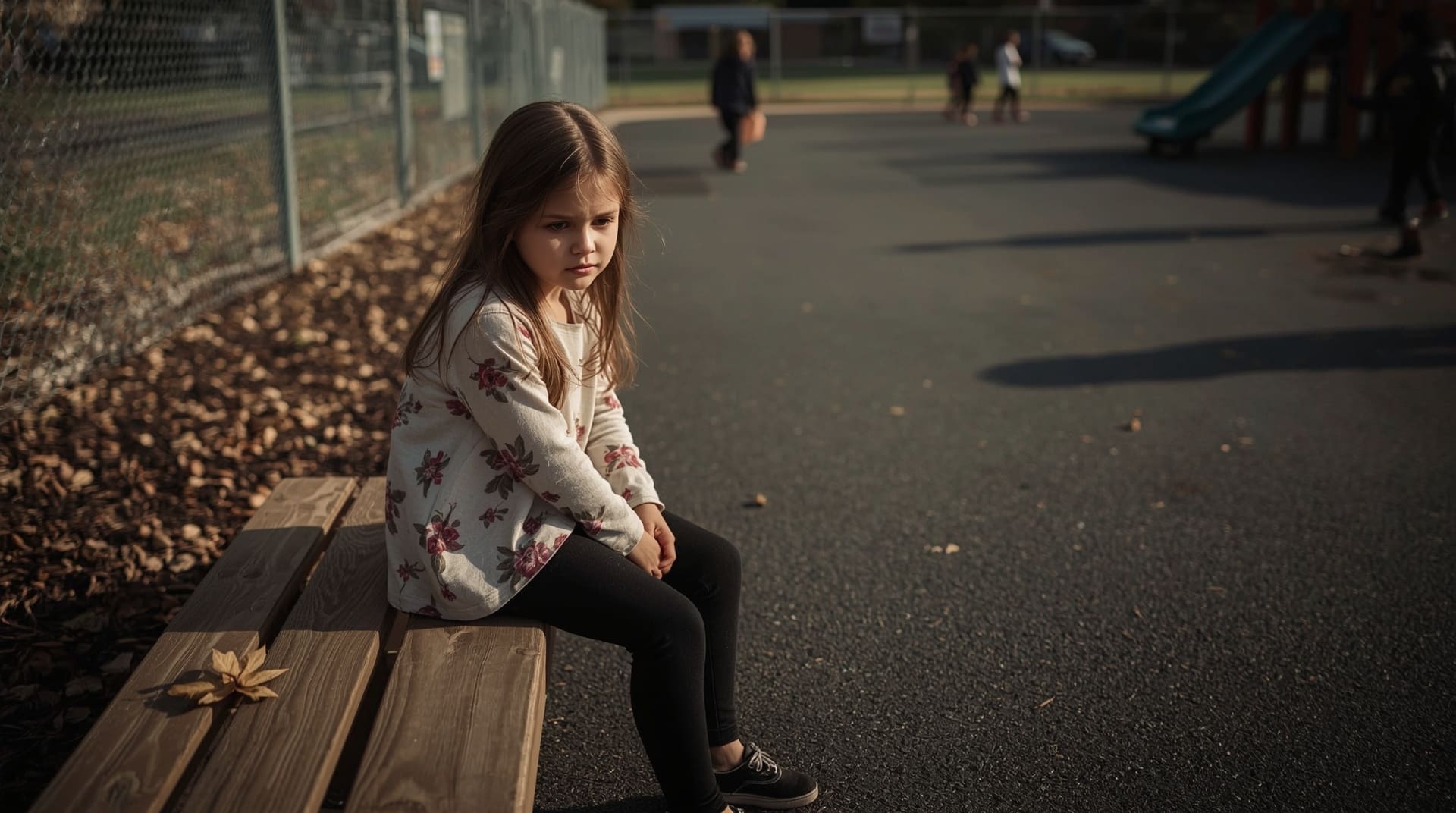
Girls with Level 1 ASD are diagnosed far less often than boys, and the gap is not because autism is rarer in girls. It is because the presentation is often different. Girls tend to be better at masking, which means they copy the social behavior of peers to fit in, even when it takes enormous effort.
A girl with mild autism may appear social and connected on the surface. She might have a close group of friends and perform well academically. The internal struggle, such as the anxiety, the exhaustion from masking, and the confusion around social rules, stays hidden. Parents and teachers often do not suspect anything until the child begins to break down at home or develops anxiety or depression in adolescence.
If your daughter is emotionally exhausted after school, has intense interests that feel unusual for her age, or struggles more with friendships than her grades would suggest, those patterns are worth exploring with a specialist. Early identification and support make a real difference, regardless of gender.
The Difference Between Mild Autism and Other Diagnoses
Several conditions share overlapping features with Level 1 ASD. ADHD (Attention-Deficit/Hyperactivity Disorder), anxiety disorders, and sensory processing disorder all produce some of the same behaviors. That overlap is one reason accurate diagnosis requires a comprehensive evaluation rather than a checklist.
| Feature | Level 1 ASD | ADHD | Anxiety Disorder |
|---|---|---|---|
| Social difficulty | Core feature | Secondary to attention | Fear-driven |
| Repetitive behavior | Core feature | Rare | Possible in OCD subtype |
| Sensory sensitivity | Very common | Can occur | Can occur |
| Language development | Typically on time | Typically on time | Typically on time |
| Response to routine | Strong need | Often resists routine | May prefer routine |
It is also worth knowing that ASD and ADHD frequently co-occur. A child can have both. A thorough evaluation by a psychologist or developmental pediatrician can sort out what is driving which behavior and lead to a more accurate treatment plan.
When to Seek a Professional Evaluation
You do not need to wait for a crisis to seek an evaluation. If you have been noticing a pattern of subtle signs for several months and something still feels off, trust that instinct. You know your child better than any checklist does.
Specific situations that warrant a professional evaluation include:
- Your child wants friends but consistently struggles to make or keep them
- Meltdowns or anxiety seem disproportionate and frequent
- Your child has very intense, narrow interests that dominate most of their time
- Teachers have raised concerns more than once, even vague ones
- Your child seems exhausted or distressed after school every day
- Sensory issues are limiting participation in daily activities
Families in the Florida Keys and across South Florida have access to professionals who specialize in autism evaluations. In Key Largo and surrounding communities, getting connected early means your child can start building skills during the developmental window when intervention has the most impact.
Final Thoughts on Mild Autism Characteristics
Mild autism characteristics are real, even when they are hard to see. Level 1 ASD traits do not always look like what most people picture when they think of autism. They look like a bright child who struggles socially, a sensitive kid who melts down over small changes, or a student who excels at memorizing facts but falls apart during group projects. These patterns deserve attention, not dismissal.
The earlier a child gets an accurate picture of how their brain works, the sooner they can get strategies that actually fit them. If the subtle signs in this article sound familiar, the next step is a conversation with a qualified professional. Support exists, it works, and your child does not have to figure this out alone.
Frequently Asked Questions About Mild Autism Characteristics
What is the difference between mild autism and Level 1 ASD?
They refer to the same profile. “Mild autism” is an informal term many parents and media sources use. The clinical term is Level 1 ASD, which means the person requires some support but can generally manage daily tasks independently. The DSM-5, which is the official diagnostic guide clinicians use, does not use the word “mild.”
Can a child with mild autism have strong academic skills?
Yes, and this is very common. Many children with Level 1 ASD are academically gifted or at grade level in most subjects. Strong academic performance often masks the social and emotional challenges underneath. A child can read fluently and solve math problems while still struggling significantly with friendships and sensory regulation.
At what age are mild autism characteristics usually first noticed?
Parents often notice something different in the preschool or early elementary years, though many Level 1 ASD diagnoses come later, in middle school or even adulthood. The subtlety of the traits and the masking ability of some children, especially girls, can delay recognition by years. Earlier observation leads to earlier support, so it is never too soon to ask questions.
How is Level 1 ASD diagnosed?
Diagnosis requires a comprehensive evaluation by a licensed psychologist or developmental pediatrician. The process typically includes structured observations, parent and teacher rating scales, cognitive testing, and a detailed developmental history. There is no single test or blood work that confirms ASD. The evaluation looks at behavior patterns across multiple settings over time.
What types of therapy are most helpful for children with Level 1 ASD?
Social skills therapy and ABA therapy are the two most commonly recommended approaches for Level 1 ASD. Social skills groups help children practice real-world interaction in a structured, safe setting. ABA therapy builds specific communication and adaptive skills step by step using positive reinforcement. The right combination depends on your child’s specific profile and needs.