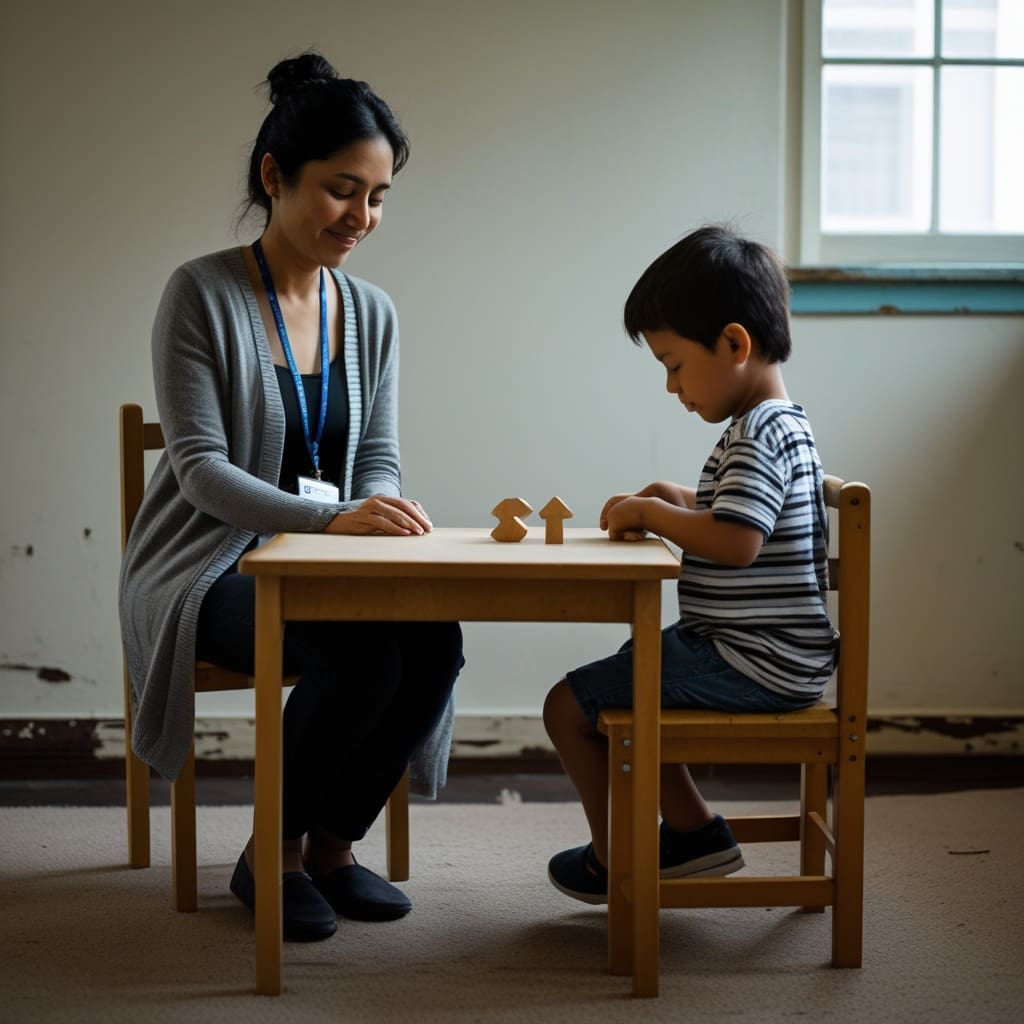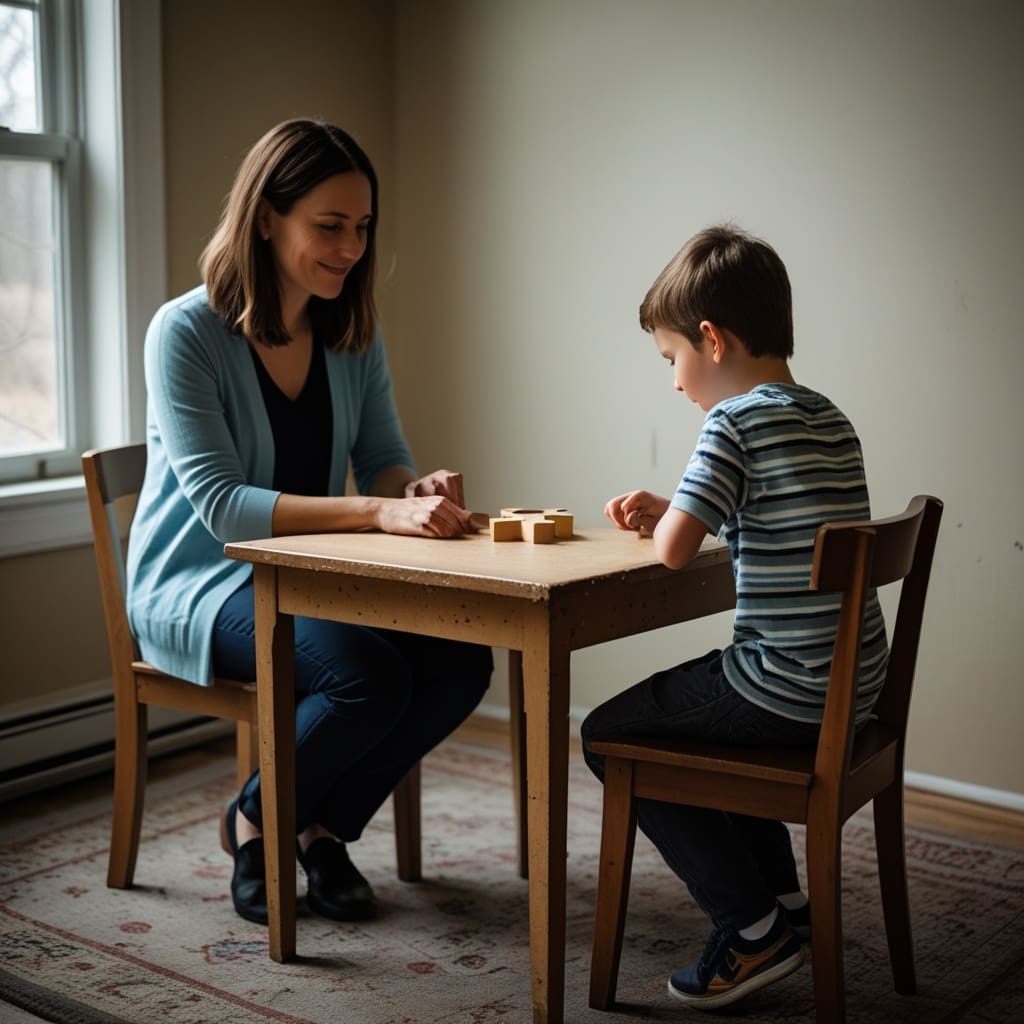

An ABA behavioral therapist is a trained professional who uses Applied Behavior Analysis methods to help people, most often children with autism spectrum disorder, build skills and reduce behaviors that interfere with daily life. The title covers a range of jobs, from entry-level Registered Behavior Technicians who complete 40 hours of training before running direct sessions to Board Certified Behavior Analysts who hold a master's degree and design the treatment plans. Families searching for this term usually want to know who will actually sit across from their child during therapy, and what training that person completed to earn that seat. The Behavior Analyst Certification Board (BACB) reports the number of certified professionals in this field has grown more than 20 percent annually over the past several years, a sign of how fast demand for autism services has climbed nationwide.
Key Takeaways
- An ABA behavioral therapist can refer to a Registered Behavior Technician (RBT), a Board Certified Assistant Behavior Analyst (BCaBA), or a Board Certified Behavior Analyst (BCBA), each with different training requirements and responsibilities.
- RBT certification requires a minimum of 40 hours of training and a passing score on a competency assessment plus an exam, typically completed within 1 to 3 months.
- A BCBA must hold a master’s degree, complete 1,500 to 2,000 hours of supervised fieldwork, and pass a 185-question exam administered by the BACB.
- Session rates for ABA therapy generally range from $120 to $250 per hour before insurance, though most families pay far less out of pocket due to coverage mandates in all 50 states.
- The Bureau of Labor Statistics groups behavior technicians under its broader category for psychiatric aides and technicians, projecting faster than average job growth through 2032.
What Is an ABA Behavioral Therapist?
An ABA behavioral therapist is any professional who delivers or oversees Applied Behavior Analysis services, a treatment approach grounded in the science of learning and behavior. The term is used loosely by families and job boards alike, so it can describe someone with 40 hours of training or someone with a doctorate and a decade of clinical supervision experience. What unites all of them is a reliance on data collection, reinforcement strategies, and structured teaching methods to help clients, most commonly children on the autism spectrum, gain communication, social, and self-care skills.
The confusion around this title is understandable. Unlike physical therapy or nursing, ABA does not have a single licensed title that covers every practitioner. Instead, the field operates on a tiered credentialing system managed by the BACB, a nonprofit organization founded in 1998 that sets national standards for training, ethics, and testing. Understanding which tier you are working with matters because it directly affects the cost, the qualifications behind the person providing care, and the level of clinical decision-making they are permitted to perform.
RBT vs BCBA: What Is the Difference?
An RBT is the front-line therapist who runs direct sessions under supervision, while a BCBA is the graduate-level clinician who designs the treatment plan and supervises the RBT’s work. Families often meet both roles during a single course of treatment, since most ABA programs pair a technician for daily sessions with a supervising analyst who reviews progress every 2 weeks.
The table below breaks down the practical differences between the two most common roles families encounter.
- Registered Behavior Technician (RBT): Requires a high school diploma, 40 hours of training, and a passing score on the RBT Competency Assessment and a 75-question multiple-choice exam. Delivers direct one-on-one therapy sessions following a plan written by a BCBA. Typical pay ranges from $18 to $25 per hour, according to Indeed’s 2024 salary data for behavior technician roles.
- Board Certified Behavior Analyst (BCBA): Requires a master’s degree in psychology, education, or a related field, 1,500 to 2,000 hours of supervised fieldwork, and a passing score on a 185-question exam. Writes treatment plans, analyzes data trends, and supervises technicians. Median annual salary sits between $75,000 and $95,000, per ZipRecruiter’s 2024 compensation report for behavior analysts.
- Board Certified Assistant Behavior Analyst (BCaBA): Requires a bachelor’s degree, 1,000 hours of supervised fieldwork, and a passing score on a 130-question exam. Works under a BCBA’s supervision to implement and adjust programs, filling a middle ground between technician and full analyst.
To see how these roles interact in a real clinical setting, families often find it useful to review the range of therapy roles and services families work with here, which lays out how technicians, assistants, and analysts coordinate on a single treatment team.

What Does a Behavior Technician Do Day to Day?
A behavior technician spends most of the workday running structured teaching sessions, recording data on client responses, and following a behavior intervention plan written by a supervising BCBA. A typical session lasts between 2 and 4 hours and may take place in a client’s home, a school setting, or a dedicated therapy center. Within that session, the technician might rotate through discrete trial teaching, natural environment training, and short breaks built around the client’s tolerance level.
Daily responsibilities generally include the following:
- Reviewing the treatment plan before each session, typically a 5 to 10 minute check of goals and target behaviors set by the BCBA.
- Running teaching trials in blocks of 10 to 20 repetitions per skill, tracking correct and incorrect responses on a tablet or paper data sheet.
- Implementing reinforcement schedules, delivering preferred items or praise immediately after a target behavior, often within 1 to 3 seconds to maximize learning.
- Recording behavioral incidents such as tantrums or self-injury, noting antecedents and consequences for later analysis.
- Communicating with parents or caregivers for roughly 10 to 15 minutes at the end of each session to review progress and homework tasks.
Because so much of the job depends on consistency, most agencies require technicians to complete continuing education hours, often 8 hours annually, to maintain their RBT credential through the BACB. This ensures the therapist stays current on updated ethics codes and teaching techniques rather than relying solely on initial 40-hour training. For a closer look at how this plays out in a structured setting, seeing how technicians and supervisors work together during center sessions gives a clearer picture of the daily rhythm between direct care staff and clinical oversight.
What Qualifications Does an ABA Therapist Need?
Qualifications range from a 40-hour course for entry-level technicians to a master’s degree and 1,500 supervised hours for a fully certified analyst. No state requires a bachelor’s degree to become an RBT, which is why this entry point attracts career changers and recent graduates.
How Do You Become an RBT?
Becoming an RBT takes 5 steps:
- Complete a 40-hour training course approved by the BACB, costing $50 to $200 and taking 2 to 4 weeks.
- Pass a background check, usually done in 3 to 5 business days.
- Complete the RBT Competency Assessment, a 1 to 2 hour skills demonstration run by a BCBA.
- Pass the RBT exam, a 75-question test with a 2-hour limit and an 80 percent passing score.
- Register with the BACB and pay a $45 annual renewal fee.
Most candidates finish in 4 to 8 weeks, far faster than nursing or occupational therapy assistant programs, which often take 1 to 2 years.
How Do You Become a BCBA?
Becoming a BCBA takes 2 to 6 years, depending on prior education. It requires a master’s degree in behavior analysis, psychology, or education from a BACB-approved program, plus 1,500 hours of supervised fieldwork (or 2,000 under standard supervision). Candidates then take a 185-question exam covering ethics, measurement, and intervention strategy. The first-time pass rate has run between 55 and 65 percent in recent years.
Once certified, a BCBA renews every 2 years and completes 32 hours of continuing education, including 4 in ethics. Families can meet the credentialed therapists and behavior analysts on staff.
How Much Does ABA Therapy Cost?
ABA therapy typically costs between $120 and $250 per hour when billed privately, though most families with insurance pay a fraction of that through copays or coinsurance. A full-time program involving 20 to 40 hours per week can total $50,000 to $100,000 annually before insurance adjustments, according to Autism Speaks’ cost estimates for intensive early intervention.
Coverage has improved considerably over the past decade. All 50 states now have some form of autism insurance mandate requiring ABA coverage under private plans, though the details, such as annual visit caps or age limits, differ by state. Medicaid also covers ABA therapy nationwide following a 2014 Centers for Medicare and Medicaid Services (CMS) clarification confirming that medically necessary behavioral health treatment for children under 21 must be covered under the Early and Periodic Screening, Diagnostic, and Treatment (EPSDT) benefit. Families should still expect to verify specifics with their own insurer, since deductible amounts, prior authorization rules, and session caps vary by plan.
Insurance coverage does not eliminate cost variation entirely, since the number of authorized hours, the therapist’s credential level, and the setting (home versus center-based) all influence the final bill a family sees each month.
What Is the Career Outlook for ABA Behavioral Therapists?
Job growth for behavior technicians and analysts is projected to outpace the national average for all occupations, driven largely by rising autism diagnosis rates and expanded insurance coverage. The Bureau of Labor Statistics places related roles under its psychiatric technicians and aides category, projecting 12 percent growth from 2022 to 2032, a rate more than double the average for all jobs tracked. The BACB reports that certificant counts across all credential levels have grown from roughly 30,000 in 2015 to over 70,000 by 2023, reflecting sustained demand across school districts, private clinics, and in-home service providers.
This growth has practical implications for anyone considering the field. Turnover among RBTs remains relatively high, often cited between 30 and 50 percent annually in industry workforce surveys, largely because the entry-level role can be physically and emotionally demanding despite its accessible training requirements. Agencies increasingly offer tuition reimbursement or covered exam fees as recruitment incentives, particularly for technicians willing to commit to at least 1 year of service.
How Do You Choose the Right ABA Therapist for Your Child?
Choosing the right ABA therapist means verifying credentials directly through the BACB’s public certificant registry, confirming supervision ratios, and asking how often data is reviewed and adjusted. A supervising BCBA should observe each technician’s sessions at minimum twice per month, per BACB supervision standards, though many quality programs schedule weekly check-ins instead.
Consider asking a potential provider these specific questions before starting services:
- How many active RBT certifications does the agency currently maintain, and what is the technician-to-supervisor ratio?
- How often will the BCBA update the treatment plan based on collected data, weekly, biweekly, or monthly?
- What insurance plans does the practice accept, and what is the estimated out-of-pocket cost per session?
- Does the agency offer center-based, home-based, or hybrid session formats, and how does that affect scheduling flexibility?
- What continuing education or crisis-management training have the direct-care staff completed beyond the initial 40-hour course?
A provider willing to answer these questions clearly and provide documentation is generally a stronger sign of program quality than marketing claims about success rates alone. Transparency about supervision structure often says more about program quality than any single testimonial.
Take the Next Step
If you are evaluating ABA services for a child or family member, start by confirming the specific credentials of everyone who will be involved in care, from the direct technician to the supervising analyst. Ask providers directly about session structure, supervision frequency, and insurance verification before committing to a treatment plan, and do not hesitate to request documentation of certification status through the BACB’s public registry.
Frequently Asked Questions
Is an ABA behavioral therapist the same as a psychologist?
No, an ABA behavioral therapist and a psychologist are different professions with different training paths. A psychologist typically holds a doctoral degree and a state license to diagnose and treat mental health conditions broadly, while an ABA therapist, whether an RBT or a BCBA, specializes specifically in applying behavior analysis techniques, most often for autism spectrum disorder and related developmental conditions.
Can an ABA behavioral therapist work independently without supervision?
Only a BCBA can practice independently; RBTs and BCaBAs must always work under supervision. The BACB requires RBTs to receive at least 5 percent of their monthly service hours in direct supervision from a BCBA, ensuring that even independent-feeling sessions are backed by ongoing clinical oversight.
How long does ABA therapy usually last for a child?
Most children remain in ABA therapy for 1 to 3 years, though intensity and duration depend on individual progress. Some children transition to fewer weekly hours after achieving specific goals, while others with more significant support needs may continue longer-term, lower-intensity services into adolescence.
What is the difference between center-based and in-home ABA therapy?
Center-based therapy takes place at a dedicated clinic with access to multiple staff and structured resources, while in-home therapy happens in the family’s natural environment. Each format has advantages: centers often allow for peer interaction and consistent staffing, while home-based sessions can better generalize skills to daily routines like mealtime or bedtime.
Do ABA behavioral therapists need to be licensed by the state?
Licensing requirements vary, since some states license BCBAs directly while others rely solely on BACB certification. As of 2024, more than 35 states have enacted specific ABA licensure laws, according to the Council of Autism Service Providers, meaning a BCBA in one state may need a separate state license in addition to national certification to legally practice.
Conclusion
An ABA behavioral therapist can mean several different things depending on the credential behind the title, from a recently trained RBT running daily sessions to a master’s-level BCBA designing the overall treatment strategy. Knowing the distinctions between these roles, along with realistic costs, training timelines, and supervision standards, puts families in a stronger position to evaluate the quality of care being offered. As demand for autism services continues to rise nationally, understanding exactly who is providing therapy, and what qualifies them to do so, remains one of the most practical steps a family can take before starting treatment.