
Early intensive behavioral intervention (EIBI) is a structured autism treatment that delivers 20 to 40 hours a week of one-on-one applied behavior analysis (ABA) therapy to children under age 5. The model grew out of research by Dr. O. Ivar Lovaas at UCLA in the 1970s and 1980s, and it remains one of the most studied autism interventions available today. Programs typically run one to three years, targeting a window when the brain forms new connections fastest. Because EIBI demands so many weekly hours during that narrow age range, it differs sharply from general early intervention services in both intensity and cost, which can run tens of thousands of dollars a year.
Key Takeaways
- EIBI typically involves 20 to 40 hours per week of one-on-one ABA therapy for children younger than 5, delivered over 1 to 3 years.
- The original UCLA Young Autism Project, led by Dr. Ivar Lovaas, reported that 47 percent of children who received intensive treatment achieved normal intellectual and educational functioning, compared to 2 percent in a control group.
- A board-certified behavior analyst (BCBA) designs and supervises the program, while registered behavior technicians (RBTs) deliver most direct sessions.
- Annual cost estimates for full-intensity EIBI commonly range from $40,000 to $100,000 depending on weekly hours, location, and insurance coverage.
- Most states require private insurers to cover medically necessary autism treatment, including ABA, though prior authorization and hour caps still vary by plan.
- Research findings are mixed on the “recovery” claims of early studies, and current researchers emphasize measurable skill gains over promises of a cure.
How Does Early Intensive Behavioral Intervention Work?
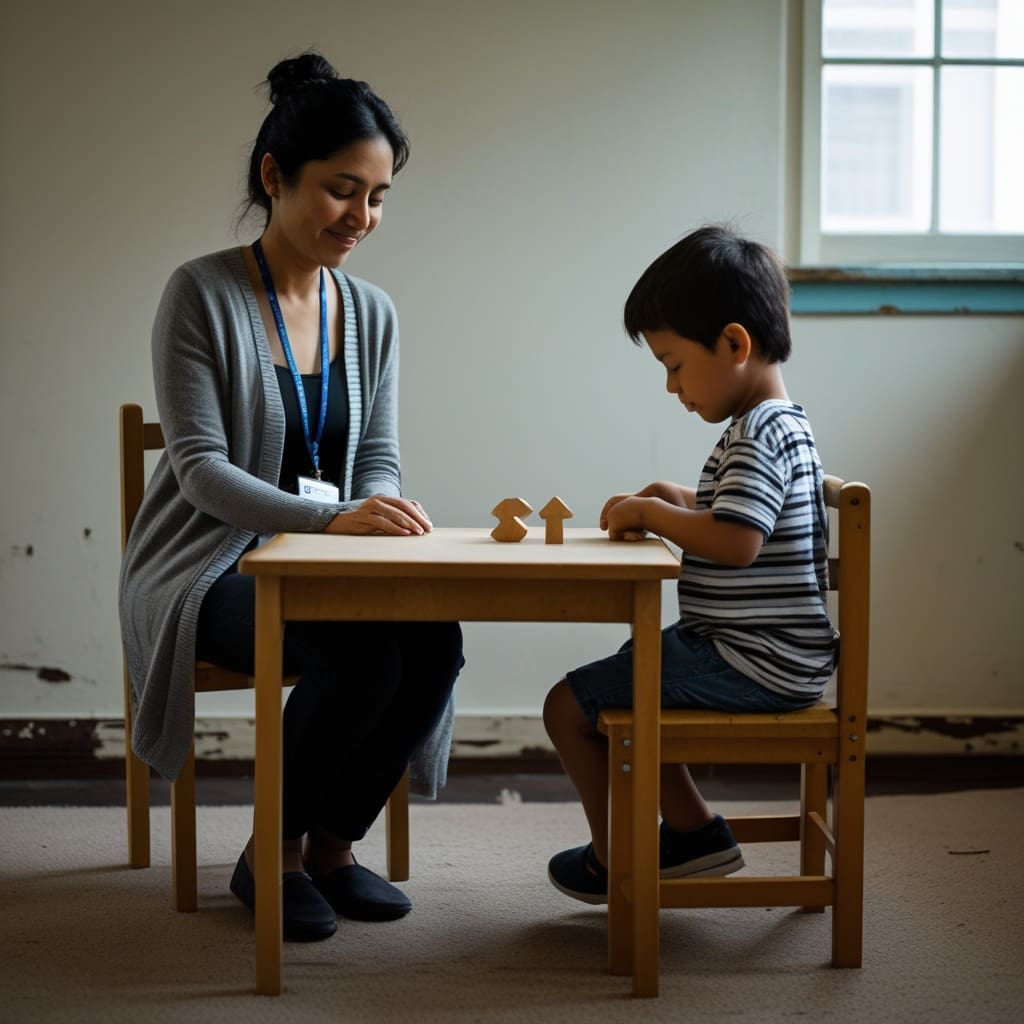
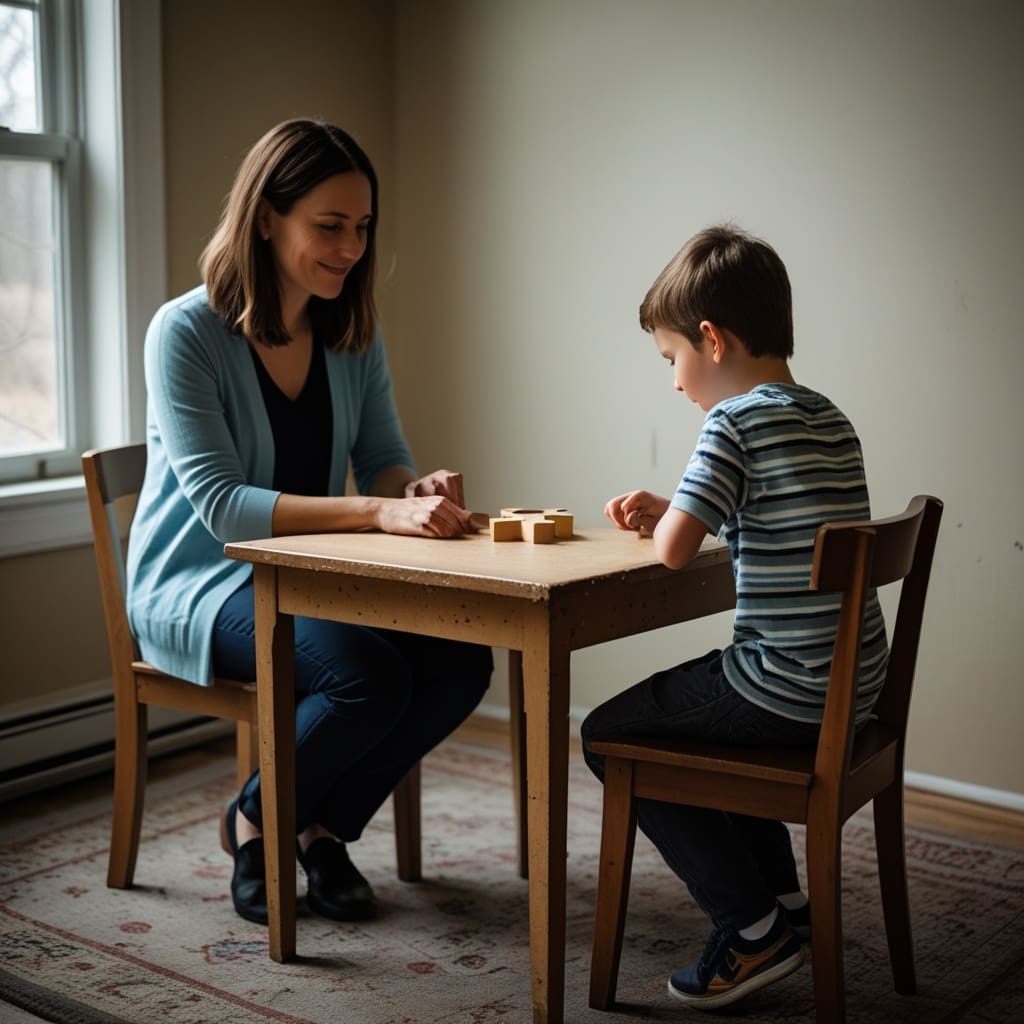
EIBI breaks complex skills into small, teachable units and reinforces correct responses immediately, using a method often called discrete trial training. A behavior technician might present a single instruction, such as pointing to a picture card, then reward the correct response with praise, a preferred toy, or a small edible item. Sessions repeat these trials dozens of times per hour across language, social, self-help, and play domains, with data collected on every single trial.
A BCBA reviews that data weekly or biweekly and adjusts the treatment plan based on what the numbers show. If a child masters a skill in three consecutive sessions, the program moves to the next target. If progress stalls, the supervisor changes the teaching strategy rather than simply repeating what already failed. This constant data-driven adjustment is what separates EIBI from looser, less structured therapy approaches.
What Age Range Does EIBI Target?
Most EIBI programs enroll children between 18 months and 4 years old, with some clinics extending intake up to age 5. The underlying theory rests on early brain plasticity, the idea that neural connections form more readily in the first few years of life. Dr. Lovaas’s original research group, and later replication studies from institutions such as the University of Washington’s Early Start Denver Model project, both targeted children under 4 at the time of enrollment.
What Did the Original Research Find?
Dr. Lovaas published his landmark study in 1987 in the Journal of Consulting and Clinical Psychology, comparing 19 children who received 40 hours per week of one-on-one treatment against a control group that received 10 hours or less. The researchers found that 47 percent of the intensive-treatment group reached average IQ scores and passed first grade in regular classrooms without special support, compared to just 2 percent of the control group. A follow-up study published in 1993 tracked the same children into adolescence and found the intellectual and educational gains largely held.
Those numbers built the reputation EIBI still carries, but later researchers raised legitimate concerns about the original project’s methodology, including the fact that children were not randomly assigned to groups and that outcome measures relied partly on subjective classroom placement rather than standardized testing alone. A 2018 Cochrane systematic review examined multiple EIBI studies and concluded that while children who received EIBI showed moderate improvements in adaptive behavior and IQ compared to control groups, the overall quality of evidence was rated low to moderate due to small sample sizes and lack of blinding. This does not erase EIBI’s value, but it does mean families should treat the original 47 percent figure as a historical benchmark rather than a guaranteed outcome.
The strongest evidence supports EIBI as effective for improving language, cognitive, and adaptive skills in young children with autism, not as a guaranteed path to a specific outcome for every child.
How Many Hours Per Week Does Intensive ABA Therapy Require?
Intensive ABA therapy hours generally fall between 20 and 40 hours weekly, though the exact number depends on the child’s needs and the clinic’s model. The following breakdown reflects common program tiers seen across ABA providers in the United States:
- Focused ABA: 10 to 15 hours per week, used for narrower skill targets such as toilet training or feeding issues.
- Moderate-intensity EIBI: 20 to 25 hours per week, common for children with milder support needs.
- Full-intensity EIBI: 30 to 40 hours per week, matching the original UCLA protocol and used for children with more significant delays.
- Maintenance or step-down phase: 5 to 15 hours per week, applied after a child transitions into school and no longer needs full-day support.
The American Academy of Pediatrics and the Behavior Analyst Certification Board (BACB) both note that hour recommendations should come from an individualized assessment, not a fixed formula. A child with strong imitation and joint attention skills at intake may need fewer hours than a child who is nonverbal with significant self-injurious behavior.
Who Delivers EIBI Services?
A licensed BCBA designs the treatment plan, sets measurable goals, and supervises the clinical team, while RBTs deliver the bulk of direct one-on-one sessions under that supervision. The BCBA credential requires a master’s degree, supervised fieldwork hours (typically 1,500 to 2,000 hours depending on the pathway), and a passing score on the BCBA exam administered through Pearson VUE testing centers. The RBT credential requires a 40-hour training course, a competency assessment, and a passing score on the RBT exam, making it a faster entry point into the field.
This layered staffing model exists because full-intensity EIBI at 30 or more hours per week would be financially and practically impossible if every session required a master’s-level clinician. Instead, the BCBA typically observes 5 to 10 percent of direct service hours each month, reviews data trends, and retrains technicians when a program is not producing results.
Why Should Families Review This Treatment Model Before Committing?
EIBI asks a young family to restructure daily life around 20 to 40 hours of weekly therapy, often for one to three years, so the decision carries real tradeoffs in time, cost, and family routine. Reviewing the model closely before starting helps parents set realistic expectations rather than assuming every child will match the outcomes from early landmark studies. It also helps families ask providers the right screening questions, such as how progress will be measured and how often the treatment plan will be reassessed.
Parents should also understand that EIBI is one option among several early intervention approaches, including the Early Start Denver Model, speech and occupational therapy combinations, and less intensive ABA programs. According to Autism Speaks’ Autism Treatment Network data, most families combine ABA with at least one additional therapy discipline, meaning EIBI rarely operates as a child’s only intervention.
What Does EIBI Cost, and Does Insurance Cover It?
Full-intensity EIBI in the United States typically costs between $40,000 and $100,000 per year, with the wide range driven by hourly billing rates, geographic location, and total weekly hours. Hourly rates for ABA therapy generally run from $60 to $250 per hour depending on the provider and region, and a 35-hour-per-week program billed at $120 per hour works out to roughly $218,000 annually before any insurance adjustment, though negotiated insurance rates are usually far lower than cash-pay rates.
Every state now has some form of autism insurance mandate, and federal parity requirements under the Mental Health Parity and Addiction Equity Act require many large group health plans to cover autism treatment on par with medical and surgical benefits. Coverage still requires prior authorization in most cases, and insurers frequently request updated treatment plans and progress data every 6 months to justify continued hours. Medicaid also covers ABA therapy in all 50 states through the Early and Periodic Screening, Diagnostic, and Treatment (EPSDT) benefit, though reimbursement rates and provider availability vary widely by state.

What Do the Results Mean for a Typical Family?
EIBI outcomes vary by child, but research gives a reasonable range to expect. A 2012 meta-analysis in Research in Autism Spectrum Disorders found average IQ gains of 11 to 17 points and meaningful adaptive behavior improvements after one to two years of treatment. Language gains show up most consistently, especially in kids who start before age 4.
Progress isn’t uniform, and some children need continued support well into elementary school. Groups like the National Autism Center’s National Standards Project list EIBI among several “established” interventions with strong evidence, alongside other ABA approaches, not as a guaranteed cure. Ask providers what measurement tools they use, such as the Vineland Adaptive Behavior Scales or Mullen Scales of Early Learning, so progress reports are based on standardized data, not just impressions.
What Are the Strengths and Limitations of the EIBI Model?
EIBI’s biggest strength is the research behind it, spanning more than four decades of published studies. It also comes with a clear data-tracking structure, so parents get objective progress reports instead of one provider’s subjective take.
The limitations matter too. High weekly hour requirements strain family schedules, especially with two working parents or other young kids at home. Even with insurance, families often still pay thousands out of pocket each year in copays and uncovered hours. Autism self-advocates have also criticized older ABA methods for focusing too much on erasing autistic traits instead of building skills, a critique that’s pushed many providers toward play-based, child-led versions of the model.
How Do You Choose an EIBI Provider?
Selecting a provider comes down to verifying credentials, reviewing their measurement practices, and confirming insurance alignment before treatment begins. The following steps give a concrete starting checklist:
- Verify the BCBA’s license number through the BACB’s public certificant registry, which lists every active credential holder in the country.
- Ask for the caseload ratio, since a single BCBA supervising more than 12 to 15 active cases at once may not provide adequate weekly oversight.
- Request a sample data sheet from a current client’s program (with identifying information removed) to see how progress gets tracked session to session.
- Confirm the reassessment schedule, which should occur at least every 6 months using a standardized tool like the Vineland-3.
- Check insurance network status directly with your carrier, since a provider’s own website listing does not guarantee current in-network status.
Take the Next Step Toward Getting Your Child Assessed
If your child has received an autism diagnosis or a developmental delay flag from a pediatrician, the most productive next step is scheduling a formal ABA assessment with a licensed BCBA. Bring any existing evaluations, such as an Ages and Stages Questionnaire (ASQ) result or a developmental pediatrician’s report, so the assessing clinician can build a treatment plan grounded in your child’s actual history rather than starting from scratch. Contact a local ABA provider directly to ask about current caseload availability, insurance verification, and how soon services could realistically begin.
Frequently Asked Questions
How Long Does Early Intensive Behavioral Intervention Typically Last?
Most EIBI programs run between 1 and 3 years, with many children stepping down to fewer hours after the first 12 to 18 months. The exact duration depends on how quickly a child meets developmental goals and how the treatment team defines “graduation” from full-intensity services. Some children transition into part-time maintenance therapy once they enter a school-based special education program.
Is EIBI the Same Thing as ABA Therapy?
EIBI is a specific, high-hour application of ABA therapy aimed at young children, not a separate treatment method. ABA is the broader science of behavior change, while EIBI describes one particular delivery model within that field, defined by its age focus and weekly hour intensity.
Can a Child Receive EIBI Alongside Speech or Occupational Therapy?
Yes, most children in EIBI programs also receive speech-language therapy and occupational therapy at the same time. Coordinated care teams typically schedule these services on separate days or in shorter blocks so the child’s total weekly therapy load stays manageable alongside sleep, meals, and family time.
What Happens if a Child Does Not Show Progress in EIBI?
A qualified BCBA should adjust the treatment plan, teaching methods, or reinforcement strategy rather than simply continuing an approach that is not working. Lack of measurable progress after 3 to 6 months should prompt a formal case review, and families have the right to request a second clinical opinion or change providers.
Does Medicaid Cover Early Intensive Behavioral Intervention?
Yes, Medicaid covers medically necessary ABA therapy, including EIBI, in all 50 states through the EPSDT benefit for children under 21. Reimbursement rates and the number of approved in-network providers vary considerably by state, so families should confirm local provider availability early, since waitlists of 6 months or longer are common in many regions according to reports from the Autism Society of America.
Conclusion
Early intensive behavioral intervention remains one of the most researched autism treatments available, backed by decades of data starting with the original UCLA Young Autism Project and continuing through modern replication studies. The model demands a serious weekly time commitment, typically 20 to 40 hours, and a financial investment that often requires insurance support to sustain. Families who go in with realistic expectations, a clear understanding of costs, and a provider who tracks measurable data tend to navigate the process with far less uncertainty than those who commit without asking these questions first.