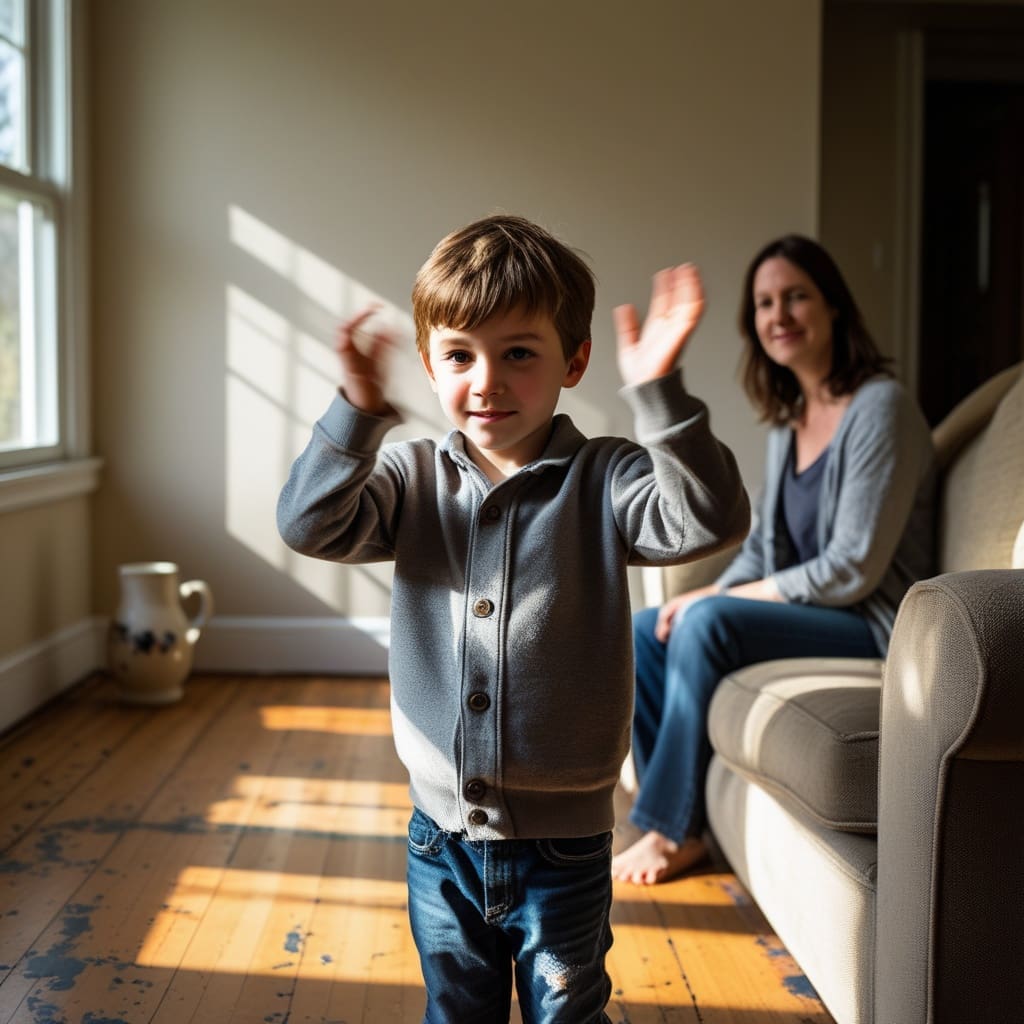

High functioning autism signs in school age children typically include strong verbal skills paired with social communication struggles, rigid routines, sensory sensitivities, and intense focus on narrow interests. These children often meet or exceed academic benchmarks, which can delay recognition for years. Roughly 1 in 31 children in the United States is now identified with autism spectrum disorder, according to the Centers for Disease Control and Prevention’s 2026 data update, and many of these children fall into what parents and teachers still informally call the “high functioning” category. Catching the signs early matters because school settings often mask difficulties until academic or social demands increase.
Key Takeaways
- High functioning autism is not an official diagnostic term; clinicians now use “Autism Spectrum Disorder, Level 1” under the DSM-5-TR criteria.
- Common signs in school age children include social communication gaps, rigid routines, sensory sensitivities, and narrow but intense interests.
- Academic strength often hides underlying struggles, which delays diagnosis for many children until age 8 or later.
- A full evaluation typically costs between $1,000 and $5,000 without insurance, though school-based evaluations are free under federal law.
- Early identification allows access to accommodations such as an Individualized Education Program (IEP) or a 504 Plan.
What “High Functioning Autism” Actually Means
The term high functioning autism describes children on the autism spectrum who have average or above-average cognitive ability and functional spoken language, but who still meet the core diagnostic criteria for autism spectrum disorder (ASD). Clinicians no longer use “high functioning” as a formal label. Since 2013, the Diagnostic and Statistical Manual of Mental Disorders, Fifth Edition (DSM-5), replaced separate categories like Asperger’s syndrome with a single spectrum diagnosis, broken into three severity levels based on the amount of support needed. Most children described as high functioning fall into Level 1, meaning they require support but not substantial or very substantial support.
This distinction matters for parents because a child who talks fluently and reads above grade level can still meet full criteria for autism. Teachers sometimes miss the diagnosis because they expect autism to look like significant speech delay or obvious repetitive behavior. In reality, many school age children mask their symptoms during the school day and then experience meltdowns or shutdowns once they get home, a pattern researchers call “autistic camouflaging.”

Social Communication Signs to Watch For
Social communication differences are often the clearest signs of high functioning autism in school age children, especially once peer relationships become more complex around ages 6 to 10. These children may want friends but struggle to understand the unwritten rules of group play, turn-taking conversation, or shifting social dynamics on the playground.
- Difficulty reading nonverbal cues: The child may miss facial expressions, tone of voice, or body language that signal a classmate is bored, upset, or joking.
- One-sided conversations: Talking at length about a preferred topic (dinosaurs, train schedules, a video game) without noticing the listener has lost interest.
- Literal interpretation of language: Struggling with sarcasm, idioms, or figurative speech, such as taking “it’s raining cats and dogs” at face value.
- Trouble with group dynamics: Preferring to play alongside peers rather than with them, or gravitating toward one-on-one interactions with a single trusted friend or adult.
- Unusual eye contact patterns: Avoiding eye contact, or maintaining it in a way that feels slightly too intense or prolonged.
Parents sometimes describe their child as “socially awkward” or “immature for their age” before ever hearing the word autism mentioned. Teachers may note that a child performs beautifully on written work but seems isolated during recess or group projects. This gap between academic performance and social functioning is one of the most reliable early flags that a school evaluation team looks for.
Behavioral and Routine-Based Signs
Rigidity around routines and rules shows up constantly in the classroom setting for children with high functioning autism. A shift in schedule, such as a substitute teacher, a fire drill, or a rearranged seating chart, can trigger disproportionate distress. This is not simple stubbornness; it reflects a nervous system that relies heavily on predictability to feel regulated.
- Strong preference for the same seat, the same walking route to the classroom, or the same order of daily activities.
- Distress or anger when plans change unexpectedly, even for minor adjustments like a delayed lunch period.
- Rule-following that borders on rigid, including correcting classmates or teachers who deviate from stated instructions.
- Repetitive behaviors, such as tapping a pencil in a specific pattern, lining up objects, or repeating phrases from a favorite show (a behavior known as echolalia).
- Intense, narrow interests that dominate free time and conversation, sometimes described by researchers as “restricted interests,” a core diagnostic criterion under DSM-5-TR.
These behaviors often intensify during unstructured times of the school day, including recess, lunch, and transitions between subjects. Structured academic time, by contrast, can feel more manageable because expectations are clear and predictable.
Sensory Sensitivities in the Classroom
Sensory processing differences affect an estimated 90 percent of children on the autism spectrum, according to research published by the Autism Speaks organization, making this one of the most consistent signs across the spectrum, including in high functioning presentations. A school age child may be over-responsive or under-responsive to sensory input, and sometimes both, depending on the type of stimulus.
- Auditory sensitivity: Covering ears during fire alarms, cafeteria noise, or group singing; becoming distressed by the hum of fluorescent lights.
- Tactile sensitivity: Refusing certain clothing textures, tags, or seams; avoiding messy activities like finger painting or glue.
- Visual sensitivity: Squinting or looking away from bright classroom lighting or busy bulletin boards.
- Proprioceptive seeking: Craving movement, such as rocking in a chair, chewing on pencils or clothing, or seeking deep pressure through tight hugs.
- Food-related sensitivity: Extremely limited food preferences based on texture or smell rather than taste alone.
These sensory responses often explain behaviors that get mislabeled as defiance or inattention. A child who leaves the cafeteria abruptly is not necessarily being rude; the sensory environment may be genuinely overwhelming for their nervous system.
Academic and Cognitive Patterns
Uneven academic profiles are extremely common in high functioning autism. A child might read three grade levels ahead in decoding but struggle significantly with reading comprehension, particularly when a passage requires inferring a character’s emotions or motives. Math calculation might be strong while word problems that depend on social context prove difficult.
Executive functioning challenges also appear frequently, including trouble with organization, time management, and transitioning between tasks. A child may lose assignments despite understanding the material perfectly, or take far longer than classmates to switch from one subject to the next. Many school psychologists now use tools such as the Behavior Rating Inventory of Executive Function (BRIEF-2) alongside autism-specific instruments to capture this pattern.
Perfectionism and a strong fear of making mistakes show up often as well. This can look like refusing to attempt an assignment unless certain of a correct answer, or becoming visibly distressed over a single wrong response on a quiz. Teachers sometimes interpret this as anxiety alone, without recognizing the underlying autistic trait of needing certainty and control.

How Diagnosis Works: Steps, Timeline, and Cost
Diagnosing high functioning autism in a school age child involves both medical and educational evaluators, and the process can take anywhere from a few weeks to over a year.
- Screening (free to $50): A pediatrician uses a tool like the Social Communication Questionnaire (SCQ) during a well-child visit.
- Referral (3 to 9 months wait): The child sees a developmental pediatrician, psychologist, or psychiatrist for a full evaluation.
- Diagnostic testing ($1,000 to $5,000 without insurance): This includes the ADOS-2, cognitive testing, and parent interviews like the ADI-R.
- School evaluation (free under IDEA): Public schools must evaluate a child at no cost, though this determines educational eligibility, not a medical diagnosis.
- Eligibility and support plan (within 60 days of consent in most states): A team decides if the child qualifies for an IEP or a 504 Plan.
Insurance coverage varies by state, and even with a mandate, co-pays and deductibles can add up to $1,000 to $3,000 a year out of pocket. Many families without insurance start with the free school evaluation, then pursue a private diagnosis later for medical documentation.
Comparing High Functioning Autism Signs to Similar Conditions
Several other conditions share overlapping traits with high functioning autism, which is part of why misdiagnosis or delayed diagnosis happens so often in school settings. Attention-Deficit/Hyperactivity Disorder (ADHD), anxiety disorders, and sensory processing disorder frequently co-occur with autism or get mistaken for it entirely.
- High functioning autism vs. ADHD: Both can involve inattention and difficulty with transitions, but autism centers more on social communication differences and restricted interests, while ADHD centers more on impulsivity and difficulty sustaining attention across most tasks, not just socially demanding ones.
- High functioning autism vs. social anxiety: A socially anxious child usually understands social rules but feels too afraid to engage, while a child with autism may not intuitively grasp the unwritten social rules in the first place.
- High functioning autism vs. giftedness: Gifted children can show intense focus and advanced vocabulary, but they typically do not show the same degree of sensory sensitivity or difficulty with reciprocal conversation.
Research published by the CDC’s Autism and Developmental Disabilities Monitoring (ADDM) Network indicates that roughly 1 in 4 children identified with autism also carries a co-occurring ADHD diagnosis, which underscores why a thorough evaluation matters rather than relying on a single symptom checklist.
What Parents and Teachers Can Do Right Now
Documentation is the most useful first step available to any parent or teacher who suspects high functioning autism. Keep a simple written log of specific incidents, including the date, the setting, and exactly what happened, rather than general impressions. A note like “October 14, meltdown after fire drill, covered ears for ten minutes” is far more useful to an evaluator than “had a bad day.”
Requesting a school evaluation can happen at any time during the school year through a written request to the school’s special education coordinator. Under IDEA, the school must respond to this request and, if it agrees an evaluation is warranted, complete the evaluation within a legally defined timeframe that varies by state but commonly falls between 45 and 60 school days.
A written request for evaluation, even a single paragraph, starts a legal timeline that a verbal request to a teacher does not.
Classroom accommodations can begin before a formal diagnosis is complete. Many teachers voluntarily offer strategies such as advance notice of schedule changes, a designated quiet corner, noise-canceling headphones, or visual schedules taped to the desk. These low-cost adjustments often reduce daily distress significantly while the longer evaluation process unfolds.

Building a Support Plan: IEP vs. 504 Plan
An IEP and a 504 Plan both provide legal protections for a child with high functioning autism, but they serve different purposes and offer different levels of support. Choosing the right one depends on whether the child needs specialized instruction or simply needs accommodations to access the general curriculum.
- IEP (Individualized Education Program): Governed by IDEA, this plan includes specific, measurable educational goals and specialized instruction, such as social skills groups, speech therapy, or occupational therapy delivered by school staff.
- 504 Plan: Governed by Section 504 of the Rehabilitation Act, this plan offers accommodations like extended test time, preferential seating, or breaks during sensory overload, without requiring specialized instruction.
Many children with high functioning autism qualify for an IEP under the “autism” eligibility category even when their academic scores are at or above grade level, because IDEA eligibility depends on educational impact broadly defined, including social and emotional functioning, not solely on grades or test scores. Parents who disagree with a school’s eligibility decision have the right to request an Independent Educational Evaluation (IEE) at public expense in most circumstances.
Take the Next Step
If several of these signs sound familiar, schedule a conversation with your child’s pediatrician or school counselor within the next few weeks rather than waiting for the situation to resolve on its own. Bring your written log of specific incidents to that first appointment, and ask directly whether a referral for a comprehensive autism evaluation is appropriate. Early identification, even for a child performing well academically, opens the door to accommodations and support that can meaningfully reduce daily stress at school and at home.
Conclusion
High functioning autism signs in school age children often hide behind strong grades and articulate speech, which is exactly why they get missed for so long. Watching for social communication gaps, rigid routines, sensory sensitivities, and uneven academic patterns gives parents and teachers a clearer picture than test scores alone ever will. A formal evaluation, whether pursued through a pediatrician or through the free school-based process under IDEA, remains the most reliable path toward an accurate diagnosis and a workable support plan.
Frequently Asked Questions
At what age are high functioning autism signs usually noticed in school age children?
Most signs become noticeable between ages 6 and 9, once social and academic demands increase. Earlier signs may exist but often get overlooked until group work, complex friendships, and classroom routines expose the underlying differences more clearly.
Can a child with high functioning autism do well academically and still need support?
Yes, academic success does not rule out a need for support. IDEA eligibility for the autism category considers social, emotional, and behavioral impact, not only grades, so a straight-A student can still qualify for an IEP.
Is high functioning autism the same as Asperger’s syndrome?
Asperger’s syndrome was folded into the broader autism spectrum diagnosis in 2013. The DSM-5 removed it as a separate category, and most children previously described as having Asperger’s now receive an Autism Spectrum Disorder, Level 1 diagnosis instead.
How much does an autism evaluation cost without insurance?
A private, comprehensive evaluation typically costs between $1,000 and $5,000. A school-based evaluation through the public school district costs nothing to the family, since IDEA requires public schools to provide it at no charge.
What should I do if the school denies my request for an evaluation?
Request the denial in writing and consider a private evaluation or mediation. Parents also have the right under IDEA to request an Independent Educational Evaluation at public expense if they disagree with the school’s decision, and many states offer free parent advocacy centers to help navigate this process.