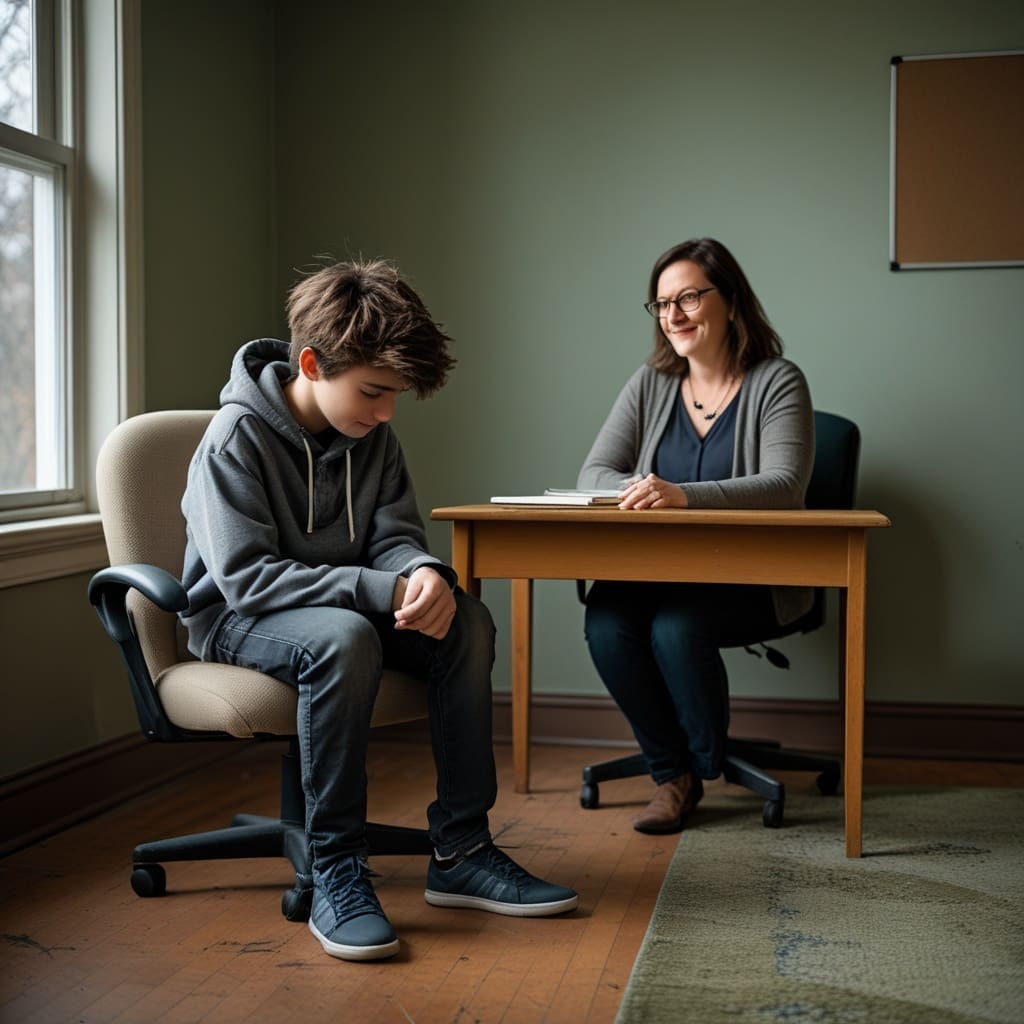

Undiagnosed level 1 autism in adults often shows up as trouble reading social cues, a strong need for routine, sensory sensitivities, and deep focus on niche interests. These traits stay mild enough to slip past childhood diagnosis but strong enough to cause burnout, strained relationships, or friction at work. Many adults only spot the pattern after a child, sibling, or partner gets diagnosed and they recognize the same criteria in themselves. The CDC estimates roughly 1 in 31 children in the U.S. was identified with autism spectrum disorder as of 2022, and clinicians widely believe adult rates run similar but stay undercounted, especially among women and people skilled at masking.
Level 1, formerly called Asperger's syndrome under the DSM-IV, is the mildest classification on the autism spectrum under the DSM-5-TR. It means a person requires support but can typically live independently, hold a job, and maintain relationships, while still experiencing real and sometimes debilitating challenges. Many adults with level 1 autism spend decades believing they're just introverted, anxious, or bad at socializing, since their symptoms don't match the outdated stereotype of autism as an obvious, severe disability. Research suggests autistic traits often get masked so well that clinicians miss them too, which is part of why so many people aren't diagnosed until their 30s, 40s, or later, often after a child's diagnosis prompts them to recognize the same patterns in themselves.
Key Takeaways
- Level 1 autism is the mildest DSM-5-TR classification, requiring “support” rather than “substantial support” or “very substantial support,” yet it still causes measurable daily strain.
- Common undiagnosed signs in adults include social exhaustion after minor interactions, rigid routines, sensory overload, and deep, narrow interests maintained since childhood.
- Masking, or camouflaging autistic traits to fit in, is a major reason diagnosis is delayed, sometimes by 20 to 30 years or more.
- Women and people assigned female at birth are diagnosed later on average, often in their 30s or 40s, compared to men diagnosed in childhood or their 20s.
- A formal evaluation typically costs between $1,200 and $5,000 out of pocket in the United States, though many insurance plans cover part of the cost with the correct diagnostic code.
- An adult autism diagnosis does not require childhood testing records; clinicians can assess current functioning alongside developmental history reported by the adult or family members.

Why Level 1 Autism Often Goes Unnoticed Until Adulthood
Level 1 autism was designed under DSM-5 criteria to describe individuals who need the least support among autistic people, which paradoxically makes it the hardest tier to detect early. A child who speaks on schedule, earns good grades, and follows classroom rules rarely raises red flags for teachers or pediatricians, even if that child struggles intensely with friendships or sensory environments behind the scenes. The traits that would normally prompt an evaluation, such as delayed speech or repetitive motor behaviors, are often mild or entirely absent in Level 1 presentations.
Many adults now seeking evaluation grew up in the 1970s through 2000s, before clinicians understood how autism presents outside stereotypical, more visibly impaired profiles. Diagnostic tools such as the Autism Diagnostic Observation Schedule, Second Edition (ADOS-2), were not developed until the 1990s and did not become standard practice until the 2000s. A 2023 study published in the journal Autism in Adulthood found that adults diagnosed after age 18 reported an average delay of over two decades between first noticing symptoms and receiving a formal diagnosis.
Core Signs of Undiagnosed Level 1 Autism in Adults
Adults with undiagnosed Level 1 autism often describe a lifelong sense of being “different” without knowing why. The signs below match patterns commonly reported by adults later diagnosed under DSM-5-TR criteria for Autism Spectrum Disorder.
1. Social Communication Difficulties That Are Easy to Mask
Many undiagnosed adults memorize scripts for small talk or rehearse phone calls, then feel drained after interactions others find effortless. Eye contact can feel uncomfortable or require conscious effort. Humor, sarcasm, and idioms are sometimes understood only after a delay, forcing the adult to mentally translate what was just said.
2. Intense, Narrow Interests
A hallmark sign is deep, sustained focus on one or two topics, sometimes for years, with detailed knowledge that surprises peers. This might look like reciting statistics about a niche hobby or spending most free time absorbed in one subject. Unlike a casual hobby, the interest often provides emotional regulation during stress.
3. Sensory Sensitivities
Fluorescent lighting, certain fabric textures, loud restaurants, or specific food textures can cause disproportionate discomfort. Some adults need noise-canceling headphones at work, avoid clothing tags, or feel physically unwell in crowded stores. These sensitivities often get dismissed as “just being picky” for years before any link to autism is made.
4. Rigid Routines and Difficulty With Change
A strong preference for sameness shows up as detailed daily schedules, fixed ways of completing tasks, or real distress when plans change. Adults often don’t see this as unusual, since they’ve built their career and living situation around avoiding disruption.
5. Chronic Exhaustion From Masking
Masking means suppressing autistic traits to appear neurotypical, like forcing eye contact, hiding stimming behaviors, or mimicking others’ expressions. A 2021 study in Molecular Autism linked chronic masking to higher rates of anxiety, depression, and suicidal ideation in autistic adults, especially those diagnosed later in life.
6. Difficulty With Executive Function
Trouble with time management, starting tasks, and organizing multi-step projects is common, even among adults with strong intelligence and verbal skills. This often gets misattributed to ADHD alone, which frequently co-occurs with autism; research suggests 50 to 70 percent of autistic adults also meet criteria for ADHD.
7. Literal Interpretation of Language
Many undiagnosed adults take instructions, jokes, or figures of speech literally, which can cause workplace confusion or lead others to see them as rigid or humorless. This often improves with age as coping strategies develop, but the underlying processing difference stays.

Why Women and Certain Groups Are Diagnosed Later
Autism has historically been studied through male-dominated samples, which shaped diagnostic criteria around presentations more common in boys and men. Girls and women often develop more sophisticated masking strategies earlier, including mimicking peers’ social behavior and adopting special interests that appear more socially typical, such as animals or celebrities rather than trains or numbers.
A 2022 review published in The Lancet Psychiatry noted that the average age of autism diagnosis for women is often 10 or more years later than for men, and many women are first diagnosed with anxiety, depression, borderline personality disorder, or eating disorders before autism is ever considered. Transgender and nonbinary adults also show higher rates of previously unrecognized autism, according to multiple studies compiled by the National Autistic Society, suggesting that gender-diverse individuals may be underdiagnosed for similar reasons tied to atypical presentation and clinician bias.
How Level 1 Compares to Level 2 and Level 3
Understanding where Level 1 sits within the DSM-5-TR framework helps clarify why it is so frequently missed. The three levels describe the amount of support required, not the presence or absence of specific traits.
- Level 1 (Requiring Support): Noticeable difficulties with social initiation and flexibility, but the person can speak in full sentences, often lives independently, and needs support mainly in specific situations like changes to routine or complex social settings.
- Level 2 (Requiring Substantial Support): Marked deficits in verbal and nonverbal social communication even with supports in place, more obvious and frequent repetitive behaviors, and noticeable distress or difficulty with change that others outside the family would recognize.
- Level 3 (Requiring Very Substantial Support): Severe deficits in social communication, minimal initiation of social interaction, and behaviors that significantly interfere with functioning across nearly all settings.
Because Level 1 traits are subtle by definition, an adult can meet full diagnostic criteria while appearing entirely “typical” to coworkers, friends, and even close family members for years.
Getting an Adult Autism Evaluation: Process and Costs
A formal diagnosis in adulthood follows a structured process, even though no single blood test or brain scan can confirm autism. Evaluations rely on clinical interviews, standardized tools, and reported developmental history.
- Initial consultation ($150 to $400): A psychologist or psychiatrist reviews current concerns, symptom history, and rules out other conditions such as social anxiety disorder or obsessive-compulsive disorder.
- Developmental history gathering (no additional cost, 1 to 3 hours): The clinician asks about childhood behavior, often requesting input from parents, old report cards, or baby books if available, though this is not strictly required for adults.
- Standardized testing ($800 to $2,500): Tools such as the ADOS-2 Module 4 (designed for verbally fluent adolescents and adults) or the Autism Diagnostic Interview-Revised (ADI-R) are administered, typically over 1 to 3 sessions lasting 1.5 to 3 hours each.
- Cognitive and co-occurring condition screening ($300 to $1,200): Many clinicians also assess for ADHD, anxiety, depression, or learning differences, since these frequently overlap with autism and affect treatment planning.
- Feedback session and written report ($200 to $500): The clinician explains findings, provides a formal diagnostic report, and discusses next steps, accommodations, or referrals.
Total out-of-pocket cost for a comprehensive adult autism evaluation in the United States generally runs between $1,200 and $5,000 in 2026, depending on geographic location and whether a full neuropsychological battery is included. Some university-affiliated clinics and training programs offer reduced-fee evaluations, sometimes between $500 and $1,500, though waitlists can extend 6 to 12 months. Insurance coverage varies by plan, but many major insurers now reimburse 60% to 80% of evaluation costs when a referring physician documents functional impairment, leaving out-of-pocket costs around $300 to $800.

What to Do If You Recognize These Signs in Yourself
Self-recognition is often the first and hardest step, particularly for adults who have spent decades attributing their struggles to personal failure rather than a neurological difference. If several of the signs described above feel familiar, consider the following approach rather than jumping straight to self-diagnosis or dismissing the pattern entirely.
- Start with a screening tool. The Autism Spectrum Quotient (AQ-10) and the Ritvo Autism Asperger Diagnostic Scale-Revised (RAADS-R) are widely used self-report screeners. A score of 6 or higher on the AQ-10, or 65 or higher on the RAADS-R, generally warrants a referral for full evaluation, though neither tool alone confirms diagnosis.
- Document specific examples. Write down concrete situations, such as a specific meltdown after a schedule change or a memory of struggling with a school cafeteria, rather than vague impressions. Clinicians rely heavily on specific, dated examples during interviews.
- Seek a clinician experienced with adult autism. Not every psychologist has training in adult presentations, particularly in women and gender-diverse adults. Ask directly about experience with adult diagnosis before scheduling.
- Consider co-occurring conditions. Anxiety, depression, and ADHD frequently accompany undiagnosed autism and can complicate the clinical picture. A thorough evaluation should address all of these together.
- Connect with adult autism communities. Peer support groups, whether local or online, often help adults process what a diagnosis means practically, separate from the clinical process itself.
A diagnosis does not change who a person has always been; it simply gives a name to a pattern that was there all along, often since early childhood.
Benefits and Limits of a Late Diagnosis
An adult diagnosis can open access to workplace accommodations under the Americans with Disabilities Act, including modified lighting, flexible scheduling, or written instructions in place of verbal-only communication. It can also validate a lifetime of unexplained struggle and reduce the self-blame that often accompanies years of masking.
That said, a diagnosis does not automatically resolve co-occurring anxiety or depression, and some adults report a difficult adjustment period after diagnosis as they reprocess earlier life events through a new lens. Therapy with a clinician familiar with autistic adults, sometimes called neurodiversity-affirming therapy, can help during this transition. There is no cure for autism, and Level 1 classification specifically reflects a need for ongoing, if modest, support rather than a temporary condition to be resolved.

Call to Action
If the signs described in this article sound like your own life story, take the next concrete step rather than continuing to wonder. Complete a validated self-screening tool such as the RAADS-R or AQ-10 this week, write down three specific examples from your own history that match the criteria, and contact a licensed psychologist or psychiatrist experienced in adult autism evaluation to schedule a consultation. Clarity, and the support that can follow it, starts with that first appointment.
Conclusion
Level 1 autism in adults often hides in plain sight, disguised by years of learned coping strategies, high intelligence, and quiet endurance rather than obvious impairment. Recognizing the signs, from social exhaustion and sensory overwhelm to rigid routines and intense focused interests, is often the first step toward a diagnosis that can arrive decades later than it should. A formal evaluation, while it requires time and financial investment, offers language, community, and practical accommodations that many undiagnosed adults spend a lifetime searching for without knowing where to look.
Frequently Asked Questions
Can adults be diagnosed with Level 1 autism for the first time later in life?
Yes, adults of any age can receive a first-time autism diagnosis. Clinicians assess current functioning and developmental history reported by the adult, and childhood records or parent interviews, while helpful, are not strictly required to complete an evaluation.
What is the difference between Level 1 autism and Asperger’s syndrome?
Level 1 autism replaced the separate Asperger’s syndrome diagnosis when the DSM-5 was published in 2013. Individuals previously diagnosed with Asperger’s syndrome under the DSM-IV generally fall under the Level 1 classification today, since both describe milder presentations requiring the least support on the spectrum.
How long does an adult autism evaluation typically take?
A complete evaluation usually takes between 4 and 10 hours spread across 2 to 4 appointments over several weeks. This includes the initial consultation, standardized testing sessions, and a final feedback appointment where results and a written report are discussed.
Does a Level 1 autism diagnosis qualify an adult for workplace accommodations?
In many cases, yes, under the Americans with Disabilities Act. A documented diagnosis can support requests for accommodations such as written instructions, flexible scheduling, noise-reducing equipment, or modified lighting, though the specific process depends on the employer and role.
Is it possible to have Level 1 autism without any noticeable childhood signs?
True absence of childhood signs is rare, but many signs go unnoticed rather than truly absent. Clinicians typically find, upon detailed history-taking, that traits were present in childhood but were subtle, masked, or misattributed to shyness, giftedness, or personality rather than a developmental difference.