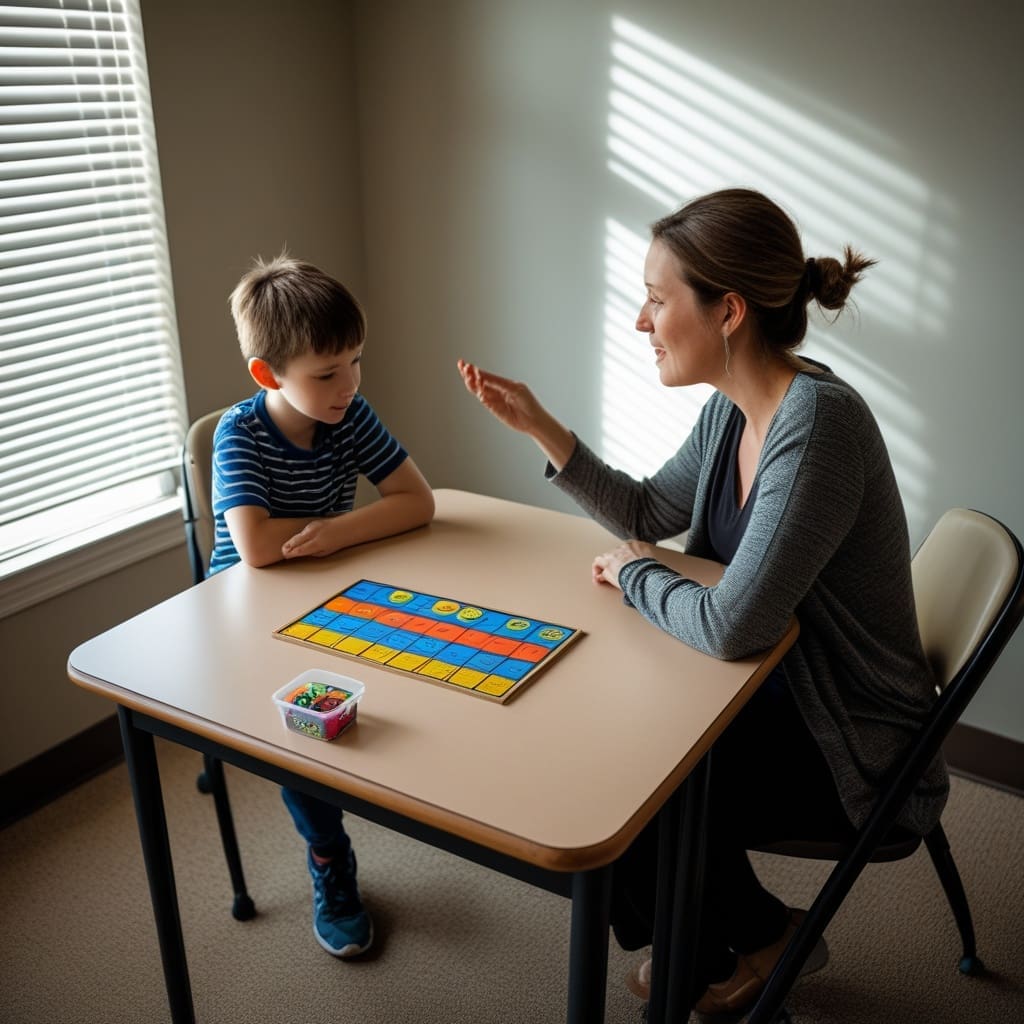

Autism masking in adults shows up as chronic overcorrection of eye contact, scripted conversation, suppressed stimming, and physical or emotional exhaustion after social contact. These behaviors develop as a survival strategy, often starting in childhood, and many autistic adults are not consciously aware they are doing it until a therapist or diagnostic evaluation points it out. A 2024 survey from Catalyst Care Group found that more than 70 percent of autistic adults reported masking regularly, and a large share said it directly damaged their mental health. Recognizing the signs matters because unaddressed masking is strongly linked to burnout, anxiety, and delayed or missed diagnosis, particularly in women and people who were never evaluated as children.
Key Takeaways
- Masking involves suppressing natural autistic traits and performing neurotypical behavior to avoid judgment, rejection, or professional consequences.
- Common signs include scripting conversations in advance, forcing eye contact, mimicking others’ expressions, and needing extended recovery time after social events.
- Surveys suggest that between 70 and 80 percent of autistic adults engage in masking, with higher rates reported among women and late-diagnosed adults.
- Chronic masking is associated with autistic burnout, depression, and anxiety, and it frequently delays diagnosis by years or decades.
- Reducing masking involves identifying safe environments, working with an autism-informed therapist, and gradually reintroducing natural behaviors like stimming.
What Autism Masking Actually Is
Masking, sometimes called camouflaging, refers to the conscious or unconscious suppression of autistic traits in order to appear neurotypical. This can mean forcing eye contact that feels physically uncomfortable, rehearsing small talk before a meeting, or copying the tone and body language of coworkers. Researchers first described this pattern in academic literature around 2017, and clinical interest has grown steadily since, particularly as more adults seek diagnosis later in life.
The behavior is not limited to social settings. Many adults mask at work, in romantic relationships, in medical appointments, and even with close family members. Some describe it as playing a character for hours at a time, then feeling depleted once they are alone. The exhausting part is not the performance itself, but the constant self-monitoring required to keep the performance believable.

Common Signs of Masking in Adults
Masking signs vary from person to person, but certain patterns show up again and again in clinical interviews and self-report surveys. Below are the most frequently reported behaviors among autistic adults who were diagnosed after age eighteen.
- Scripting conversations in advance. Many adults rehearse greetings, small talk, and even predicted responses before a meeting or social event, sometimes writing out mental “if this, then that” scripts.
- Forcing eye contact. Because eye contact can feel physically uncomfortable or overstimulating, adults often stare at a person’s forehead, nose, or mouth instead, or count seconds to appear engaged.
- Suppressing stimming. Repetitive movements such as hand flapping, rocking, or leg bouncing get held in during work hours, then released in private, sometimes with visible relief.
- Mimicking facial expressions and tone. Adults copy the laughter, gestures, or vocal inflection of people around them, sometimes with a slight delay that others describe as “a beat behind.”
- Overexplaining or over-apologizing. Fear of misreading a social cue leads to excessive clarification, repeated apologies, or asking “did that make sense?” multiple times per conversation.
- Extended recovery time. A single social event, even a positive one, can require several hours or an entire day of solitude and low stimulation to recover.
- Special interests kept hidden. Topics an adult finds deeply engaging are downplayed or never mentioned at work or in new relationships out of fear of appearing “too intense.”
These signs often overlap with general social anxiety, which is part of why masking can go unrecognized for years. The distinguishing factor is usually the depth of exhaustion afterward and the sense that the behavior is a performance rather than a natural response.
How Common Is Masking Among Autistic Adults
Masking is not a rare coping mechanism. The 2024 Catalyst Care Group survey of autistic adults in the United Kingdom found that 77 percent reported masking on a daily or near-daily basis, and nearly 80 percent said masking had a negative effect on their mental health. Academic studies, including work published through the Autistic Self Advocacy Network and peer-reviewed autism research journals, report similar figures, generally placing daily or frequent masking somewhere between 70 and 85 percent of surveyed autistic adults.
Rates appear higher among women and nonbinary autistic adults, a pattern researchers attribute to stronger social pressure to conform and to diagnostic criteria that were originally built around observations of autistic boys. This is one reason the average age of diagnosis for autistic women is several years later than for men, with some studies placing the gap at four to six years. Masking is also more pronounced in professional settings with strict social norms, such as law, medicine, and corporate management, where deviation from expected behavior can carry real career consequences.
Why Autistic People Mask in the First Place
Masking usually develops as a response to negative feedback, whether that feedback comes from bullying, workplace discipline, family criticism, or simple social rejection. A child who is repeatedly told to “stop fidgeting” or “look at me when I’m talking to you” learns that certain natural behaviors bring punishment, so the behaviors get buried. By adulthood, the masking has often become so automatic that the person can no longer easily tell where the performance ends and their actual personality begins.
Several specific motivations tend to drive the behavior:
- Avoiding social rejection. Roughly one in three autistic adults reports being excluded or bullied specifically because of visible autistic traits, according to survey data compiled by UK and US advocacy groups.
- Protecting employment. Fear of being fired, passed over for promotion, or labeled “difficult” pushes many adults to suppress stimming and scripted communication styles during the entire workday, often eight or more hours at a stretch.
- Avoiding misdiagnosis or dismissal in medical settings. Some adults mask during therapy or doctor visits because they worry that visible traits will be misread as a different condition or dismissed entirely.
- Maintaining relationships. Partners, friends, and family members may respond negatively to unmasked behavior, so adults mask specifically to preserve close relationships they value.
- Cultural and gender expectations. Women in particular report masking to meet expectations around emotional expressiveness and social warmth that are less often demanded of autistic men.

The Physical and Mental Toll of Chronic Masking
Masking is not free. Suppressing natural behavior for extended periods requires constant cognitive effort, and research on cognitive load supports the idea that this kind of ongoing self-monitoring is genuinely draining, not simply a matter of willpower. Adults who mask heavily report higher rates of anxiety, depression, and a specific condition known as autistic burnout, which involves a loss of skills, increased sensory sensitivity, and a drop in functioning that can last weeks or months.
Common consequences reported in survey data and clinical case studies include:
- Chronic fatigue that does not improve with normal amounts of sleep or rest.
- Identity confusion, where adults struggle to describe their own preferences, values, or personality outside of the mask.
- Delayed diagnosis, sometimes by twenty or more years, because clinicians observe the mask rather than the underlying traits during a short evaluation.
- Increased suicidality risk. Multiple studies have found elevated rates of suicidal ideation among autistic adults who report high levels of camouflaging, even after controlling for depression.
- Physical symptoms such as headaches, muscle tension, and digestive issues tied to prolonged stress responses.
Chronic masking does not simply hide autism from other people. Over time it can hide autism from the person doing the masking, making self-understanding and accurate diagnosis significantly harder to reach.
Masking Signs by Setting
Masking rarely looks identical in every environment. The table below is presented as a comparison list rather than a full grid, since the signs and typical duration of the mask differ by context.
- Workplace (typically 6 to 9 hours per day): Scripted small talk in meetings, suppressed stimming during long calls, forced eye contact during one-on-ones, and delayed responses while internally translating social cues.
- Romantic relationships (variable, often the longest sustained mask): Mirroring a partner’s interests and communication style, hiding sensory discomfort during shared activities, and agreeing to social plans that cause exhaustion rather than risking conflict.
- Medical and therapy appointments (30 to 60 minutes typically): Presenting calm, articulate answers that mask real distress, which frequently leads clinicians to underestimate the severity of symptoms being described.
- Family gatherings (several hours, often with no private recovery space): Performing enthusiasm or interest in group conversation, suppressing sensory reactions to noise or lighting, and rehearsing responses to expected questions in advance.
How Masking Signs Differ From Simple Social Anxiety
Social anxiety and autistic masking can look similar on the surface, and many autistic adults are misdiagnosed with social anxiety disorder before receiving an accurate autism diagnosis. The key difference is the underlying cause. Social anxiety centers on a fear of judgment or embarrassment, while masking centers on suppressing traits that feel natural but are perceived as socially unacceptable, regardless of whether judgment is actually expected in that moment.
A practical distinction clinicians use during evaluation involves asking what happens when the person is completely alone and unobserved. Someone with social anxiety alone typically feels calm, since the feared audience is absent. An autistic adult who masks heavily, on the other hand, may still stim, script internal thoughts, or feel a strong sense of relief specifically because the mask has come off, which points toward a deeper pattern of trait suppression rather than situational fear.
Steps to Reduce Masking and Reconnect With Natural Behavior
Reducing masking does not mean removing it instantly or in every setting, since some level of social adaptation is realistic and even useful. It means giving yourself more choice about when and how much you mask, rather than doing it automatically everywhere. The following steps are commonly recommended by autism-informed therapists and occupational therapists who specialize in adult diagnosis.
- Identify one low-stakes environment to unmask first. Start with a single trusted friend, a support group, or your own home, rather than attempting to unmask at work immediately.
- Track your energy for two weeks. Keep a simple daily log rating fatigue from 1 to 10 after social interactions to identify which specific settings drain you the most.
- Reintroduce one suppressed behavior at a time. If you suppress hand stimming, allow it for five to ten minutes daily in a private setting before expanding it to more situations.
- Seek an autism-informed therapist. Look specifically for clinicians who list autism, camouflaging, or neurodivergent-affirming care in their specialties, since general anxiety treatment often misses the masking pattern entirely.
- Build in recovery time after known high-mask events. Block out at least two to three hours of low-stimulation time following work events, family gatherings, or long meetings.
- Consider a formal evaluation. A comprehensive adult autism assessment, often involving structured interviews such as the ADOS-2 or ADI-R along with clinical history review, typically costs between $1,200 and $3,500 in the United States when paid out of pocket, though many insurance plans cover part of the cost with a referral.
Call to Action
If several of these signs sound familiar, consider scheduling a consultation with a licensed psychologist who specializes in adult autism assessment rather than waiting for symptoms to worsen. Many university-affiliated psychology clinics and private practices now offer sliding-scale fees, and some community mental health centers provide reduced-cost evaluations for adults without private insurance. Reaching out for an evaluation is not an overreaction. It is a practical first step toward understanding your own patterns and reducing the daily toll that unrecognized masking can take.
Conclusion
Autism masking in adults is a widespread, exhausting, and often invisible pattern that affects the large majority of autistic adults at some point in their lives. The signs, scripted conversation, forced eye contact, suppressed stimming, and extended recovery time, are consistent enough across surveys and clinical research that they form a recognizable profile rather than a vague collection of quirks. Left unaddressed, chronic masking is tied to burnout, anxiety, depression, and delayed diagnosis that can stretch across decades. Recognizing the pattern in yourself or someone you care about is the first real step toward reducing the toll it takes and toward getting an accurate diagnosis and appropriate support.
Frequently Asked Questions
What is the main sign of autism masking in adults?
Extreme fatigue after social interaction is the most consistently reported sign. This exhaustion goes beyond typical social tiredness and often requires hours of solitude or reduced sensory input to recover, distinguishing it from ordinary introversion or social anxiety.
Can adults be diagnosed with autism if they have masked their whole life?
Yes, masking does not prevent a diagnosis, though it can make evaluation more complex. Clinicians experienced in adult autism assessment know to ask about behavior in private, unmasked settings and childhood history, rather than relying only on how a person presents during the appointment itself.
Is masking the same thing as simply being polite or professional?
No, masking involves suppressing traits that feel involuntary and natural, not just adjusting tone for a situation. Most neurotypical adults adjust behavior somewhat for context without significant distress, while masking autistic adults often describe the process as effortful, disorienting, and identity-obscuring over time.
How long does autistic burnout from masking typically last?
Autistic burnout episodes commonly last several weeks to several months, though severe cases can extend longer. Recovery usually requires significantly reducing social and sensory demands, and repeated burnout cycles without intervention can lead to longer recovery periods each time.
Do autistic men and women mask differently?
Research suggests autistic women tend to mask more intensively and are diagnosed later as a result. Studies commonly cite a gap of four to six years between average diagnosis age for men and women, with masking behaviors in women often including closer mimicry of peer social scripts and friendship patterns.