
Applied behavior analysis is a scientific approach to understanding and changing behavior by studying how the environment shapes what a person does and how consequences influence whether that behavior continues. It grew out of decades of laboratory research on learning and has become the primary evidence-based treatment for autism spectrum disorder, though it also supports work in education, addiction recovery, and organizational management. The discipline rests on measurable data rather than guesswork, which is part of why insurers and school systems have adopted it so widely. Understanding the science behind it helps explain why the therapy built on top of it looks the way it does.
Key Takeaways
- Applied behavior analysis (ABA) is the scientific study of behavior and the environmental factors that influence it, formalized as a field in 1968 through the Journal of Applied Behavior Analysis.
- Practitioners include Board Certified Behavior Analysts (BCBAs), who hold a master’s degree and complete 1,500 to 2,000 hours of supervised fieldwork before sitting for a certification exam through the Behavior Analyst Certification Board (BACB).
- The Centers for Disease Control and Prevention’s ADDM Network reported in 2024 that roughly 1 in 31 eight-year-old children in the United States has autism spectrum disorder, a population for whom ABA is the most researched intervention.
- Therapy sessions typically run between two and six hours, with intensive early intervention programs recommending 20 to 40 hours per week.
- Hourly rates for ABA therapy generally range from $120 to $250, and all 50 states now have some form of insurance mandate covering autism treatment, according to Autism Speaks’ state insurance report.
What Is Applied Behavior Analysis, Exactly?
Applied behavior analysis is the practical application of learning theory to real-world behavior problems, built on the idea that behavior is shaped by what happens before it (antecedents) and what happens after it (consequences). Rather than treating behavior as a fixed trait, ABA treats it as something that changes in response to the environment, which means it can be measured, tracked, and modified through structured intervention. The field emerged from B.F. Skinner’s work on operant conditioning in the mid-20th century, but it became a distinct applied discipline in 1968, when researchers Donald Baer, Montrose Wolf, and Todd Risley published a defining paper in the newly founded Journal of Applied Behavior Analysis (JABA).
That paper laid out seven dimensions a study or treatment must meet to count as true applied behavior analysis, including that it must be socially significant, measurable, and based on behavioral principles rather than assumptions about internal states. Those standards still guide the field today. Every reputable ABA program should be able to show data proving a behavior has actually changed, not just describe an approach in general terms.
What Are the Core Principles of Behavior Analysis?
Behavior analysis rests on a small number of principles that explain why behavior increases, decreases, or stays the same over time. These principles apply whether the behavior in question is a child learning to request a snack or an adult learning to manage frustration at work.
- Reinforcement: Any consequence that makes a behavior more likely to happen again, whether by adding something desirable (positive reinforcement) or removing something unwanted (negative reinforcement).
- Punishment: Any consequence that makes a behavior less likely to happen again, used far less often in modern ABA than reinforcement-based strategies.
- Extinction: Withholding the reinforcement that previously maintained a behavior, which typically causes that behavior to decrease over time, sometimes after a temporary increase known as an extinction burst.
- Antecedent-Behavior-Consequence (ABC) analysis: A method of recording what happens right before and right after a behavior to identify patterns that explain why it occurs.
- Generalization: The goal of ensuring a learned skill shows up across different settings, people, and materials, not just in the therapy room.
These principles are not abstract theory. They form the backbone of how practitioners apply these behavioral principles to assess the function of a behavior before designing any treatment plan. Skipping that assessment step is one of the most common reasons a behavior plan fails to produce results.

How Does an ABA Session Actually Work?
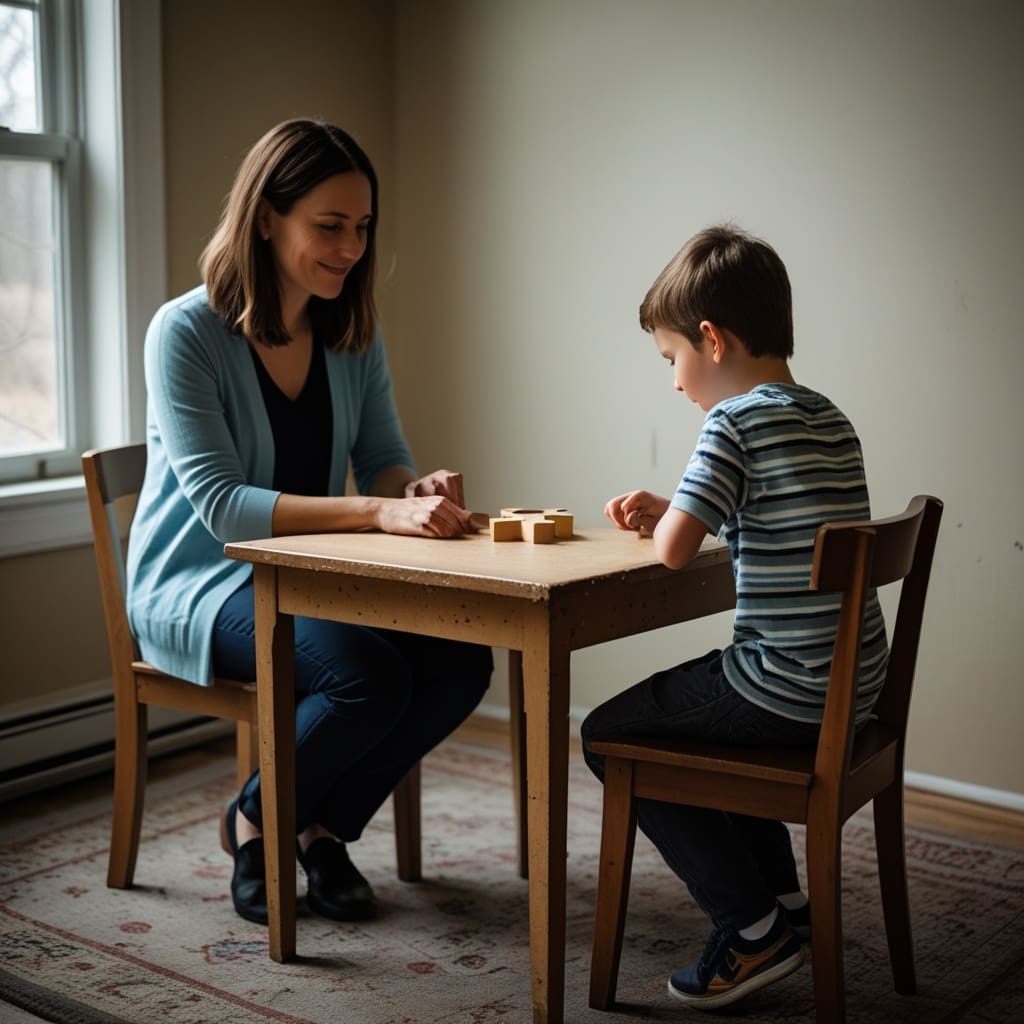
A typical ABA session follows a structured sequence designed to teach new skills, reduce interfering behavior, and collect data at every step. Session length and structure vary by provider and client age, but most ABA sessions run 2 to 4 hours and follow these stages.
- Baseline data collection (first 10 to 15 minutes): The therapist records the current rate or frequency of target behaviors before any intervention begins that day.
- Skill acquisition trials (30 to 90 minutes): Using methods such as discrete trial training (DTT) or natural environment teaching (NET), the therapist presents a specific instruction, prompts a response if needed, and delivers reinforcement for correct answers.
- Behavior reduction strategies (ongoing throughout the session): If a challenging behavior occurs, the therapist follows a written behavior intervention plan rather than improvising a response.
- Data graphing (5 to 10 minutes at session end): Results are logged into a graph so the supervising BCBA can review trends across sessions, usually weekly.
- Caregiver training (typically 1 hour every 1 to 2 weeks): Parents or caregivers learn to apply the same strategies at home, since consistency across settings is one of the strongest predictors of progress.
Sessions themselves generally last between two and six hours, and intensive early intervention models recommend 20 to 40 hours per week for children under age six, according to guidance published by the Behavior Analyst Certification Board’s practice standards. Less intensive “focused” ABA programs, often used for older children or narrower goals, may involve as few as 10 hours per week.
Who Provides Applied Behavior Analysis Therapy?
ABA therapy is delivered by three levels of practitioners, all certified through the BACB.
- Registered Behavior Technician (RBT): Needs a high school diploma, 40 hours of training, a background check, and a passing competency exam. RBTs run direct sessions under supervision.
- Board Certified Assistant Behavior Analyst (BCaBA): Needs a bachelor’s degree, coursework in behavior analysis, supervised fieldwork, and a passing score on the BCaBA exam.
- Board Certified Behavior Analyst (BCBA): Needs a master’s degree, 1,500 to 2,000 hours of supervised fieldwork, and a passing score on the BCBA exam.
The BCBA exam covers nine domains, including measurement, experimental design, and ethics. First-time pass rates sit around 60 percent, which shows how demanding the credential is. BCBAs must renew every two years with 32 hours of continuing education.
A BCBA designs the treatment plan, while RBTs and BCaBAs handle day-to-day sessions under the BCBA’s supervision, which must cover at least 5 percent of a technician’s service hours each month. This is how that structure shapes the therapy services offered here, turning research on reinforcement into an individualized plan.
What Conditions Does ABA Treat?
Applied behavior analysis is best known as a treatment for autism spectrum disorder, but its methods apply to a broader range of behavioral goals. The Centers for Disease Control and Prevention’s Autism and Developmental Disabilities Monitoring (ADDM) Network reported in its 2024 surveillance data that approximately 1 in 31 eight-year-old children in the United States has autism spectrum disorder, up from roughly 1 in 36 in the prior surveillance cycle. That rising identification rate has increased demand for trained ABA providers nationwide.
Beyond autism, behavior analysts also work with:
- Attention-deficit/hyperactivity disorder (ADHD), particularly around classroom behavior and task completion
- Intellectual and developmental disabilities requiring adaptive skill-building
- Substance use recovery programs, where contingency management (a behavior-analytic technique) rewards verified abstinence
- Traumatic brain injury rehabilitation, focused on relearning functional daily living skills
- Organizational behavior management, applying reinforcement principles to workplace safety and productivity
The common thread across all these applications is the same: identify the behavior, measure it objectively, and change the environment around it rather than relying on willpower or insight alone.
How Much Does ABA Therapy Cost?
ABA therapy usually runs $120 to $250 per hour, depending on location, provider credentials, and session format. At 20 hours a week and $160 an hour, a year of therapy without insurance can top $166,000. Even 10 hours a week adds up to around $83,000 a year, which is why insurance coverage matters so much to families considering treatment.
Cost by program intensity:
- Focused ABA (10 hours/week): About $62,000 to $130,000 a year, for specific skills or behaviors.
- Standard ABA (20 hours/week): About $125,000 to $260,000 a year, for moderate support needs.
- Intensive early intervention (30 to 40 hours/week): About $187,000 to $520,000 a year, usually for children under six with significant needs.
Most families never pay these full amounts. Every state and the District of Columbia now mandates that private insurers cover ABA services, according to Autism Speaks’ state insurance tracker. Coverage still varies by state and plan, with some capping ABA at 20 to 25 hours per week or cutting off benefits after age 21, so check with your insurer before starting treatment. Medicaid also covers ABA nationwide for eligible children through the EPSDT benefit, based on a 2014 clarification from the Centers for Medicare and Medicaid Services.
How Does ABA Compare to Other Therapy Approaches?
Families often ask how ABA differs from other common interventions for autism and developmental disabilities. The approaches are not mutually exclusive and are frequently used together, but their methods and goals differ.
- ABA versus speech-language therapy: ABA focuses broadly on behavior across all domains, while speech-language pathologists specialize specifically in communication, articulation, and language processing.
- ABA versus occupational therapy: Occupational therapy targets sensory processing and fine motor skills needed for daily tasks, while ABA targets the behavioral and learning patterns surrounding those tasks.
- ABA versus the DIR/Floortime model: Floortime is child-led and relationship-based, prioritizing emotional connection, while ABA is more structured and data-driven, with the therapist often directing specific learning trials.
- ABA versus cognitive behavioral therapy (CBT): CBT addresses thought patterns in individuals capable of verbal reflection on their own thinking, while ABA works directly with observable behavior and does not require that level of verbal insight, making it more suitable for younger children or those with limited language.
Many treatment teams combine ABA with speech and occupational therapy in what is called a multidisciplinary model, since the skills each discipline targets often reinforce one another.
What Does the Research Say About ABA’s Effectiveness?
Decades of peer-reviewed research support ABA as an evidence-based practice for autism spectrum disorder. The National Clearinghouse on Autism Evidence and Practice has classified applied behavior analysis techniques, including discrete trial training and functional communication training, among its list of established evidence-based practices, based on systematic reviews of hundreds of published studies. Outcomes vary considerably depending on the age of the child at the start of treatment, the number of therapy hours per week, and the consistency of caregiver involvement at home.
Early and intensive intervention tends to produce the strongest measurable gains. A frequently cited body of research on early intensive behavioral intervention (EIBI), building on work originally published by psychologist Ivar Lovaas, found meaningful improvements in language, IQ scores, and adaptive functioning among children who began treatment before age four and received high-intensity programming. More recent studies published in journals such as the Journal of Applied Behavior Analysis and Behavior Analysis in Practice continue to refine which specific techniques produce the best outcomes for which individuals, moving the field away from one-size-fits-all programming and toward more individualized treatment planning.
How Do You Get Started With Applied Behavior Analysis Therapy?
Getting started typically follows a clear sequence, even though the exact timeline depends on local provider availability.
- Obtain a formal diagnosis or referral, usually from a pediatrician, developmental pediatrician, or psychologist.
- Contact your insurance provider to confirm ABA coverage details, including any required pre-authorization.
- Schedule an intake assessment with a BCBA, who will conduct an initial functional behavior assessment, often taking two to four hours across one or two visits.
- Review the proposed treatment plan, including recommended weekly hours and specific measurable goals.
- Begin sessions, typically within two to six weeks of the initial assessment, depending on provider caseloads in your area.
If you are considering ABA therapy for yourself or a family member, reaching out to a licensed provider for an initial consultation is the most direct way to get accurate answers about cost, timelines, and treatment goals specific to your situation. Ask providers directly about their staff-to-client ratios, supervision frequency, and how they measure and report progress, since these details vary meaningfully between practices.
Frequently Asked Questions
Is Applied Behavior Analysis Only Used for Autism?
No, ABA principles apply to a wide range of behavioral goals beyond autism. While autism spectrum disorder is the most common reason families seek ABA services, the same principles support treatment for ADHD, substance use recovery, workplace safety training, and rehabilitation after brain injury.
How Long Does a Child Typically Stay in ABA Therapy?
Most children stay in ABA programs for one to three years, with many receiving 20 to 40 hours of therapy per week. Some children complete focused, short-term goals in under a year, while others with more significant support needs continue intensive programming for several years, with hours typically decreasing as skills improve.
Is Applied Behavior Analysis the Same as ABA Behavior Analysis?
Yes, these terms describe the same clinical field. “Applied behavior analysis” is the formal name for the discipline, while “ABA” is simply the common shorthand used by providers, insurers, and families.
Does Insurance Always Cover ABA Therapy?
Not automatically, but coverage is required in some form in all 50 states. Specific terms, including annual hour limits, age restrictions, and required documentation, differ by state and by individual insurance plan, so confirming details directly with your insurer before starting treatment is essential.
What Qualifications Should You Look for in an ABA Provider?
Look for a Board Certified Behavior Analyst (BCBA) overseeing the treatment plan, verified through the BACB’s public certificant registry. Direct session providers should hold at minimum an active RBT credential, and the practice should be able to show you regular data reports demonstrating measurable progress toward specific goals.
Conclusion
Applied behavior analysis gives clinicians and families a data-driven way to understand why behaviors happen and how to change them through structured, measurable intervention. Its scientific foundation, dating back to the 1968 JABA framework, still shapes every credentialed program in practice today, from BCBA-designed treatment plans to RBT-delivered sessions in homes, schools, and clinics across the country. Whether you are exploring ABA for a child recently diagnosed with autism or researching the discipline out of general interest, the core idea remains the same: observable behavior, guided by consistent principles, can be measured and improved.