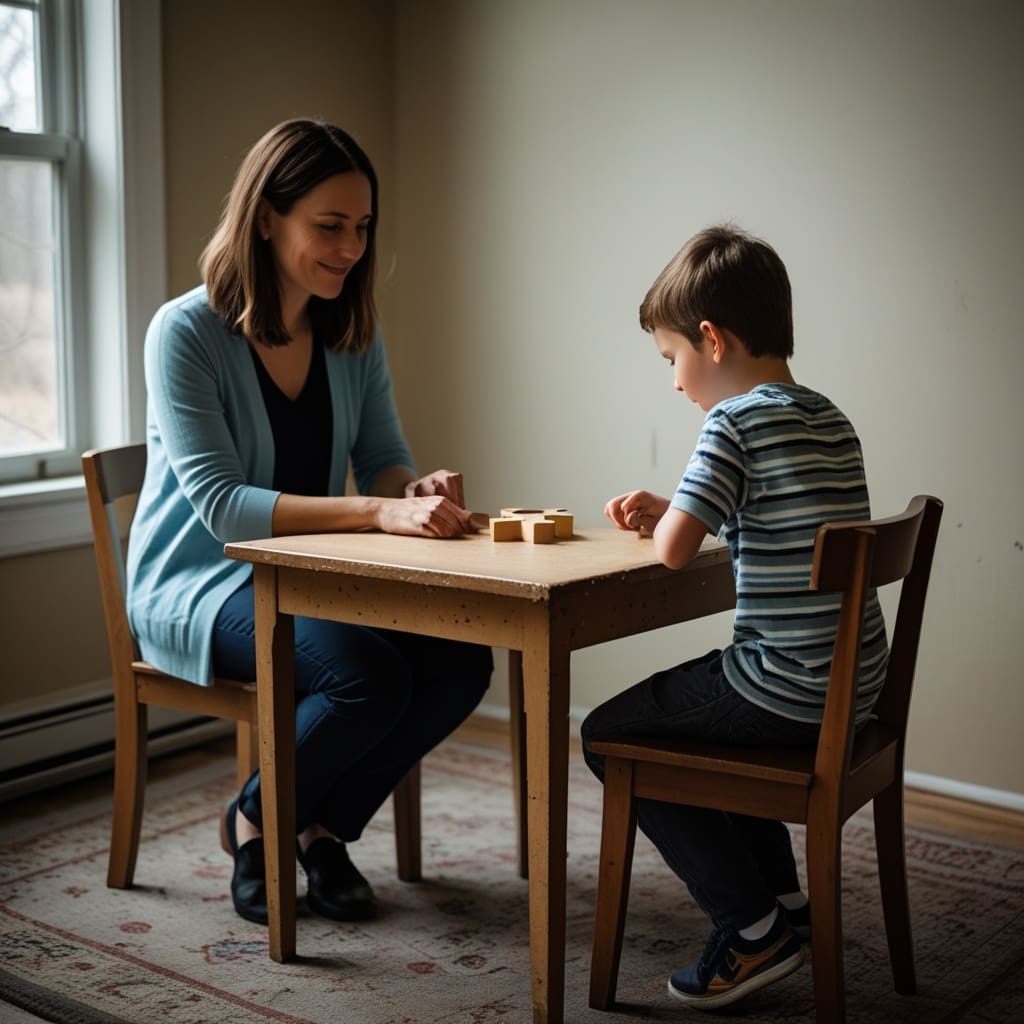


Level 1 autism is the DSM-5-TR label for the mildest support level on the autism spectrum, given to people who need some help with social communication and flexible thinking but manage daily life mostly on their own. That does not mean the condition is minor or that it can go unmanaged. Many children and adults with Level 1 autism struggle daily with unwritten social rules, sudden changes in routine, and sensory overload, even when they seem capable on the surface. Roughly 1 in 31 children in the United States has been identified with autism spectrum disorder, according to the CDC’s most recent data, and a large share of them fall into this Level 1 category. Knowing what the diagnosis actually involves helps families find the right therapy, school accommodations, and support at home.
Key Takeaways
- Level 1 autism is the lowest of the three DSM-5-TR support levels, but it still involves real, daily difficulties with social interaction and flexibility.
- Diagnosis requires a formal evaluation from a developmental pediatrician, psychologist, or neuropsychologist; there is no lab test or brain scan that confirms autism.
- Signs differ by age. Young children often show delayed play skills and rigid routines, while adults frequently describe years of “masking” before receiving a diagnosis.
- The three core challenge areas are social communication, inflexible or repetitive behavior, and sensory processing differences.
- Social skills therapy, occupational therapy, and structured behavioral support (often 5 to 15 hours per week for Level 1) tend to produce the most measurable improvement.
- Level 1 differs from Level 2 and Level 3 mainly in the intensity of daily support required, not in whether autism is “more” or “less” present.
Defining Level 1 Autism and Where It Fits on the Spectrum
Autism spectrum disorder is a neurodevelopmental condition that shapes how a person communicates, interprets social information, and reacts to their surroundings. The DSM-5-TR, the diagnostic manual clinicians use across the United States, sorts autism into three levels based on how much daily support a person needs: Level 1 (requiring support), Level 2 (requiring substantial support), and Level 3 (requiring very substantial support).
You may still hear Level 1 autism referred to informally as “high-functioning autism,” though most clinicians have moved away from that phrase because it can minimize genuine struggles. People with Level 1 autism typically speak in full sentences, attend mainstream schools, hold jobs, and live on their own. Even so, they often find social relationships exhausting to maintain and struggle when routines shift without warning.
The key distinction of Level 1 is functional capacity paired with unmet need. A person can function in most everyday settings, but only because they are working harder than their peers to do so. Left without support, those hidden efforts tend to surface as anxiety, school avoidance, burnout, or strained friendships, particularly during transitions like starting middle school or entering the workforce.
How Level 1 Autism Is Diagnosed
Diagnosis comes from a full developmental evaluation, not a single test or scan. Developmental pediatricians, psychologists, or neuropsychologists gather evidence through direct observation, tools like the ADOS-2, caregiver interviews, and school reports, then measure it against DSM-5-TR criteria.
A Level 1 label means a person shows difficulty in two required areas but only needs support, not substantial or very substantial support. Evaluations generally follow these steps:
- Screening and referral: A pediatrician or teacher raises concerns, often using the M-CHAT-R for toddlers, leading to referral within 4 to 8 weeks.
- Evaluation appointment: Usually 2 to 4 hours over one or two visits, including observation and cognitive testing.
- Caregiver and teacher input: Questionnaires like the Social Communication Questionnaire cover behavior across settings.
- Differential diagnosis: The clinician rules out overlapping conditions like ADHD, anxiety, or language impairment.
- Report and level assignment: Families usually get a full report within 2 to 6 weeks with the assigned level and recommendations.
Clinicians look at two required domains. Social communication covers trouble reading facial expressions or tone, sustaining conversation, or building age-appropriate friendships. Restricted and repetitive behaviors cover rigid routines, intense fixed interests, or sensory sensitivities that disrupt daily life. Both domains need impairment for an ASD diagnosis; if only one shows up, clinicians usually look elsewhere for an explanation.
A private evaluation in the U.S. typically runs $1,000 to $3,500 out of pocket, though insurance often covers part of it with a physician referral. Public schools must provide a free psychoeducational evaluation under IDEA once a family submits a written request.
Common Signs of Level 1 Autism Across Different Ages
Level 1 autism looks different depending on age and personality, which is why diagnosis often gets delayed for years, especially in kids who do well in school or have learned to copy their peers socially.
Signs in Young Children
- Limited eye contact, even with family
- Playing near peers instead of with them
- Strong attachment to routines, with distress when they change
- Intense, narrow interests that take over free time
- Trouble understanding jokes, sarcasm, or figures of speech
- Sensory sensitivity to sounds, fabrics, lights, or smells
Signs in School-Age Children and Teens
- Trouble reading unspoken social rules, like when to join a conversation
- Difficulty making or keeping friends despite wanting to connect
- Feeling overwhelmed by loud cafeterias, assemblies, or unpredictable classrooms
- Rigid thinking that makes compromise or last-minute changes hard
- Social anxiety that leaves many teens drained by the end of the school day
Signs in Adults
Many adults with Level 1 autism, especially women, were never diagnosed as children because they learned early to mimic social behavior. Most describe a lifelong sense of being different without knowing why. Common patterns include struggling with small talk, preferring detailed instructions over vague ones, and deep expertise in one or two subjects. Many also “mask,” consciously copying social behavior to fit in, which often leaves them exhausted by evening.
The Core Everyday Challenges of Level 1 Autism Explained
Understanding the specific difficulties behind a Level 1 diagnosis helps parents and caregivers respond with support instead of frustration. These challenges are genuine, even when they are not obvious to teachers, coworkers, or extended family.
Social communication difficulties go well beyond shyness. Many people with Level 1 autism struggle to interpret nonverbal signals such as facial expression, body posture, and tone of voice. Their speech often leans literal and detailed, which can come across as blunt or overly formal to peers who expect casual small talk. They understand the dictionary meaning of words but frequently miss the social layer sitting underneath them, such as when a sarcastic comment is meant as a joke rather than a literal statement.
Inflexibility and routine dependence show up as a reliance on predictable schedules to feel calm and regulated. A last-minute change in plans, an unfamiliar location, or a substitute teacher can trigger real anxiety or a meltdown. This reaction is not defiance or stubbornness. It reflects a genuine neurological need for consistency, and when that need goes unmet repeatedly, distress tends to build rather than fade.
Sensory processing differences appear at every level of autism, including Level 1. A person might be hypersensitive to background noise that others do not even register, such as a humming fluorescent light or a ticking clock, while simultaneously craving specific textures or repetitive movement to self-soothe. These sensory patterns influence behavior at school, at family gatherings, and in the workplace, often more than people realize.
Level 1 Compared With Level 2 and Level 3 Autism
The three DSM-5-TR levels differ mainly in how much daily support a person needs, not in the presence or absence of autism traits. A helpful way to compare them side by side:
|
Feature |
Level 1 (Requiring Support) |
Level 2 (Requiring Substantial Support) |
Level 3 (Requiring Very Substantial Support) |
|
Verbal communication |
Full sentences; social nuance is difficult |
Simpler sentence structure; limited initiation of interaction |
Very limited or minimal verbal speech |
|
Daily living |
Independent with occasional support |
Needs daily support for tasks like organization or transitions |
Needs support for most daily tasks |
|
Flexibility |
Distress with major changes; adapts with warning |
Marked distress with minor changes |
Extreme distress with almost any change |
|
Typical support hours |
5 to 15 hours per week of targeted therapy |
15 to 25 hours per week |
25 to 40+ hours per week |
Level assignment can also shift over time. A child assessed at Level 2 in preschool may present as Level 1 by adolescence after years of speech and behavioral therapy, and the reverse can happen if support drops off during a difficult transition, such as a move to a new school.
Therapy and Support Options That Make a Measurable Difference
Social skills therapy ranks among the most effective interventions for Level 1 autism because it treats social interaction as a learnable skill set rather than something that should develop naturally. Instead of waiting for social understanding to emerge on its own, a trained therapist breaks conversation, turn-taking, and perspective-taking into specific, practiced steps.
Group-based social skills programs, which typically run $50 to $150 per session and meet weekly for 8 to 16 weeks, let participants practice conversation and nonverbal reading with peers who face similar challenges. Individual therapy sessions target personalized goals, such as managing social anxiety before a job interview or navigating workplace small talk. Applied Behavior Analysis (ABA) therapy, generally billed at $120 to $150 per hour, is more intensive and is often recommended at 5 to 15 hours weekly for a Level 1 diagnosis, focused on specific behavioral or communication goals rather than the 20 to 40 hours per week sometimes used for Level 2 or Level 3 support needs.
Occupational therapy addresses sensory regulation and fine motor coordination, usually in 30- to 60-minute sessions once or twice weekly. Speech-language therapy can target pragmatic language, meaning the social use of language rather than grammar or vocabulary. Many families combine two or three of these services rather than relying on just one, and most public school districts are required under IDEA to provide related services like speech therapy and social skills groups at no direct cost once a child qualifies for an Individualized Education Program (IEP).
Research consistently shows that intervention started earlier tends to produce stronger long-term outcomes, though meaningful progress is achievable at any age, including well into adulthood.
Building a Support Plan That Actually Works at Home and School
Effective support for Level 1 autism rarely relies on a single strategy. Most families find success by combining structured routines at home, formal accommodations at school, and targeted therapy outside of both settings.
At school, a 504 Plan or an IEP can formalize accommodations such as advance notice of schedule changes, access to a quiet space during sensory overload, or extended time on written assignments. Requesting an evaluation in writing to the school district starts a legal 60-calendar-day timeline (varying slightly by state) for the district to complete testing and determine eligibility under IDEA.
At home, visual schedules, advance warning before transitions, and a predictable daily rhythm reduce the number of meltdowns triggered by surprise. For teens and adults, coaching around workplace disclosure, such as when and how to request accommodations under the Americans with Disabilities Act (ADA), can prevent burnout tied to years of unacknowledged masking. Family counseling also helps parents and siblings understand that rigid behavior or social withdrawal reflects genuine neurological need rather than a behavioral choice.
Conclusion
Level 1 autism sits at the mildest end of the diagnostic spectrum, but it still shapes daily life in real, sometimes exhausting ways for children, teens, and adults alike. A formal evaluation from a qualified clinician remains the only reliable way to confirm the diagnosis and determine which support level applies. Once a diagnosis is in hand, targeted therapies such as social skills training, occupational therapy, and school-based accommodations under IDEA or a 504 Plan can meaningfully reduce daily struggles and build genuine independence. Whether you are a parent navigating a new diagnosis or an adult reconsidering years of feeling out of step with peers, accurate information and consistent support make the difference between simply coping and actually thriving.
Frequently Asked Questions
Is Level 1 autism the same thing as Asperger’s syndrome?
Not officially, though the two overlap significantly in practice. Asperger’s syndrome was removed as a separate diagnosis when the DSM-5 was published in 2013 and folded into the single autism spectrum disorder category. Many people previously diagnosed with Asperger’s now fall under Level 1 autism, since both describe individuals with fluent speech and average or above-average cognitive ability who still struggle with social communication.
Can a person with Level 1 autism attend a regular classroom?
Yes, most students with Level 1 autism attend general education classrooms, often with accommodations. Support might include a 504 Plan, extended test time, a designated quiet space, or a paraprofessional check-in a few times per day. Full-time separate special education placement is far more common at Level 2 or Level 3.
Does Level 1 autism qualify for disability benefits or accommodations?
It can, depending on how much the diagnosis limits daily functioning. Under the ADA, workplaces must provide reasonable accommodations once a disability is disclosed, regardless of level. Social Security Disability benefits are assessed individually based on functional limitation, not diagnostic level alone, so a Level 1 diagnosis does not automatically guarantee or exclude eligibility.
At what age can a child be diagnosed with Level 1 autism?
Diagnosis is possible as early as 18 to 24 months, though Level 1 traits are often identified later. Because Level 1 symptoms are subtler than Level 2 or Level 3, many children are not formally diagnosed until ages 6 to 12, and many adults receive their first diagnosis well into their 30s or 40s.
Does a Level 1 autism diagnosis ever change to a different level later?
Yes, level assignment can shift with age, therapy, and environment. A child may move from Level 2 to Level 1 after years of consistent speech and behavioral therapy, or the reverse can occur if support is withdrawn during a stressful life transition, such as starting college or changing jobs.